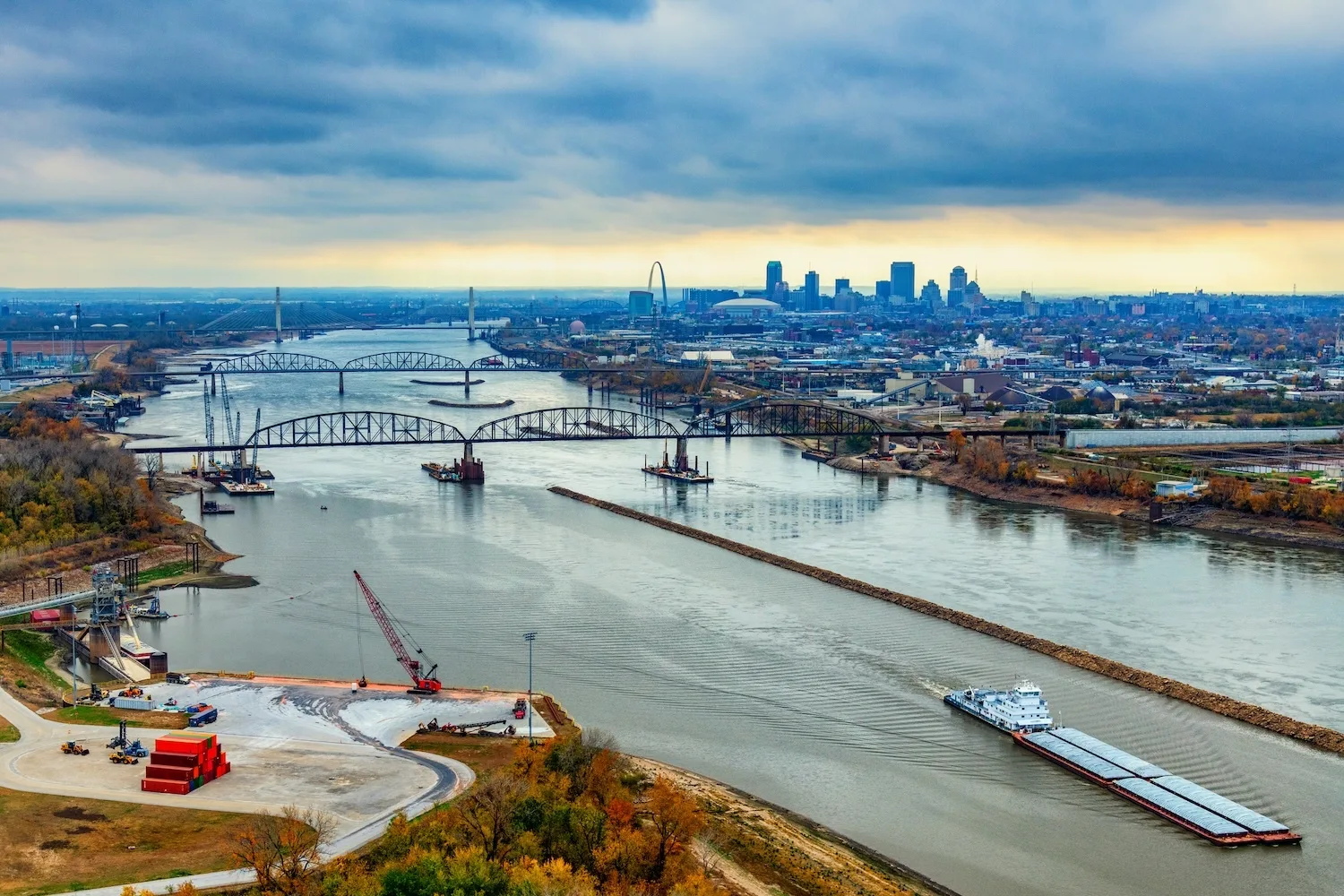
Data centers don’t just represent a critical issue for the St. Louis region. Anything built in the metro area could also have big impacts downstream. That’s one reason the mayors of Mississippi River towns to the north and south of St. Louis are pursuing a collective voice on their water use.
The Mississippi River Cities and Towns Initiative, a coalition of more than 100 river cities including St. Louis, is exploring a Mississippi River Compact. A legal agreement similar to what’s been forged for the Great Lakes and the Colorado River, the compact would lay out how to manage the waterway and prevent its exploitation or export to other states.
Keep up with local business news and trends
Subscribe to the St. Louis Business newsletter to get the latest insights sent to your inbox every morning.
“The compact for the Mississippi River would protect our water resources collectively, and put all of our cities on an equal footing of protection, where they would all have a say in who gets to put a straw in the Mississippi River for what purpose and how much,” says executive director Colin Wellenkamp.
More than a dozen data centers are already operating in the city of St. Louis, even as proposals for additional large-scale ones are being debated. Some of the largest facilities can use over a billion gallons of water annually, which Wellenkamp says can stress a municipal water system that may not be designed to deliver that much water on a day-to-day basis.
The city’s water system is already under pressure, even without new large-scale users. Debate over how to spend St. Louis’ portion of the Rams Settlement money earlier this year laid bare the water division’s project backlog and funding it needs to maintain the existing system.
Wellenkamp argues cities and businesses should take action to mitigate the potential downsides of data centers—and if that doesn’t happen on the local level, the rest of the river is affected.
“There are things that the industry that’s making the [water] draw can do to limit their amount of intake,” he says. “That’s investing in water recycling technology or water processing on site, inside the plant, where they can reuse the same amount of water for their processes over and over again instead of continually drawing fresh [water] out of your drinking water supply.”
When the river’s level drops, it can choke the ability to ship goods on it, as happened a few years ago when the river hit historic lows. Low levels are hampering shipping again this year but not to the same extent.
“This is having an impact on our ability to use the river to float critical commerce all over the planet,” he says “Doing that in conjunction with just allowing anyone to come in and mass consume water out of the Mississippi River, it creates more risk. What we’re trying to do is mitigate risk.”
Indeed, while St. Louis has a large part of its identity tied up in the Mississippi River, that’s also true of the cities and towns that line its banks to our north and south.
In St. Louis, the river and its tributaries are a source of some local pride (we draw our high-quality drinking water from the river basin) and also part of what drives the region’s economy.
“It’s crucial to so much that we do and so much of who we are. The future of the Mississippi River is the future of St. Louis,” says Wellenkamp, adding that the extent of what the river does for the region can be overlooked, even as the city pulls hundreds of millions of gallons per day from the Mississippi and Missouri rivers to sustain life and local business activities.
“But it’s not only for drinking water but for manufacturing too,” he says.
The AB InBev plant uses water to produce beer and other drinks. Other major players in manufacturing have expanded their presence, including P&G and MilliporeSigma, and the region has attracted newcomers as well, such as the global specialty minerals company ICL, in part due to river access. Even recent promotions aimed at redeveloping the former Doe Run smelter site Jefferson County for advanced manufacturing tout its positioning along the river, a common talking point as St. Louis makes the case that it’s a great place to do business.
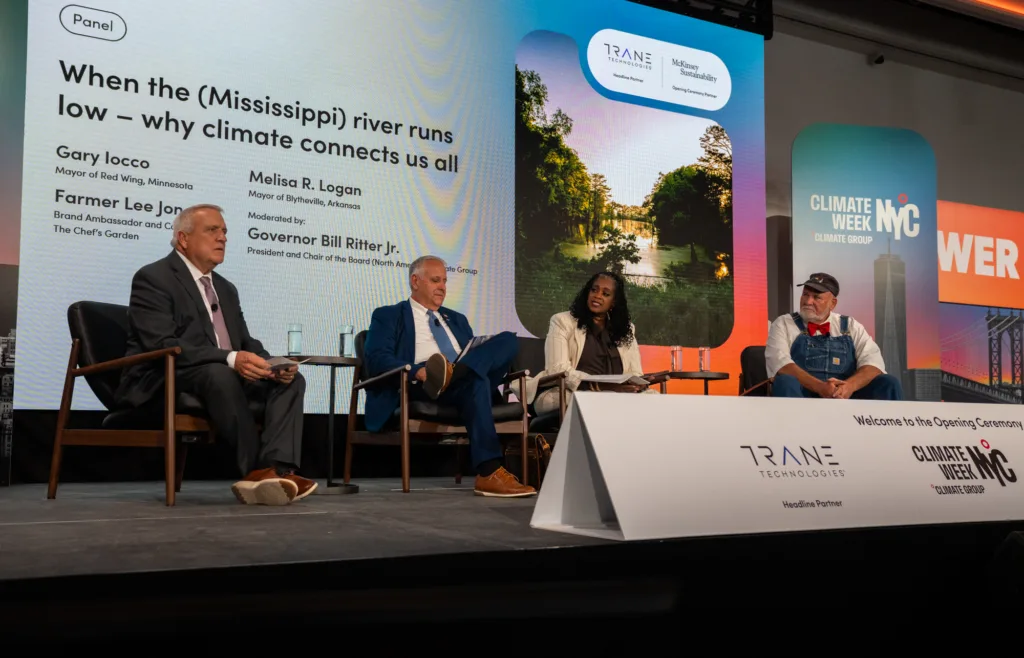
Other towns along the Mississippi River depend on the river’s ecology to drive their economies too. It’s part of the central message Mayors Melisa Logan of Blytheville, Arkansas, and Gary Iocco of Red Wing, Minnesota, delivered to last week’s Climate Week NYC, a global event where leaders in business, tech, politics, and academia share strategies and views on responding to climate change.
“It’s very crucial for us to make sure that we are continuing to keep it a viable river,” Iocco says.
Iocco adds the current lock and dam infrastructure makes shipping by barge both highly cost-effective and efficient compared to other modes of transit, with nearly $40 billion in agricultural exports flowing through his city’s port year. Plus riverboat cruises stopping in Red Wing account for nearly $1 million in town revenue. Red Wing suffers during periods of high- and low-water when the boats cannot port.
Logan agrees, adding that mayors like her and Iocco have a responsibility to sustain the river.
“I’m afraid that it won’t always be there,” she says. “The future of the river is in our hands and we have to do what it takes to keep it alive and keep it healthy.”
In the past 20 years, storms, droughts, extreme heat, and other weather events have caused some $250 billion in infrastructure damage, Logan says. She adds her small town relies on the health of the river in part to ship agricultural and manufactured goods, like steel, produced nearby.
And being downstream of St. Louis means Logan’s community experiences the consequences of decisions made upstream She says a larger city like St. Louis can support hers by communicating and alerting them to any incoming hazards, such as flood waters, drought or debris, so that they can be prepared to manage them.
“And then inviting us to the table. Even in flood mitigation plans, drought mitigation plans, if it’s going to affect me, can I come to the table and talk about what the effects of that are?” she says. “We have to think about this more regionally than locally, so we understand that what happens up the river affects what happens down the river and vice versa.”