On Friday, St. Charles became the first city in the U.S. to ban data centers, with its city council approving a one-year moratorium on accepting any application that would create or expand one within its limits. And it likely won’t be the last, as communities across the nation grapple with these projects.
St. Charles’ moratorium came in response to the Project Cumulus proposal, which spurred widespread anger from residents before being withdrawn. But while that $1 billion project was unusually big, and its backers were unusually secretive, its purpose was not. Data center growth has tripled over the past decade, according to a Department of Energy report, which predicts it to double or triple again in just the next four years, driven in part by the rapacious energy needs of artificial intelligence. By 2028, the DOE says, data centers will consume 6 to 12 percent of total U.S. electricity.
Get a fresh take on the day’s top news
Subscribe to the St. Louis Daily newsletter for a smart, succinct guide to local news from award-winning journalists Sarah Fenske and Ryan Krull.
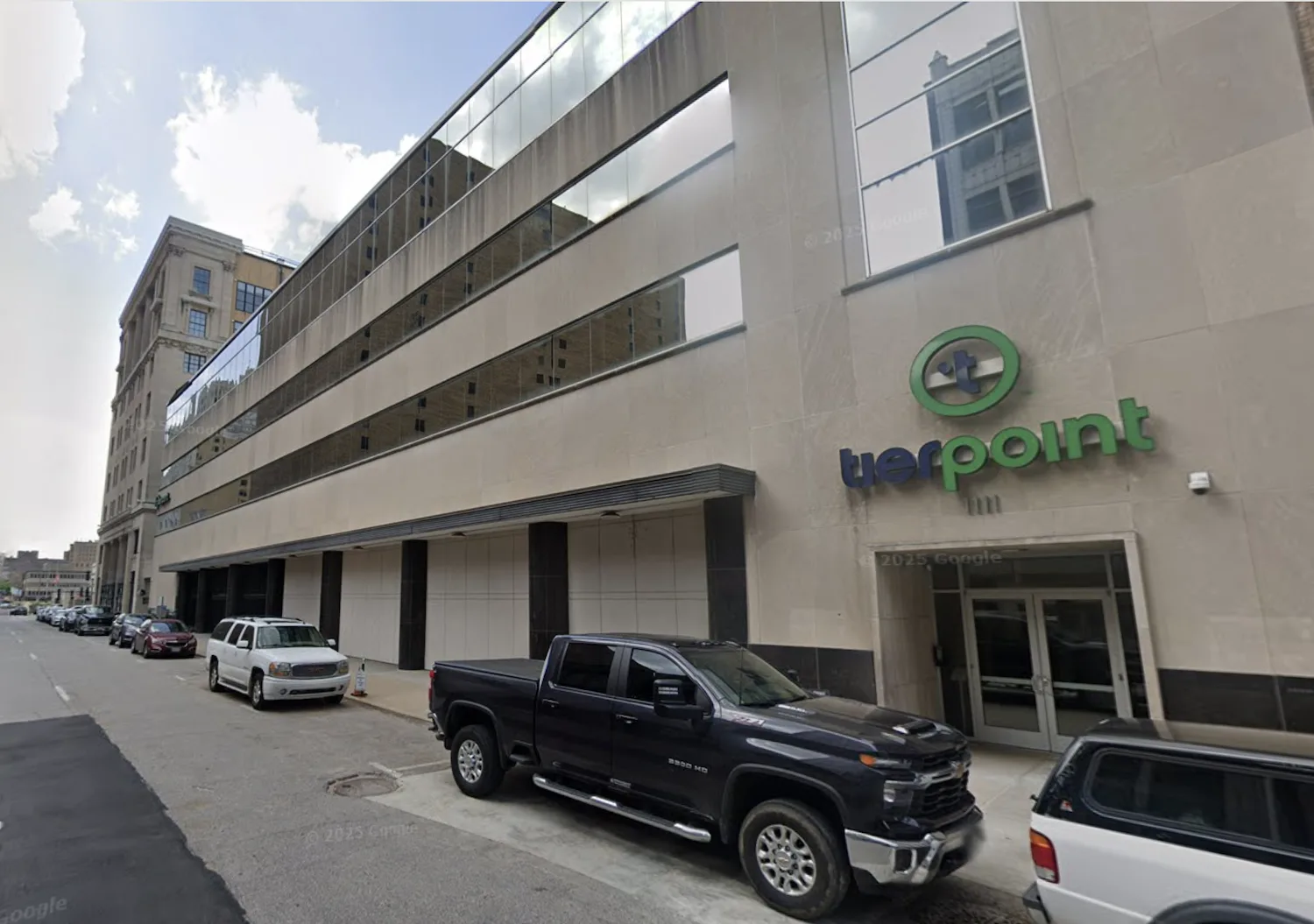
Thirteen sites within the city of St. Louis classify themselves as data centers (the classification allows them to be exempted from the city’s energy benchmarking program). They’re in neighborhoods including Covenant Blu Grand Center, Midtown, and both downtown and Downtown West. They’re hidden inside at least one former church and one former newspaper headquarters. The biggest is 546,000 square feet, records show, which is one-third of the size of the St. Charles proposal. They include longtime sites owned by AT&T and newer developments as well, including the $150 million TierPoint data center announced for Downtown West one year ago.
At the time, both Greater St. Louis Inc. and Mayor Tishaura Jones heralded the project, with Jones issuing a statement saying, “TierPoint’s decision to invest so heavily in Downtown St. Louis is a strong vote of confidence in our plans for the future.” These days, however, a data center might get a different reception. They’ve been criticized for high energy and water consumption, and some are reportedly loud, creating what’s been described as a “dull aural hum” that gives neighbors headaches, vertigo, and nausea. Another fear for places like downtown St. Louis, and Downtown West is that they fill up sizable buildings, but, with few employees on site, do little to contribute to a vibrant urban streetscape. With St. Louis’ inexpensive downtown real estate, one can picture a Potemkin village of buildings whose facades conceal only endlessly humming computers.
The city of St. Louis currently has no special zoning classification for data centers, but the mayor’s chief of staff, Casey Millburg, says that could change. The city is taking a hard look at zoning across the board, with a zoning upgrade underway at City Hall (a “ZOUP,” in City Hall parlance) to create “a modern code to meet a modern moment.”
Says Millburg, “I think it’s certainly top of mind as we’re eyeing our zoning code overhaul, and I think it’s top of mind as well because of what’s going on surrounding communities with these gigantic data centers being proposed that are, correctly, getting a lot of attention from the community and sparking a lot of really, really wonderful conversation.” She adds, “We are definitely keeping a very active eye on that.”
Absent a moratorium of its own, St. Louis officials may have to grapple with that question sooner than later. The Post-Dispatch reported earlier this month that developer Green Street wants to build a $600 million data center next to its now-shuttered Armory project, though the company has not publicly confirmed that. That would situate the project in a neighborhood that is either the thriving heart of the city (it’s next to Green Street’s now-shuttered Armory project, which puts it within a few blocks of City Foundry and its grocery store, restaurants, and luxury apartments) or a desolate block (it’s vacant land alongside a tangle of freeways), depending whom you ask. Is a data center a good use that helps build up the landscape, or a scourge to be pushed to the edges of town? St. Louis will have to answer that question along with municipalities across the nation.
Millburg says the key is to be intentional about which uses belong where. “It’s really important that we think in a holistic, targeted way about our land, which is an extremely precious commodity,” she says. Because, like it or not, developers pitching these proposals are already here.