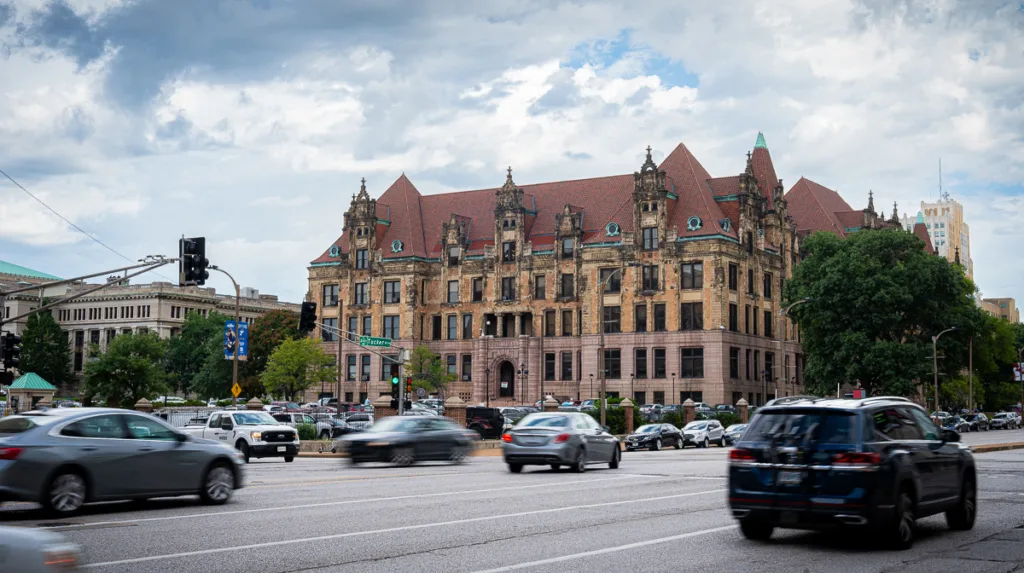
Backers of a proposed taxing district covering parts of the Covenant Blu-Grand Center and Midtown neighborhoods weathered skepticism about their plan during a meeting of the St. Louis Tax Increment Financing Commission Wednesday before commissioners voted 4-1 to advance the plan to the Board of Aldermen.
The proposal for a $39.5 million, 23-year tax increment financing district to support public infrastructure improvements in a roughly 111-acre area bounded by Theresa Avenue, Delmar Boulevard, Jefferson Avenue, and Olive Street, had been previously heard by the commission in June.
Keep up with local business news and trends
Subscribe to the St. Louis Business newsletter to get the latest insights sent to your inbox every morning.
It’s being spearheaded by the Kranzberg Arts Foundation along with the Midtown Alley Business Alliance, Grand Center Inc., and the Locust Central Business District, as well as some faith-based organizations and small businesses.
Kranzberg Arts Foundation executive director Chris Hansen reiterated that the goal of the TIF is to improve public infrastructure, such as pedestrian lighting, traffic calming, curb repairs, and stormwater management as a way to spur development in the area.
“The uses for this are for public infrastructure only. No private developer incentives. No eminent domain control. This is not about incentivizing developers or paying people to make their project cheaper,” he said at the hearing. “This is for streetscaping, landscaping, and other public-serving improvements.”
Hansen repeatedly emphasized how the proposal would not financially burden the city, as the TIF district would only be able to make such improvements using money from the incremental increases to tax collections in the district (including property, sales, earnings, and food and beverage taxes) after the district is established. On top of that, the proposal would only claim half of the increased revenue generated, sending the rest back to the city.
Hansen, and his supporters, argue developers want to invest more in the neighborhoods, but aren’t doing so because of how poor the public infrastructure is in the area. He projected the TIF could yield $500 million in private investment over its life.
Hansen said it’s not “speculative new developers” who were likely to commit to new projects, but rather “people that have put decades of investment and have real projects, real site control,” like Jasson Johnson or Eric Thoelke, who he said are likely to double down on the neighborhoods if the public conditions were improved.
“We really focused on those that had already shown a commitment to the area and had projects they were in planning on or site control,” he said. “We weren’t speculating on a whole new wave of people coming into the district.”
Added Hank Webber of Urban Impact Advisors: “I think it’s fair to say that the first 10 years of projects are projects that people are seriously interested in, but not willing to pull the trigger on now.”
The commission also heard from local residents and those representing interested organizations whose comments ping-ponged between support and opposition.
The Show-Me Institute’s David Stokes expressed dismay over a group of organizations pursuing a TIF to manage specific public infrastructure investments.
“Here we’re just turning the future taxes over to a private group that says, ‘We can do better than the elected officials.’ Maybe they can, but I think that’s a very dangerous precedent,” he warned. “Does this commission want to go down a very dangerous road for democracy where in the not-too-distant future, all the prosperous retail-oriented or business-oriented parts of St. Louis have kept all their future taxes?”
Other speakers echoed the concern that wealthier enclaves will see this as an opportunity to capture their own incremental tax increases for their priorities, but St. Louis Art Place founding director Kaveh Razani said he found that to be somewhat alarmist.
“If we’re here trusting this commission to make a decision on this day, are we not also going to trust them to make a decision when another private neighborhood of [means] decides to come with a plan to create a private TIF?” he questioned. “I think we need to be able to separate things out and take them on a case-by-case basis.”
Government watchdog Gerry Connolly pointed out that boosters of the TIF district were relatively light on specifics of where new development would come from. And he shared unease about an un-elected organization becoming the steward of public dollars.
“We’re hearing about potential projects, but we know very little about them,” he said. “The formula for this $39 million is predicated on a consultant’s projections. And I wouldn’t move forward on this unless you have substantive information on what those projections are.”
Soon after his testimony, though, New + Found founder and CEO Steve Smith emphatically shared his intention to develop new multi-family housing in Grand Center. He said the TIF would be an important component to make fundraising for such a project much easier.
“We, as a community, civic leaders, political leaders, residents, business leaders, we all have to work together to make St. Louis more attractive,” Smith said. “I think Grand Center is one of the opportunities to do that. Otherwise, we’re just moving deck chairs on the Titanic here.”
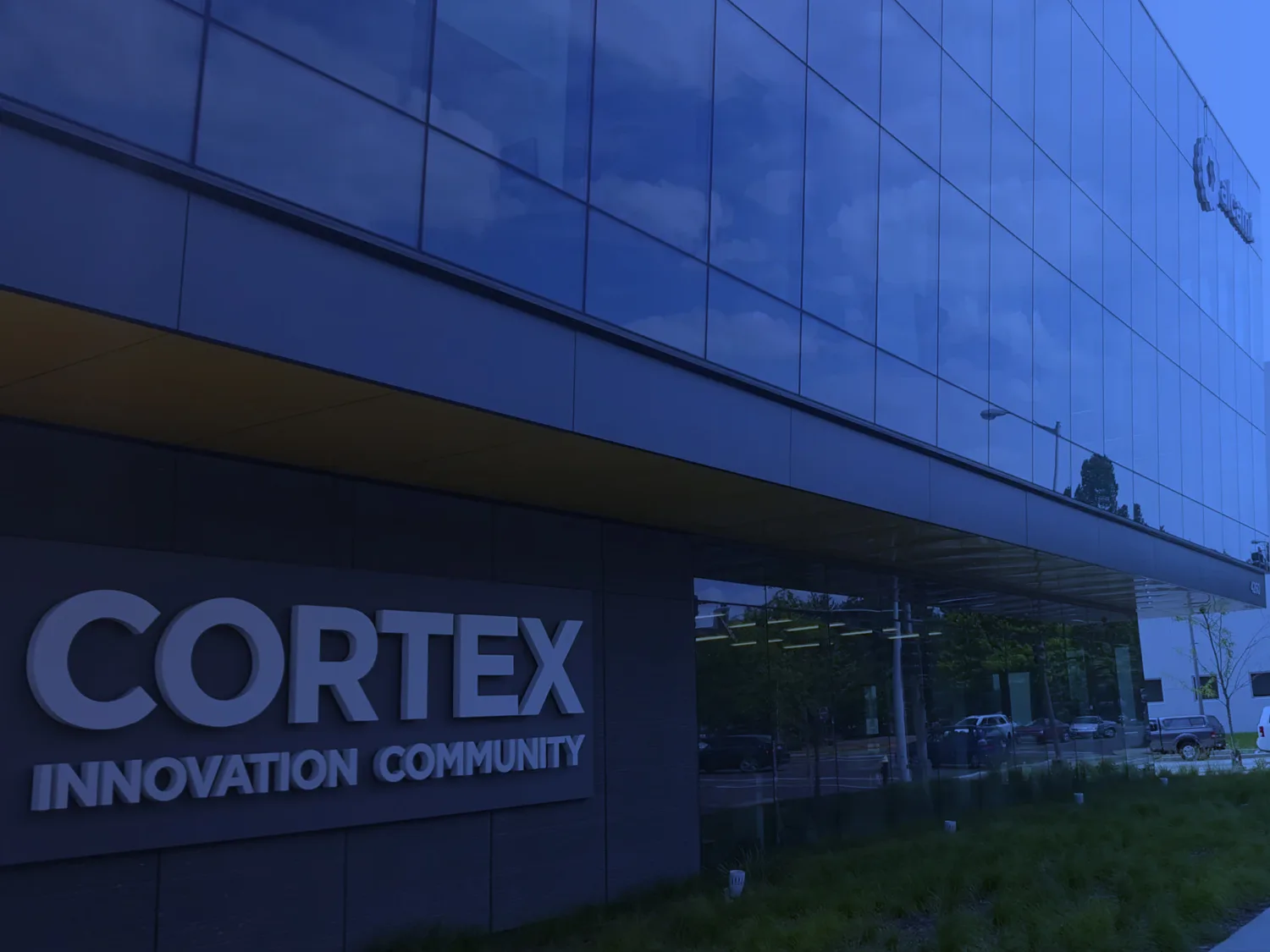
He added that Grand Center is “ready to see new construction,” and a TIF could spur new investment in much the same way similar districts did for Cortex and City Foundry (which Smith spearheaded).
Grand Center Inc. president and CEO Peg Weathers concurred on the appetite for development in the neighborhood.
“It’s happening right now,” she said. “This TIF would provide a reliable source of funding for the district. The elements that we’re talking about are not benefiting one developer or another. These are public infrastructure improvements.”
Weathers argued these kinds of improvements are already being managed in the neighborhood by organizations like hers or the Kranzberg Arts Foundation because the city is overwhelmed by infrastructure needing attention.
Added Locust Central Business District executive director, Ann Kittlaus, “Private investment can’t create and implement a comprehensive public realm plan. That really is the job of public dollars.”
Commissioners, though, appeared less than enthusiastic about signing off on yet another special taxing jurisdiction within the city.
“I’m having just a little bit of heartburn in the ‘but-for’ test. I’m struggling to necessarily connect the infrastructure projects to the private investment that we’re talking about,” said Spenser Owens. “I don’t necessarily see the cause, the absolute causal connection there.”
Owens did commend the proposal for having a “pay-as-you-go setup,” where the city wouldn’t have to immediately dedicate tax dollars to the TIF.
“I think that would be fatal to this plan,” he said. “I think it’s somewhat speculative to assume that the projects will come in and generate the revenue to get to the $39.5 million.”
Fellow TIF commissioner Phillip Klevorn took a skeptical tone, likening the district to a $39 million line of credit with no defined source of repayment.
“I understand your predicament. I mean, let’s be honest here—this is a failure of the city to provide adequate infrastructure and not living up to their responsibility and obligation,” he said. “This is a choice between a horrendous deal and a bad deal, and I’m going to go with the bad deal.”
Both Klevorn and Owens were among the four voting to approve advancing the TIF proposal to the Board of Aldermen, which is on recess until September 11. Two other members abstained, while one, Brandon Smart, voted no.