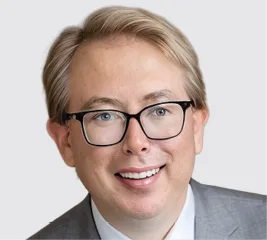
In just over a year at the helm of the downtown innovation center, Winters has made a sizable impact. T-REX has launched new programs designed to elevate the region as a national leader in entrepreneurship and advanced technology, including a youth entrepreneurship initiative, geospatial workforce development efforts, and hands-on founder support programs designed to help entrepreneurs navigate the early stages of scaling their businesses. “These efforts are expanding economic opportunity, supporting underrepresented founders, and positioning St. Louis as a bold, inclusive hub for techdriven growth,” Winters says.
Keep up with local business news and trends
Subscribe to the St. Louis Business newsletter to get the latest insights sent to your inbox every morning.
2026 QUESTIONNAIRE
PROFESSIONAL ACCOMPLISHMENTS & OPPORTUNITIES
What has been your/your company’s most significant success over the past 12 months? T-REX’s most significant success has been the launch of multiple new programs designed to elevate St. Louis as a national leader in entrepreneurship and technology innovation. These initiatives include a youth entrepreneurship intensive, new workforce development efforts in geospatial technology, and hands-on founder support programs that guide entrepreneurs through the critical early stages of launching and scaling their companies. At the same time, T-REX has actively worked to draw more venture capital attention to St. Louis by fostering connections between local startups and national investors, hosting investor-facing events, and strengthening the pipeline of fundable, high-growth companies emerging from our ecosystem. Collectively, these efforts are expanding economic opportunity, supporting underrepresented founders, and positioning St. Louis as a bold, inclusive hub for tech-driven growth.
What has you most excited about the future of your company or industry? What has me most excited about the future of T-REX and our industry is the opportunity to scale our programming in a way that not only launches more high-potential startups—but keeps them rooted right here in St. Louis. We’re building an environment where entrepreneurs can access world-class resources, mentorship, and capital without needing to leave the region. By deepening our support for early-stage founders and expanding initiatives that foster long-term growth, we’re helping create the conditions for startups to take root, thrive, and contribute to a stronger, more resilient innovation economy in St. Louis.
If you could change one thing about your industry, what would it be and why? If I could change one thing about the innovation and entrepreneurship industry, it would be to dramatically reduce friction in early-stage funding and operational support—especially here in non‑coastal regions like St. Louis. Entrepreneurs face hurdles in securing seed capital, managing cash flow, navigating legal and regulatory processes, and building experienced teams—often before they’ve fully proven their concept. Imagine a system where every founder can easily access flexible capital, get structured mentorship from day one, and work with streamlined legal, financial, and operational services. That kind of frictionless support ecosystem would enable more startups to launch confidently—and to stay and scale in St. Louis instead of moving elsewhere. It’s not just about more resources; it’s about removing barriers so founders can focus on building, not battling bureaucracy.
What’s the toughest business challenge you’ve had to overcome? The toughest business challenge has been guiding T-REX through a thoughtful reinvention—retooling our strategy, modernizing our programs, and finding fresh resources to power a much bigger vision. It’s meant asking tough questions, experimenting fast, and carefully realigning the organization while keeping day-to-day operations humming. The stakes are high, but the process has also been genuinely fun: Every breakthrough, new partnership, and spark of founder energy reminds us why reinventing T-REX is worth the effort and keeps the whole team excited for what’s next.
What’s a risk you took in business that didn’t pan out—but taught you something valuable? A risk I took that didn’t pan out was investing time and energy into a partnership that looked great on paper but lacked true alignment in values and goals. We kept pushing forward, hoping things would click, but eventually realized we were forcing something that just wasn’t built to last. It taught me the importance of trusting your gut early, and that a shared vision and mutual trust matter more than big names or bold promises. Not every opportunity is the right one—and sometimes walking away is the smartest move you can make.
What advice would you give to the next generation of St. Louis entrepreneurs or leaders? My advice to the next generation of St. Louis entrepreneurs and leaders is simple: Try the thing. Don’t wait until it’s perfect, don’t overthink it—just start. Failure isn’t something to avoid; it’s how you learn, adjust, and build something better the next time. Every successful founder I’ve met has a long list of things that didn’t work before something finally did. So take the risk, stay curious, and keep moving forward. Also, join T-REX. We’ve built a community that’s here to help you every step of the way.
MENTORS & PEERS
What is a key strength of the St. Louis metro area business environment? A key strength of the St. Louis metro area business environment, especially from the perspective of a nonprofit like T-REX, is the remarkable spirit of collaboration and generosity that exists across sectors. In St. Louis, businesses, foundations, universities, civic leaders, and fellow nonprofits don’t just coexist—they actively support one another. Whether it’s sharing expertise, co-developing programs, or stepping up with resources, there’s a genuine sense that we’re all working toward something bigger than ourselves. That mindset has been invaluable as we grow T-REX’s impact and build a stronger innovation economy for the region.
What is one thing you would change about the St. Louis metro area business environment? One thing I’d change about the St. Louis area is how quietly we tell our story. There’s incredible talent, innovation, and collaboration happening here but too often, we treat it like a best-kept secret. We need to be louder and bolder about what makes St. Louis special. That means telling our success stories nationally, attracting outside investment, and showing the world that this is a place where big ideas can take root and thrive. The assets are here we just need to own them unapologetically.
Who is the most interesting under-the-radar/emerging business leader in St. Louis? Nick Reinke, CEO of HabiTerre
Who in your company (or industry) deserves more recognition for their impact? Gabe Angieri from Arch Grants absolutely deserves more recognition for his impact. He’s one of those behind-the-scenes leaders who’s constantly connecting people, advocating for founders, and pushing the St. Louis startup ecosystem forward. Whether it’s helping secure critical funding, shaping strategy, or simply showing up to support others’ work, Gabe brings a rare mix of humility, hustle, and deep commitment to the region. A lot of the momentum we’re seeing in the entrepreneurial space has his fingerprints on it—even if he’s not the one seeking the spotlight.
What’s a local organization, nonprofit, or initiative that more people should know about—and why? One local initiative that more people should know about is the downtown revitalization effort gaining momentum across several fronts. Developer Alex Oliver is leading block-by-block redevelopment along Washington Avenue, bringing new life to historic buildings and energizing the streetscape. Brad Dean, through his leadership at Explore St. Louis, is working to elevate the America’s Center convention complex and attract more large-scale events to the city’s core. The St. Louis Development Corporation (SLDC) is also playing a key role by supporting redevelopment incentives and advancing efforts to stabilize and reactivate underutilized downtown properties. At the same time, Mayor Cara Spencer has brought a renewed focus on transparency, accountability, and neighborhood-driven investment—bringing energy and urgency to how the city approaches economic development. Together, these efforts reflect a collaborative push to reestablish downtown as a thriving, dynamic center for business, culture, and community.
BACKGROUND
Where were you born? Fairbury, Nebraska
What educational degrees do you hold, and where were they earned? BA in Non-Profit Administration from Lindenwood University; MBA from the University of Nebraska-Lincoln
What was your first job, and what did you learn from it? My first job was as a lifeguard at Heman Park Pool in University City, and it taught me the value of staying alert and thinking a few steps ahead. To keep everyone safe, you had to notice small things—like a swimmer getting tired or a group starting to roughhouse—before they turned into something more serious. It was also where I learned how important it is to communicate clearly and respectfully. Whether you were giving directions or correcting behavior, how you said something mattered just as much as what you said. Those early lessons have stuck with me.
HOBBIES & INTERESTS
What’s your hobby/passion? One of my biggest hobbies is cooking. It’s my creative outlet and my way of slowing down after a busy day. There’s something incredibly satisfying about taking simple ingredients and turning them into something that brings people together. Cooking helps me focus, experiment, and take care of the people I care about; it’s equal parts art, science, and therapy. Whether I’m trying a new recipe or improvising with whatever’s in the fridge, it’s a space where I can be fully present and recharge.
What is one book you think everyone should read (or podcast everyone should listen to) and why? The Death of Ivan Ilyich by Leo Tolstoy. It’s a short but powerful story that cuts to the heart of what really matters—how we spend our time, what we prioritize, and whether we’re living with authenticity. For anyone in leadership or building something meaningful, it’s a sobering reminder that success without purpose is hollow. It’s not a business manual—but it might be one of the most important books for anyone trying to lead a life that actually means something.
What do you do when you’re feeling stuck or uninspired? When I’m feeling stuck or uninspired, I get on my bike and ride. There’s something about the rhythm of pedaling, the open air, and being fully present on the road or trail that clears my mind. It gives me space to think (or not think) and more often than not, the solution or spark I was looking for shows up somewhere along the ride.
What would people be surprised to learn about you (fun fact)? People are often surprised to learn how much I love spicy food. I’ll happily try anything that makes you sweat, tear up, or question your life choices. Over the years, it’s become a bit of a personal challenge to find the next level of heat, whether it’s hot sauces, peppers, or dishes from around the world.