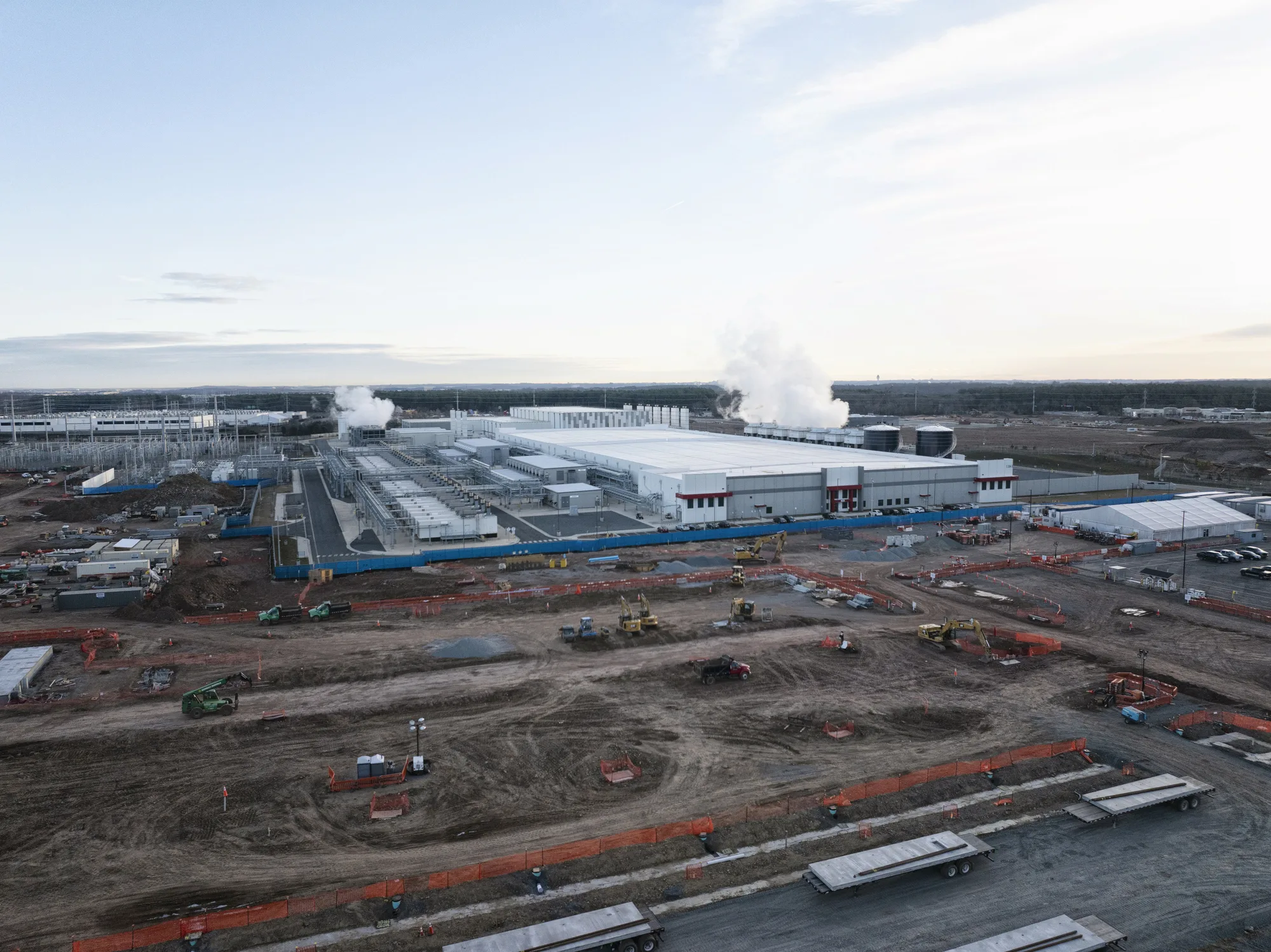
It’s set to be a busy week for data centers in the St. Louis region, as multiple local governments hold public meetings to consider the developments
Monday night has the Foristell Board of Aldermen making the final decision on whether to annex over 200 acres for a likely data center development. The action on Tuesday moves south to Franklin County, where the Planning and Zoning Commission there will again consider county-wide regulations for data centers, as well as rezoning requests attached to two distinct multi-billion dollar developments. And on Thursday morning the City of St. Louis hosts a conditional use hearing where a recommendation will be rendered for the data center pitched next to The Armory in Midtown.
Keep up with local business news and trends
Subscribe to the St. Louis Business newsletter to get the latest insights sent to your inbox every morning.
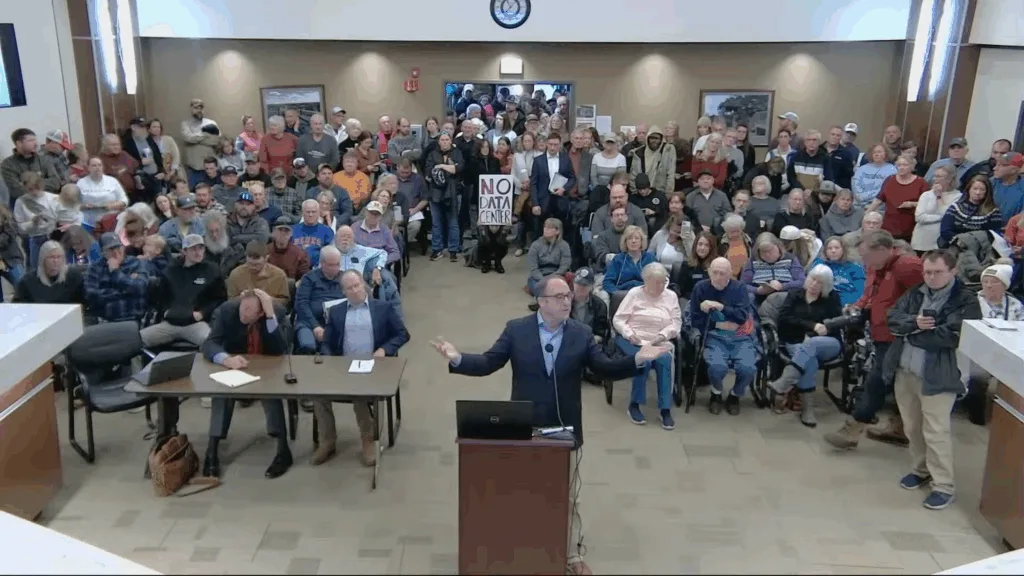
The meetings this week, like so many before them, are likely to feature skeptical locals pushing back on the projects. It’s a dynamic that’s not entirely surprising to Mark Muro, a senior fellow at the Brookings Institution who studies tech development.
“There’s a lot of reasons that suspicion and ultimately the kind of backlash conditions we’re seeing now have grown,” he says. “There’s a deeper narrative. This is not a superficial community backlash in one or two places.”
Data centers have existed for years, but what’s new now are the conditions under which they’re being developed, Muro explains. The tech industry’s “demand for scale as almost a philosophical mantra” has given way to bigger facilities and greater competition among the largest firms, moving as fast as possible to meet growing demand, he says.
Across the U.S., Muro says there are a finite number of “highly desirable, gargantuan, mega sites” with easy access to resources that power and cool such facilities, ratcheting up the speed and competitiveness among developers and companies looking to get deals done. That should give communities leverage when a developer comes to town, Muro argues.
Instead, the accelerated deal-making process has often come with elements Muro finds problematic, such as the “widespread” use of NDAs, which can create suspicion. “The [negotiations] are already very asymmetric because they often pit global billion dollar, trillion dollar companies with undermanned, outgunned local officials,” he says. “And the deals are often very secretive.”
The speed at which developers want to move has them considering many ways to win enough support to get a deal across the finish line, such as committing to forgo tax incentives or tacking on some kind of community benefits agreement toward the end of the negotiating process, says Daniel Goetzel, a fellow at Harvard and strategic consultant for universities, economic developers, investors and others.
“That model is almost like the brute force model, and it works largely because these are asymmetric negotiations—a city or a county manager going up against a behemoth data center company, and they’re negotiating a one-off deal,” he says.
He adds, “You take the deal because you need the revenue, and the jobs make a lot of sense in the short term. But that’s why it’s hard to do this as a one or two-person economic development office.”
Muro agrees: “So many of the frontline negotiators are terrified that these projects will go to the next town.”
Franklin County as a microcosm
The situation unfolding in Franklin County, which is fielding pitches for two distinct mega projects, is an instructive example.
In late January, representatives from Atlanta-based Beltline Energy appeared before leaders in Pacific to share their proposal for a $16 billion data center campus on land that would need to to be annexed by the city.
In the following weeks, Pacific leaders asked Beltline to pay $20,000 for experts, including geologists, engineers, and conservationists, to evaluate its proposal. But last month, Beltline moved to table discussion of the proposal in Pacific, citing funding concerns. It later became clear that they’d instead moved the proposal to Franklin County so it could instead take the lead in approvals.
“That all kind of felt shady,” says Keith Ketcherside, who lives on property adjacent to Beltline’s proposal.
Like Ketcherside, his neighbor Scott Matthews only learned about the project through an anonymous letter, prompting him to pay closer attention to the local proceedings. “There’s a lot of things being done behind the scenes to minimize the voice of the people, and that’s just wrong,” Matthew says.
What bothers Matthews most is that Franklin County is considering adding data centers as a defined use in its zoning regulations with them permitted in parcels that allow a wide range of commercial, retail, or manufacturing uses.
Matthews foresees this neutering the public’s ability to voice concerns about projects, since the local government’s review would become largely administrative. Ketcherside agrees. “That’s the fear that we have now that they’re going to take the element of approval out of our hands and make it an administrative function,” he says.
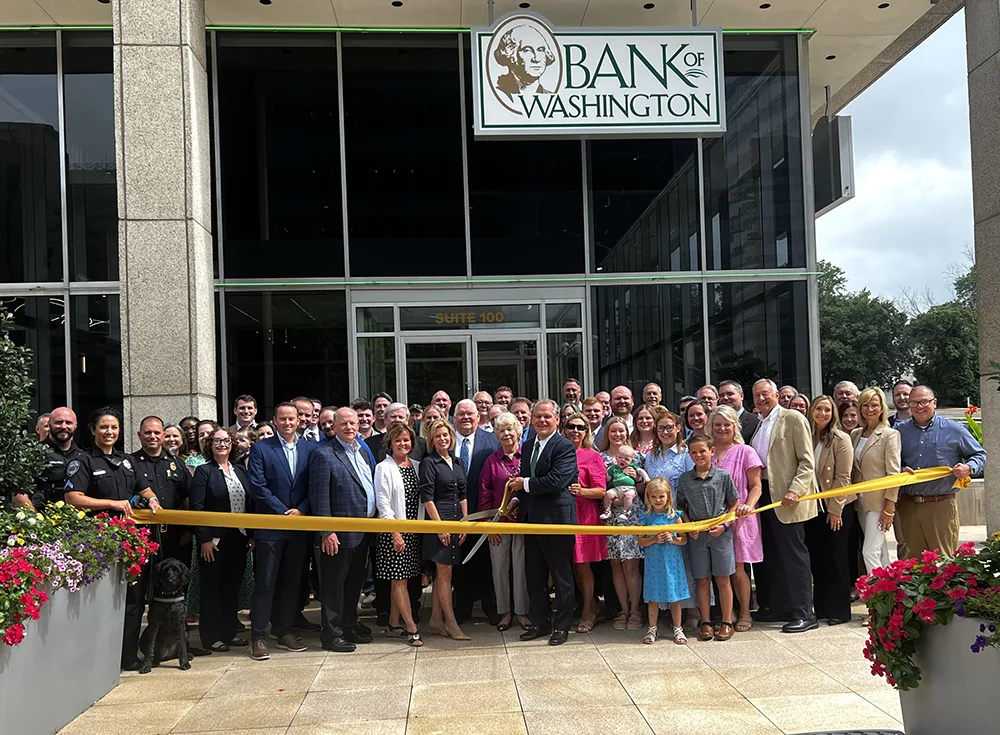
Adding to the distrust felt by some residents, the proposals are being backed by wealthy or politically connected people seeking to rezone agricultural land to allow data centers. The land next to Shaw Nature Reserve pitched for the Gateway Digital Campus is owned by members of the Eckelkamp family, who run the Bank of Washington, while the acreage for Beltline’s proposal is owned by William McLaren, who sits on the county’s Planning and Zoning Commission, the same body making a recommendation this week to the broader County Commission on the proposed data center regulations, as well as the two mega-proposals. (McLaren has said he chose not to attend past meetings where data centers came up to avoid giving the appearance of a conflict of interest.)
Both Ketcherside and Matthews say the sweeping rules proposed in Franklin County don’t yet include provisions assuring financial protection if a data center site is abandoned in the future.
“I think there’s a rush to throw the welcome mat out at whatever cost to the local environment and the residents,” says Ketcherside. “They don’t want to miss out on an opportunity for a revenue stream, whatever that may look like, which, at this point we haven’t seen a business plan, and we need to see that business plan.”
He adds the county is in a position to ask a lot more of potential developers, such as detailed reports demonstrating how their plant addresses noise, electricity and water consumption, or contingencies in the event of an environmental disaster, like flooding of the Meramec River (which abuts the land where Beltline wishes to develop).
A path to better deals
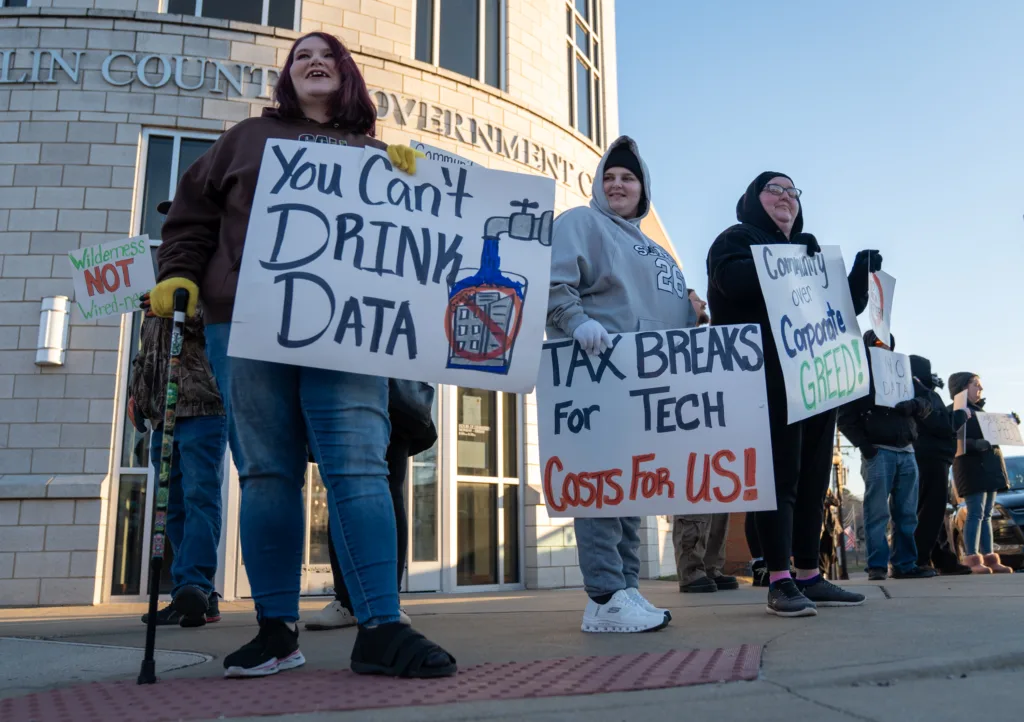
Muro, with the Brookings Institution, agrees that local communities with highly desirable sites for data centers have more leverage than they might realize.
“There needs to be greater public transparency and greater economic and financial expertise brought to the table to analyze proposals from the perspective of the aspirations of the community,” he says. “We’re not going to get good deals if the community is not well-informed, and its key negotiators [are] not well-informed. I think that’s a very substantial capacity problem that’s at the base of all this.”
Goetzel notes that the public is thinking beyond just the specifics of the proposal, but to forces at play across the nation. “They’re not just thinking about a physical piece of infrastructure going to the community. They’re thinking about the rise of AI,” he says.
Plus, Goetzel says the gains in construction employment tend to be short-lived and promises of immediate bumps in local tax revenue can fall flat.
“In a moment where people are deeply skeptical of politicians, when you say you’re just going to take the money from a company that negotiated clandestinely under the shadow of a made-up organization name, transfer [it] to my local government, who then is going to fill gaps in their budget, and I don’t know exactly how the money is going to be spent, there just isn’t a lot of goodwill that’s engendered on either side of that equation,” he says.
He adds, “People really want to understand how this makes their community more competitive, how it makes it a place that they can continue to live in and want to raise their kids in.”
But he and Muro argue that local governments can extract lasting community benefits from data center developments by framing negotiations around the higher economic aspirations of the community. Goetzel says there are opportunities to ask the developers to share in the upside of the project beyond just tax revenue.
“Can they take an equity stake in the real estate project, or can they make contributions to a fund for site readiness, or contribute to local [community development financial institution]s that’ll support local small businesses?” he says.
Communities can also ask that developers earmark some of the computing power built for local universities or the technology clusters they’re keen on developing, Goetzel adds. He and Muro highlight Wisconsin as a strong example, where Microsoft is building many data centers, but is also pouring resources into worker training facilities and programs, along with new research and development tools that fit well with existing programs at different campuses in the University of Wisconsin system.
As Muro explains, it comes down to communities considering and pushing for what they need “to advance our efforts, to diversify our economy, build up a beneficial technology sector, create ecosystems around some of the industries that we think we do pretty well at.”