St. Louis researchers are making waves in the medical community. Thanks to world-class teams, the city is at the forefront of healthcare innovation. Here are some of the latest advances taking place right in our own backyard.
NEUROLOGY & MENTAL HEALTH
Alzheimer’s blood test–FDA submission (WashU Medicine & Siteman Cancer Center):WashU researchers pioneered a highly accurate blood test that detects amyloid and tau proteins—the hallmarks of Alzheimer’s disease—years before symptoms appear. The test could replace expensive PET scans and invasive spinal taps for routine clinical diagnosis.
AI brain-mapping software–FDA authorized (WashU Medicine & Siteman Cancer Center):This software uses advanced fMRI data to rapidly create a digital map of a patient’s brain before neurosurgery. By identifying exact functional areas, surgeons can remove tumors with extreme precision and protect the patient’s speech, movement, and cognitive abilities.
Vagus nerve stimulation for stroke recovery (BJC & WashU Medicine): Clinicians are advancing stroke treatment by using an implanted device to stimulate the vagus nerve, which helps the brain rewire itself after a stroke. Coupled with physical therapy, patients can regain significant arm and hand movement.
Implanted device for treatment-resistant depression (WashU Psychiatry):WashU is leading clinical trials for an implanted VNS device for patients with severe depression who haven’t responded to traditional therapies. Recent results show that one in five patients reached full remission and many have maintained significant improvements in mood and quality of life.
Your guide to a healthier, happier you
Sign up for the St. Louis Wellness newsletter and get practical tips for a balanced, healthy life in St. Louis.
CANCER & ONCOLOGY
Liver transplant for metastatic colorectal cancer (BJC & WashU Medicine):WashU surgeons are changing the way colorectal cancer is treated by performing life-saving liver transplants for patients whose cancer has spread exclusively to their liver and cannot be removed surgically.
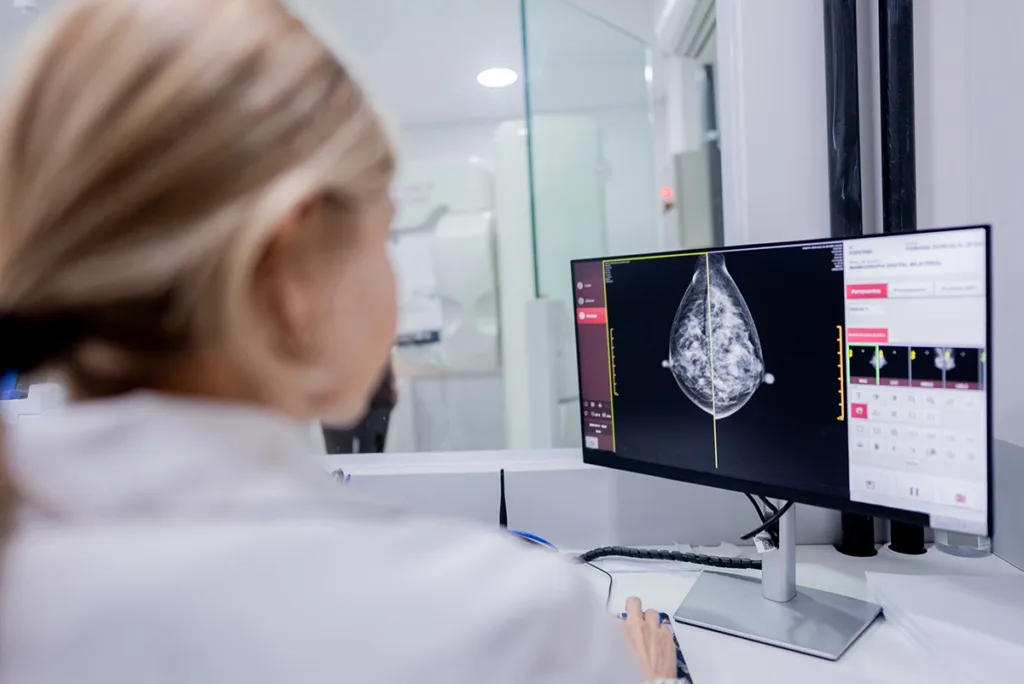
AI mammogram risk prediction (WashU Medicine & Siteman Cancer Center): Researchers developed the AI-driven software Prognosia to analyze mammograms and predict a woman’s five-year breast cancer risk with twice the accuracy of traditional models. The technology enables personalized screening schedules and earlier detection.
Histotripsy for liver tumors (Mercy Hospital St. Louis): Mercy is the first hospital in Missouri—and among the first 100 in the U.S.—to use the Edison histotripsy system, a non-invasive technology that uses focused sound waves to mechanically dismantle liver tumors without the need for incisions, radiation, or heat.
Wugen CAR-T therapy (WashU Medicine & Siteman Cancer Center): Biotech company Wugen, in partnership with WashU, is advancing off-the-shelf CAR-T cell therapies that transform how experts treat blood cancers. While traditional therapies use a patient’s own cells, these manufactured cells are ready for immediate use, significantly reducing wait times for critically ill patients.
CARDIAC & SURGICAL INNOVATION
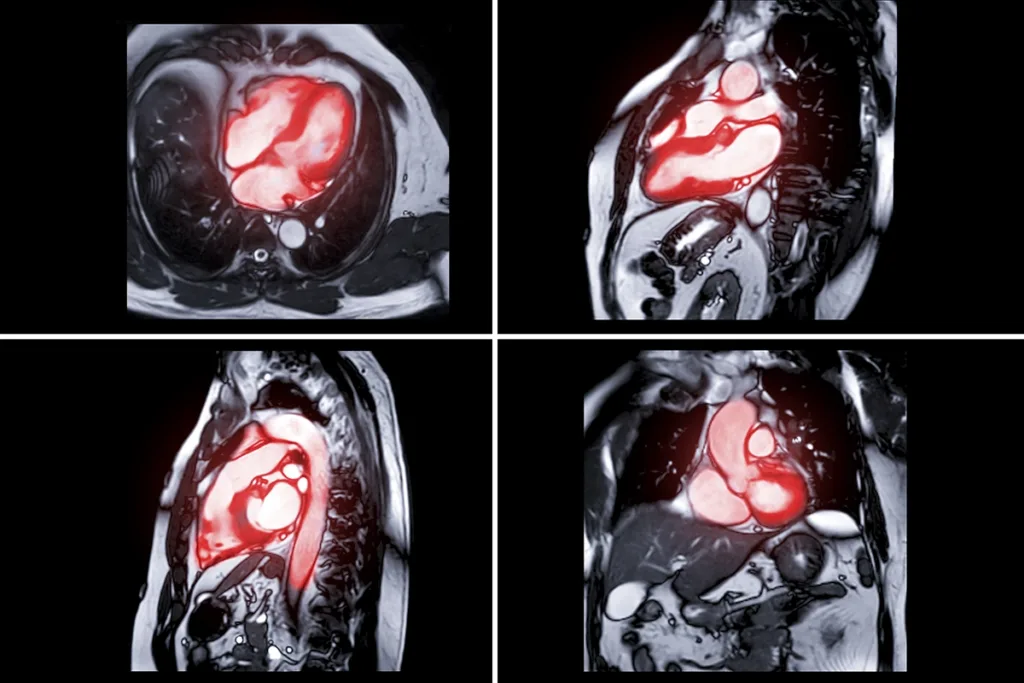
Advanced cardiac imaging for early detection (St. Luke’s Hospital): St. Luke’s has implemented HeartFlow AI technology, which transforms standard CT scans into personalized, 3D models of a patient’s coronary arteries. It’s a more accurate, less invasive way for doctors to visualize blood flow and blockages.
One-time radiation for heart arrhythmias (WashU Medicine & Siteman Cancer Center):Doctors can now use a single, high-dose beam of radiation to treat life-threatening ventricular tachycardia. It’s non-invasive and replaces hours-long catheter surgeries, which allows patients to go home the same day with a significantly reduced risk of sudden cardiac arrest.
Mazor X for spine surgery (Mercy Hospital St. Louis): The Mazor X robotic system enables Mercy surgeons to perform complex spinal fusions with exacting precision. This robotic guidance leads to smaller incisions, less blood loss, and faster recovery times for patients who have debilitating back conditions.
da Vinci Surgical System (Mercy Hospital St. Louis): Mercy Hospital has expanded its surgical capabilities by adding the advanced da Vinci 5 Surgical System, resulting in more precise, less invasive procedures in urology, gynecology, thoracic, and general surgery.