“Let’s do this,” Dieter Pauwels says.
Five people, including myself, follow Pauwels into a serene studio space that’s often used for yoga classes. It is 6 p.m. on a Sunday night. I slip off my shoes, unsure of what to expect next. Here at Casa Bagus, an “energy community center” on Clayton Road, a stone’s throw from a highway interchange and the world’s largest Amoco sign, Pauwels prepares to lead a class in shaking meditation.
Your guide to a healthier, happier you
Sign up for the St. Louis Wellness newsletter and get practical tips for a balanced, healthy life in St. Louis.
I have spent a couple of hours in Pauwels’ company at this point and have heard him explain in several different ways the concept behind shaking meditation, a practice that Pauwels finds so compelling, so transformative, his life’s work is to spread the practice in St. Louis. He opened Casa Bagus in October 2013. A few other people have shown up to shake tonight, so this mystical Eastern practice must be gaining some traction in the Show-Me State.
Enough talking. Enough thinking. Now is the time to experience it for myself. It’s time to shake free my inhibitions and my skepticism.
At the front of the room is a modest framed photo of Ratu Bagus, the guru from whom Pauwels learned his practice. With white robes, a wispy beard, and his hair in a top knot, Bagus stares out of the photo, his pointer finger aimed directly at the viewer. He is issuing a challenge. For tonight, at least, he has me as a disciple.
Pauwels hits play on his iPod. The music begins: a chilled-out incantation inviting participants to let themselves go beyond the realms of the body and the mind, to erase the boundaries between themselves and other people. Within minutes, the music has fully geared up, morphing from soothing mystical sounds into thudding techno, which is quite effective at drowning out the constant hum of traffic from Clayton Road.
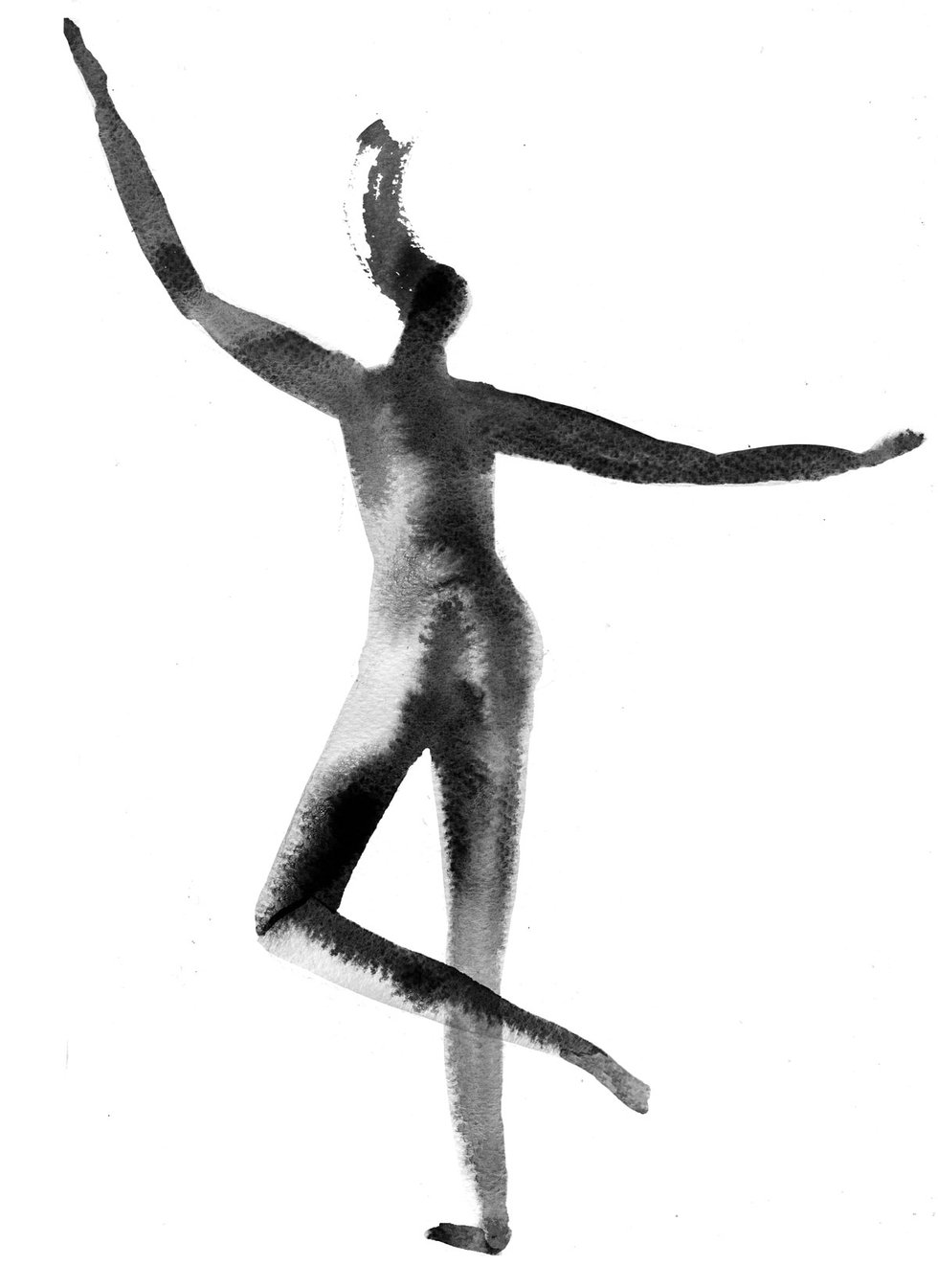
Pauwels, standing with arms stretched in front of him and sweat glistening on his neck, quivers with an intensity that, frankly, is a little frightening. The other participants are all behind me; I wonder what they are getting out of this. A glance over my shoulder confirms they, too, just five minutes into this meditation, are being transported to another plane. It’d be impossible not to move your body to this music, yet vibrating your whole body into a state of enlightenment is not a dance move I ever learned.
An hour—a whole hour—of this?
It started as a simple assignment: relax. More specifically, relax in multiple ways, from the conventional (breathing exercises, lifestyle changes) to the unexpected (shaking meditation) to the ever-trending (tai chi, yoga).
Of course, few relaxation methods are as communal—or as popular—as yoga. On Saturday mornings from May through October, Satinder Khalsa leads yoga classes in Tower Grove Park. It’s a ritual for many on their way to the farmers’ market. Supple bodies and yoga mats stretch as far as the eye can see. Over the course of nine years, the classes have grown from 20 people to 200. (A couple of years ago, attendance spiked to 400 after a newspaper article.)
Such mass workouts are inevitably less rigorous than the studio classes that Khalsa offers. Although participants follow the same basic sequences of postures in both contexts, Khalsa saves more challenging postures for smaller classes. And if one is looking for a yoga class in St. Louis, there’s no shortage of varieties: ashtanga (Khalsa’s preferred form, which hews closely to its Indian origins), Bikram (yoga in a hot environment), kundalini (which emphasizes breathing techniques)—to name a few. Yoga is as flexible to Western tastes as its practitioners’ bodies are.
For some, yoga is only about fitness, says Khalsa, and that’s fine. When people are ready to learn about its history and spiritual heritage, they’ll ask. Khalsa, who’s studying his craft in India this winter, says relatively few people in India practice yoga for exercise, instead considering it to be more about mindfulness. “The physical activity suits Westerners,” he says. “It helps them burn off anxiety produced by their faster-paced lives. We need the physical activity to get to that quieter place.”
Perhaps the frenetic physical activity of shaking is just another way toward inner peace, as contradictory as that might sound. On any spiritual journey to find inner peace—whether shaking or stretching—Khalsa says it’s a matter of “whatever works for you at the time.”
Pauwels laughs good-naturedly at the way yoga has become mainstream in the U.S., while other Asian traditions—no less legitimate, effective, or imbued with wisdom—are considered “kooky.” With only a handful of centers in the U.S. (including Pauwel’s), shaking meditation is treated with the same sort of bemusement as yoga was when it first made inroads in America in the 1960s. It’s a hard sell. As Pauwels earnestly explains his thinking about the practice, one unfamiliar metaphysical concept is stacked on top of another. He often ends his thoughts, “Does that sound crazy to you?”
Belgian-born Pauwels’ first direct encounter with shaking meditation was four years ago, while traveling on the island of Bali, a tourist-friendly section of Indonesia. Bali is the only island in the country where the influence of Buddhism and Hinduism is stronger than that of Islam. There, at the ashram, or religious community, built around Bagus’ teaching, Pauwels experienced his life—his very sense of self—being dismantled and rebuilt. When he wasn’t meditating at the ashram, he spent time on everyday tasks, such as cleaning guest rooms and preparing meals. But for six hours per day, Pauwels shook alongside his guru. Bagus, who speaks limited English but has a large international following, is in his midsixties and leads shaking classes every day. The intensive, daily shaking sessions left Pauwels physically drained and violently ill. Yet reaching this nadir was necessary, he says: Being thoroughly broken apart allowed him to be spiritually rebuilt.
Prior to his spell in Indonesia, Pauwels was a life coach and business consultant, appearing on KPLR-TV in a weekly segment in which he was billed as Coach Dieter. Although “people might have perceived me as successful and happy, I felt there was something missing in my life,” he says. “I came to the conclusion that nothing external in life gives us permanent happiness.” But when Pauwels discovered shaking meditation, he says, “it made me realize that true, everlasting happiness lies within.”
Now, he wants to share that sense of inner peace with others. While he acknowledges that shaking isn’t for everyone, he yearns for a world in which all people have a go-to meditation technique that allows them to live more mindfully.
He gently grabs my upper arms and tells me to open my shoulders and reposition my feet, which he says will allow the energy to flow more freely. Tentatively, I submit to his instructions and to the pounding pulse of the music. Some of my self-consciousness dissipates, and with it go some of the worries of a hard week. The sensation—like any spiritual feeling, it’s almost impossible to put into words—is akin to the acute discomfort one feels early on in a massage, as the kinks are worked out of certain parts of your body, only to call attention to how much tension remains elsewhere.
Lynn Rossy, a health psychologist at the University of Missouri in Columbia and author of the blog Tasting Mindfulness, says, “Meditation is not always something peaceful and quiet.” Mindfulness is “about befriending the present moment, no matter what is occurring.
“Your whole life can be a meditation,” she says. “Anything that you bring your attention to without judgment turns it into a mindfulness activity. You can practice mindfulness when you shower, walk, make the bed, cook a meal, eat, talk, listen, email.”
Rossy sends me a link to an MP3, a guided three-minute meditation that she has recorded. The intention is that it can be bookmarked on a Web browser and incorporated into a busy working day. She suggests using the meditation “throughout the day as a way to respond to stress.” In the first minute of the MP3, Rossy asks listeners to simply list thoughts, noting them as they pass. The key is to regard those feelings without judgment. “Just tell yourself, that is how it is right now,” she says. In the second minute, Rossy asks listeners to pay close attention to their breath. In the third and final minute, she suggests focusing on “a sense of the whole body breathing.”
I follow Rossy’s step-by-step guidance: Breathe in. Breathe out. As I do so, the day’s worries have not disappeared, but they have been put in perspective. I feel refreshed and better equipped to face the world.
Breathe in. Breathe out.
What some people might call God, Pauwels calls consciousness or I AM. Any spiritual system has to come up with an answer to the problem of suffering, and some Eastern religions tend to accept suffering as part and parcel of the human condition more readily than Western ones. Shaking meditation, with roots in Hinduism, is no different. Practitioners of shaking meditation accept that “the clouds will come” and “the clouds will pass,” Pauwels says—but shaking, like similar practices, represents an attempt to put people in constant connection with the part of the sky that is never changing, so to speak. Every shake takes him to a different level of consciousness, he says.
Pauwels describes shaking meditation as being part of a tradition of ecstatic religion that can be found in almost every country of the world. In the book Shaking Medicine, scholar and therapist Bradford Keeney catalogs these traditions and finds connections between them. Others who shake include the shamans of the Kalahari Bushmen, the oldest civilization in the world; the whirling dervishes of Sufism, a branch of Islam; Quakers and Shakers of Puritan New England; and present-day Pentecostal Christians.
Many cultures have traditions in which people dance themselves into a trance. All of these religious expressions follow the same pattern of hyperstimulation, leading to an ecstatic state, followed by a period of deep relaxation. It’s in that space that realignment of priorities takes place, Keeney argues.
Pauwels says he avoids the phrase “trance dance” to describe what he does, both because of its association with mind-altering drugs and because it underplays the practice’s connection to a higher consciousness. He prefers the term “dynamic meditation.” Keeney uses the label “ecstatic dance.”
As any good dictionary will note, the word ecstasy comes from Greek, meaning “to be outside of oneself”—which is exactly the point of any kind of meditation, whether one shakes to get there or not.
For the past 20 years, Beverly Field, a psychologist at Washington University Pain Management Center, has helped patients who suffer from chronic pain. Multidisciplinary pain centers of the kind that employ Field are “few and far between,” she says. As an approach to pain management, multidisciplinary management is mostly limited to the larger teaching hospitals. The next closest place offering such a comprehensive program is Chicago, Field says.
One approach used to manage pain is biofeedback, through which humans can regulate physiological activity, such as heart rate and muscle tension, by learning to decipher the real-time signals the body is sending. We all do this to some extent already. For example, we might shift how we sit or stand to reduce tension in certain muscles. But a biofeedback monitor can provide precise information about one’s brain activity, heart rate, and muscle activity, which lets patients see differences between a stressed and a relaxed muscle, for example.
At Wash. U.’s Center for Advanced Medicine, Field teaches a variety of ways to manage pain. She’s had particular success in helping patients with intractable migraines; if a patient can be taught to pick up on early signals and practice biofeedback techniques, then he or she may be able to avert or decrease the severity of a migraine, she says. Other specialists have made advances in working with children with ADHD, helping them learn how to calm themselves by learning to influence brainwaves. The benefits are increased concentration and reduced impulsivity, rather than entirely eliminating hyperactivity.
With biofeedback, the medical machinery is simply a learning tool. When a response is mastered, biofeedback becomes “a skill you have for the rest of your life,” she says. Yet for those people without access to medical equipment, meditation techniques can offer many of the same health benefits, says Field, adding that one doesn’t need to understand the science of relaxation to benefit from it.
“Negative emotion and a relaxed body just don’t go together,” she says.
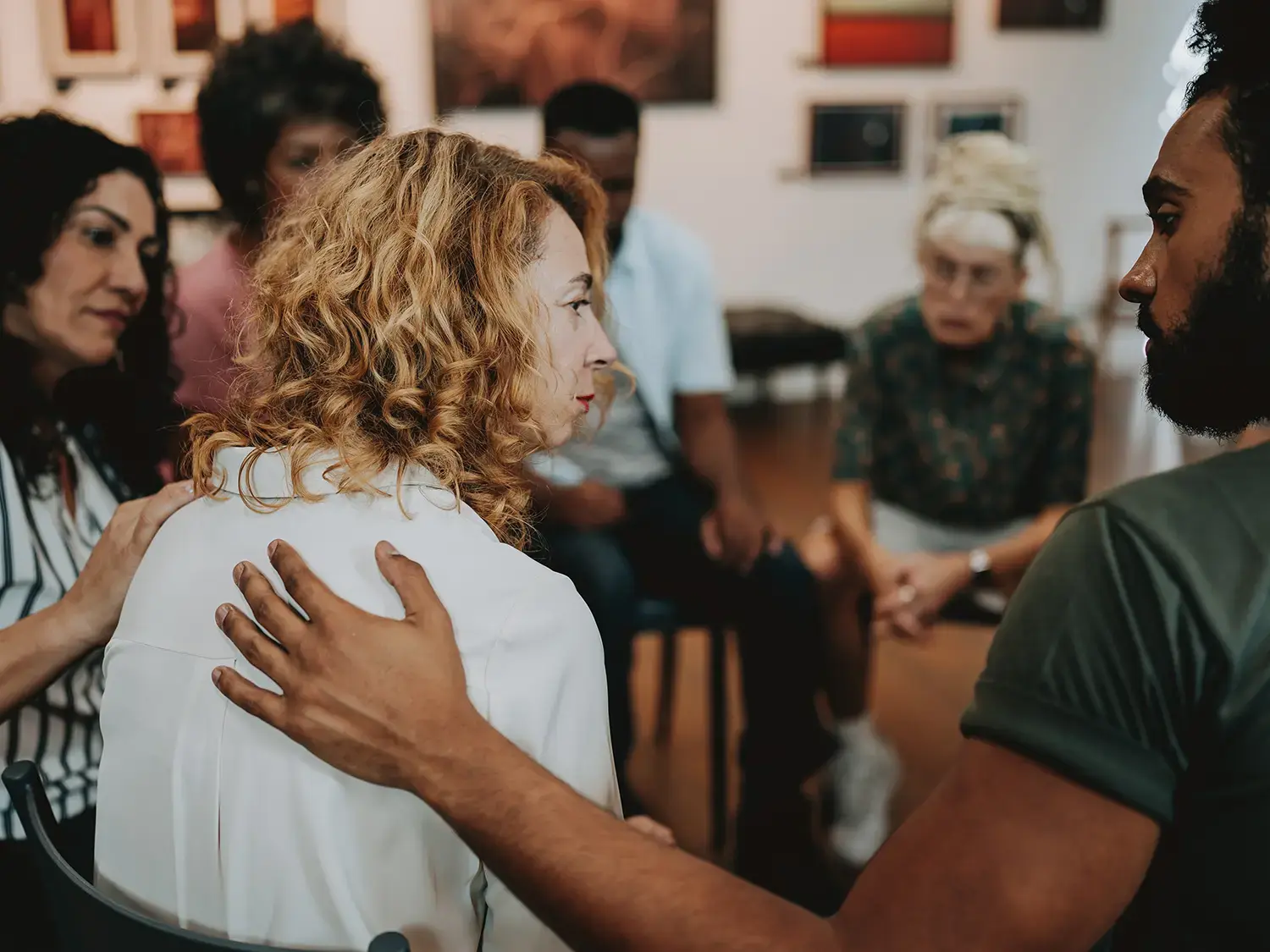
At Casa Bagus, once the meditation comes to an end, we sit in a circle, briefly exchanging thoughts on the experience. Although some participants talk of chakras and energy pathways, Pauwels goes light on the lingo. He says it was “a good shake” and that the energy is the room was “beautiful.” On other occasions, the energy might feel distinctly different, and such a shake is described as “difficult” or “heavy.”
Within the circle, people detail the personal stresses they feel have been released. Mentally, I’m a little overwhelmed by the whole experience. Yet I feel slightly less burdened by my worries and more inclined toward compassion. That feeling I had earlier of having a partially massaged, partially tense body has gone away.
I feel…relaxed.
A Minute’s Meditation
Think you don’t have time to meditate? Guess again.
Some St. Louisans insist they don’t have time for meditation. “When someone tells me he is too busy to meditate, I know he is just the person who needs it most,” Mizzou health psychologist Lynn Rossy writes on her blog. Here are five of Rossy’s tips, in her own words.
1. Do a three-minute breathing space. Developed by Zindel Segal, John Teasdale, and Mark Williams for their mindfulness-based cognitive therapy for depression, this short exercise is a perfect way to drop out of autopilot and into your thoughts, feelings, and body sensations. (Listen to the instructions here.)
2. Take a mindful walk. For three minutes, get up and simply walk. Don’t think about your worries, your projects, or your to-do list. Be aware of your body moving, placing your feet on the ground, the movement of your legs, the air against your skin, the muscles that are involved in moving you forward. Every time your mind wanders, bring your attention back to simply walking. Come back refreshed and more energized.
3. Do a short seeing exercise. For a couple of minutes, stand at a window and gaze outside. Take in the sky, the clouds, the sun, the rain, the trees, the flowers, the birds, the cars, the buildings, etc. Scan the environment and just notice the colors, the shapes, and the sizes. Be aware of the world around you. Breathe gently in and out and bring your curious awareness back to your surroundings. See what you discover.
4. When you are in a conversation with someone, let the other person be your object of mindfulness. When your mind wanders from what the other person is saying, come back to the words that they are speaking. When the person is finished talking, repeat back to the person what you heard them say so you know you’ve understood them. Notice how you get distracted and keep bringing yourself back to the person in front of you.
5. Break out of your routine. Nothing gets our attention more than novelty. The problem is, we fall into routine patterns and habits that lull us to sleep. In the morning, change what you eat for breakfast. Drive or commute a different way to work. Meet someone new for lunch. Take in a new activity—a new museum, store, sport, hiking trail, lecture, or restaurant. Make your life a little spicier, and notice how it brings you more fully into the moment.