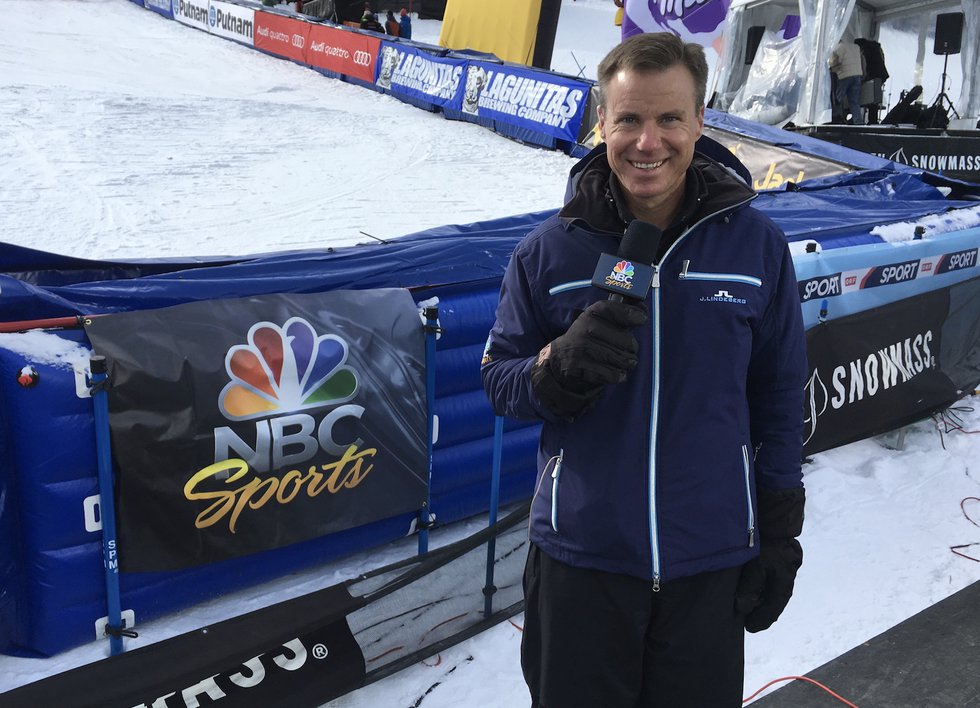
NBC sportscaster Steve Schlanger has had a busy schedule this year, between traveling back and forth from his St. Louis home and gearing up to announce his fourth Olympics: the 2018 Winter Olympics, which take place February 9–25 in PyeongChang, South Korea.
“I haven’t been home for a weekend in St. Louis since early October,” he says, “and I won’t actually be home for a weekend until the beginning of April, because right after the Olympics, I’ll come back, regroup for a couple of days, and then I’m doing the Paralympics as well.”
Are you a CITY SC fan?
Subscribe to the CITY Scene newsletter to get a fan’s guide to the pro soccer scene in St. Louis.
The veteran announcer takes it all in stride, though, admitting, “it’s just an incredibly busy stretch right now, but it’s been good.”
Hailing from Shrewsbury, the St. Louis University High alum has aimed to follow in the footsteps of Dan Kelly, Jack Buck, and Bob Costas, the men he, and most St. Louisans, grew up listening to. “Bob Costas had been a mentor to me over the years,” Schlanger says.
We recently caught up with Schlanger to talk memorable moments from his career (“I’ve had my foot run over by a car while conducting an interview”) and this year’s must-see events.
This is your fourth Olympics. What’s been your most memorable moment from the games? In my very first Olympics, I called the event that was the very first event that opened the Olympics for NBC. It was the road-cycling race in London. So, you know the Opening Ceremony had been the night before, NBC comes on the next day—boom—it’s the very first event. They made a big deal of it. Something like 10 million people were watching, and so that was a significant moment. In Sochi, I was calling biathlon, and I called the race where this Norwegian skier, whose name’s Ole Einar Bjørndalen, won a gold medal. He became the most decorated Winter Olympian of all time by doing that.
I like to, when I’m there, get out and at least experience something. So, in London, I went to the men’s gold medal soccer game between Brazil and Mexico, which was a great experience. And then in Sochi, I went to the US-Russia hockey game, which was the famous one that went to the shootout, and TJ Oshie scored several times at the shootout, and it was one of those iconic moments. I wasn’t working those but got to go to both as a fan, and they were both really cool.
Ever experienced any mishaps while announcing? The Tour de France provides all kinds of crazy. I’ve had my foot run over by a car while conducting an interview. Neither the car nor the interview stopped because of the incident. I’ve been stuck on top of a mountain in 100-mph winds, and I’ve accidentally walked into someone’s home when the family was in the middle of dinner thinking I was walking into our next hotel. Hotels come in all sizes over in Europe.
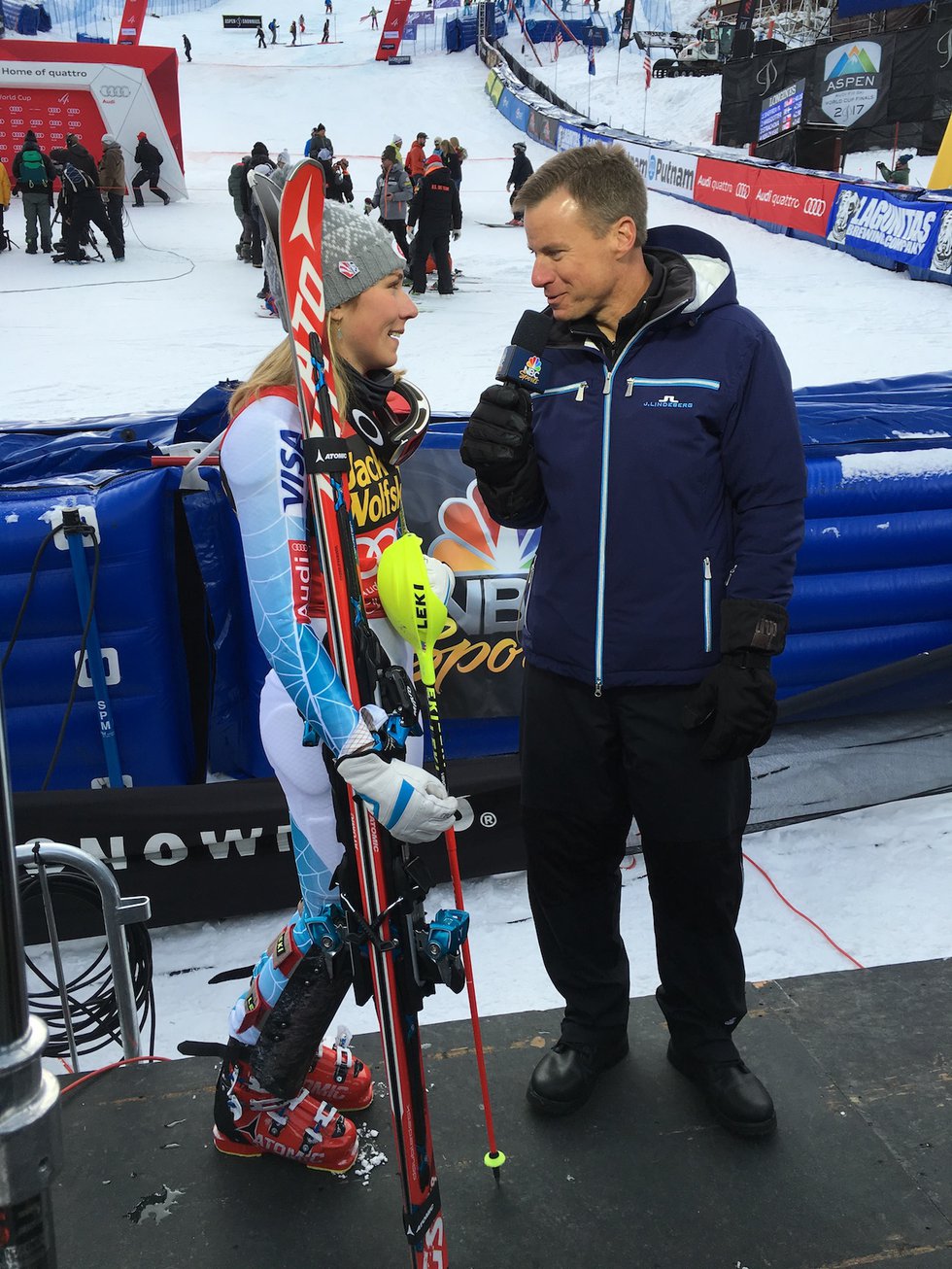
You’ve done this for a variety of sports. Is there anything you’re doing this year that will be a completely new experience for you? No, I’m actually repeating what I did in Sochi, between doing biathlon and some alpine skiing. So I’m actually familiar with everything… and a lot of the athletes are familiar from Sochi, so it’s not totally new.
You’ve done some qualifying events for this Olympics. Are there any standout athletes? The biggest stars for the US will probably be Mikaela Shiffrin, the alpine skier, and also Lindsey Vonn, the alpine skier. And then Nathan Chen in figure skating is also going to be a big one. Leading up to the games, I’ve called a lot of World Cup alpine skiing, so for these last few months throughout the season, that’s primarily what I’ve been doing is announcing the World Cup alpine races. And biathlon is the one event where the US has never medaled at the Winter Olympics, and this year, they probably have the best opportunity that they’ve ever had to do that.
What are some can’t-miss events this year? Alpine skiing, definitely, because they’re some of the biggest stars. Figure skating is always a big draw. And I would say biathlon. The reason I like it and a lot of other people tell me they like it is because it’s a very unique event—something you don’t always see and you probably wouldn’t find outside of the Olympic games. But when you get to the games, they’ll combine two drastically different skill sets in being able to ski all-out, get your heart rate really high, and then you have to come way down and be able to shoot at a target and pull that off. It has these moments of drama and suspense.
Final thoughts on the Olympics? I genuinely enjoy working on the biggest events. Alongside the Super Bowl and soccer’s World Cup, the Olympics represent the most significant stage in sports. It resonates in a way few events can. And even beyond sports, it is a massive television event. You know you are being watched by a huge national audience. As a broadcaster, that is an important responsibility.