Next month’s St. Louis mayoral election will be a repeat of four years ago, except this time Alderwoman Cara Spencer has all the momentum. In Tuesday’s primary, under the city’s approval system, more than twice as many voters cast a ballot for Spencer than for incumbent Mayor Tishaura Jones, who narrowly beat her in 2021.
Jones’ showing was enough to squeeze out longshot candidate Recorder of Deeds Michael Butler for the second spot, but she‘ll be fighting an uphill battle the next five weeks leading up to the general election April 8.
Get a fresh take on the day’s top news
Subscribe to the St. Louis Daily newsletter for a smart, succinct guide to local news from award-winning journalists Sarah Fenske and Ryan Krull.
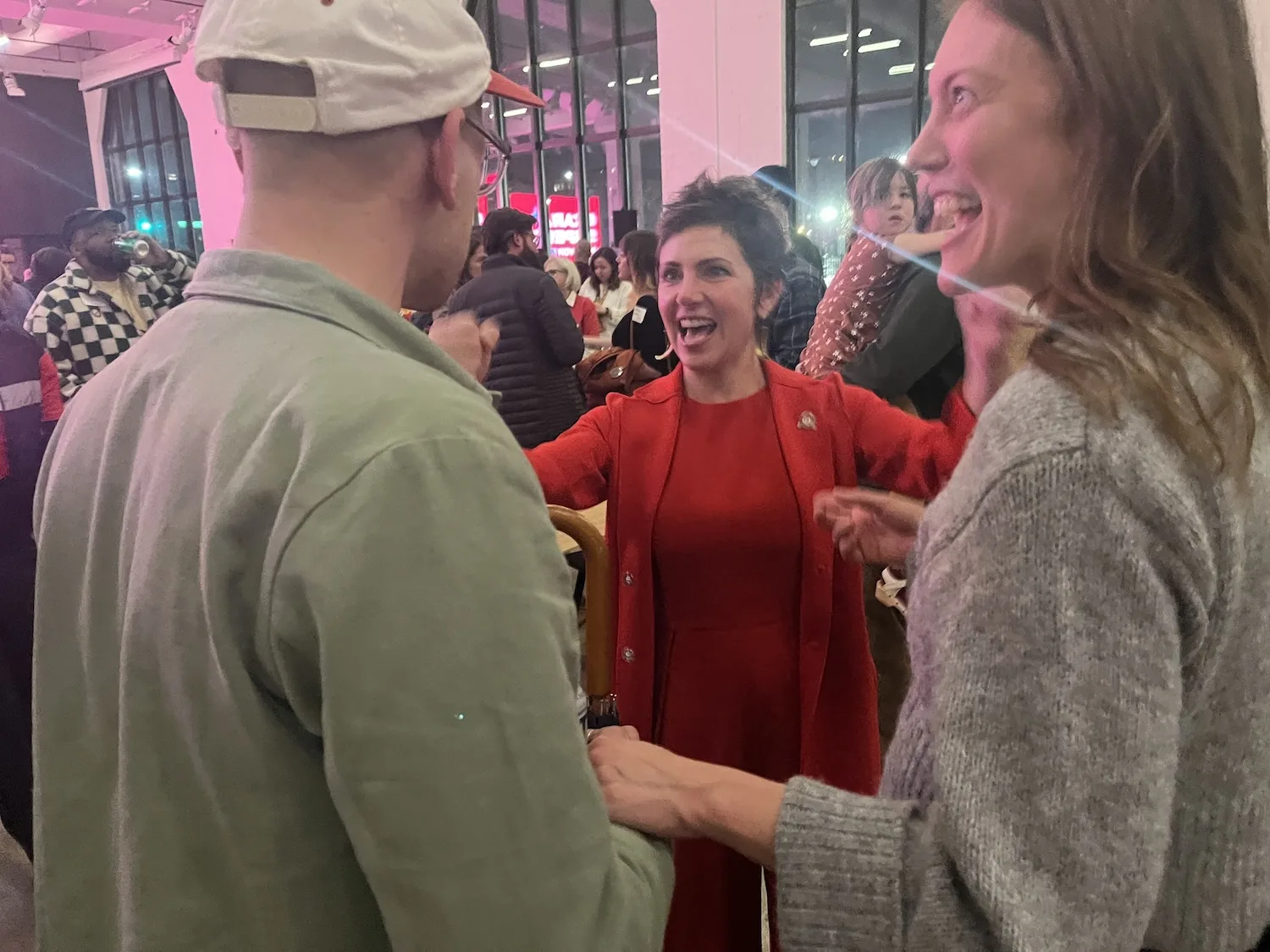
“If I was Spencer I’d be on Cloud Nine,” said one attendee at Spencer’s energetic watch party at the Post Building downtown. “You can’t make up for four years in five weeks,” he added, alluding to what he perceived as Jones’ tough prospects in the general.
In a very brief interview amid making the rounds and receiving congratulations among the 100-plus attendees at her event, Spencer told SLM she felt very good about the results, which she said “exceeded our expectations.” The unofficial vote totals, which dropped around 8:10 p.m., showed 68 percent of voters cast a ballot for Spencer compared to just 33 percent for incumbent Mayor Tishaura Jones. (Because voters can “approve” of multiple candidates, the totals are higher than 100.)
At Jones’ watch party at the Laborer’s Local 42 building in Midtown, the bad news started early. Around 7:30 p.m., absentee and early vote totals were released, showing 72 percent of voters casting a ballot for Spencer and only a hair above 25 percent doing so for Jones—putting the mayor less than one percent above Butler.
Aldermanic President Megan Green was at the Jones event. After those unofficial vote totals were released, showing Spencer’s wide victory, Green said that she still saw a path to victory for the incumbent. “I think a lot of the Butler vote will consolidate to the mayor,” she said, noting that the low turnout left Jones with a lot of room to grow. Just 17.8 percent of city voters turned out Tuesday.
Throughout the campaign, Jones argued that she’d begun her term amid an incredibly tough time for St. Louis. She took office as the COVID-19 pandemic entered its second year and the city dealt with a spike in violent crime. She’s been making the case to voters that she brought crime down, improved basic city services like 911 dispatch and that, thanks in part to a windfall from Joe Biden’s American Rescue Plan Act, the city was on the cusp of a renaissance.
Spencer’s campaign centered on the idea that city services are still woefully lacking, citing the city’s botched response to the January snowstorm as Exhibit A. As for the federal windfall, media reports of ARPA funds headed for questionable hands as well as outright (alleged) ARPA-related grift gave Spencer ample fodder to argue that Jones had bungled that front as well.
Leaving Spencer’s party around 10 p.m., Benton Park resident Lori White said that Spencer had been on her radar since she first became an alderwoman a decade ago. She said she was really impressed with the way Spencer helped businesses around Cherokee Street, as well as the way Spencer adroitly mixed practical solutions with “loftier” progressive goals.
“Cherokee Street isn’t the same as downtown,” she said. “Except maybe it is. I’m ready to see Cara give it a shot.”