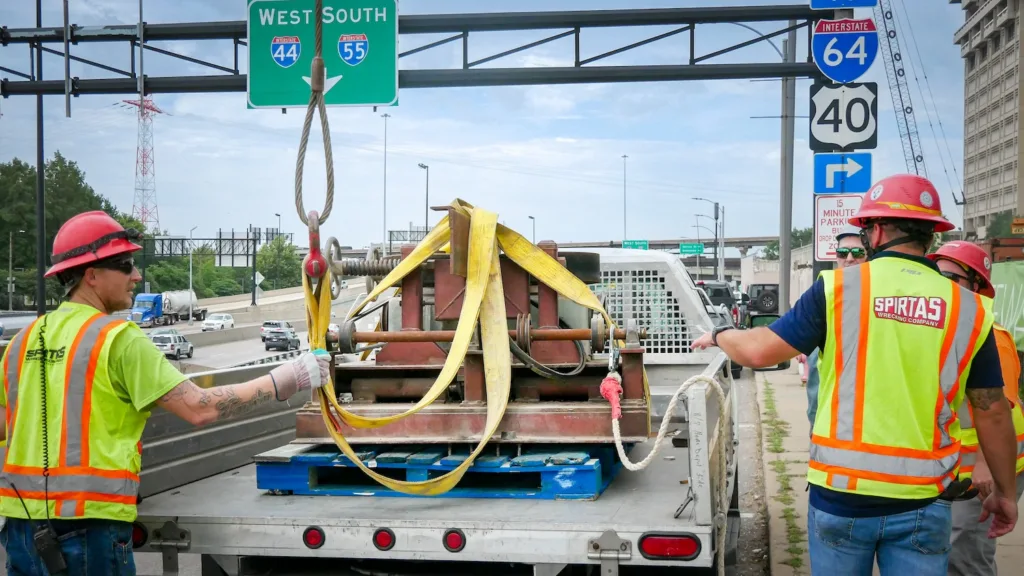
More than 10 years after last powering the revolving restaurant atop the Millennium Hotel, the north tower’s 1,500-pound axle came down this week. But the hulking piece of machinery isn’t headed for the scrapyard: City Museum has agreed to give it a second life.
Ainsley Worthley, communications & marketing coordinator for the Gateway Arch Park Foundation, says the organization was determined to get a piece of the two-tower, long vacant hotel donated to City Museum. As the nonprofit has been supervising hotel demolition on the road to its redevelopment as a $670 million mixed use project by Cordish Companies, it kept an eye out for “something that’s meaningful, something that has memories attached to it,” in Worthley’s words.
Get a fresh take on the day’s top news
Subscribe to the St. Louis Daily newsletter for a smart, succinct guide to local news from award-winning journalists Sarah Fenske and Ryan Krull.
At first they wondered if the hotel’s chandeliers might be just the thing, but they proved too delicate. When the company handling the demolition, Spirtas Wrecking Co., then encountered the rotational system that had powered the Top of the Riverfront restaurant on its slow-moving rotations, the hulking axle—three feet by three feet, mounted on a steel plate—seemed not just interesting, but more in keeping with the industrial detritus that City Museum specializes in preserving.
Maria Cassilly, City Museum’s chief archivist and special exhibits and programming manager, acknowledges that the quirky downtown museum is frequently solicited by people with random items, many of which it simply doesn’t have space for. A collection of grandfather clocks from Texas, for one, was politely declined. This was different.
“It’s something that has a lot of history in St. Louis, which is really important and a big selling point for us,” she says, adding, “One of the things that’s great about City Museum is that since we’re not a traditional institution, it gives us that freedom to collect things that a traditional art institute or history museum, they might not be interested in or have space for. We’re really excited about it.”
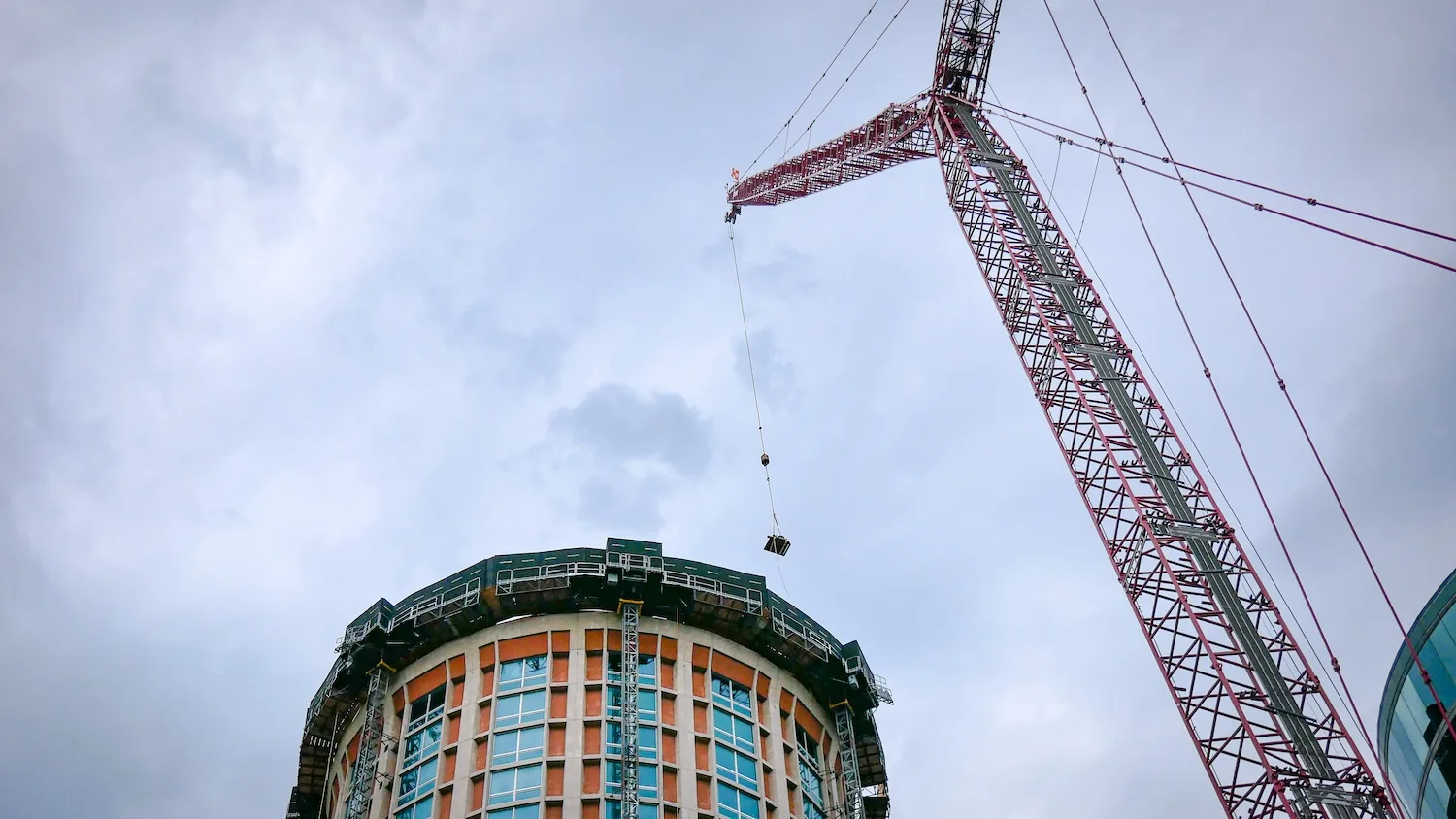
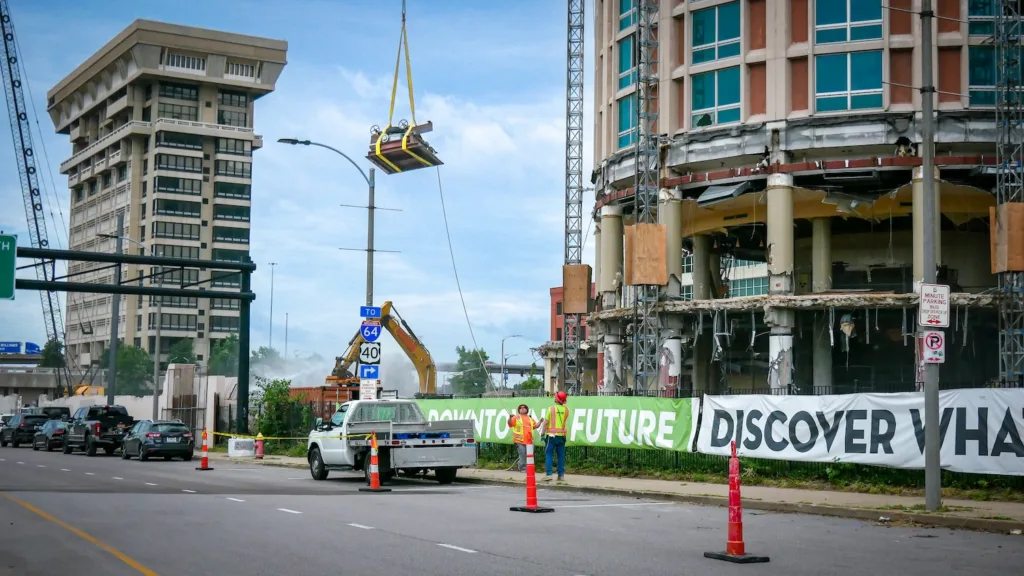
Worthley admits to holding her breath on Tuesday as the axle was lifted from the north tower and gently lowered 28 stories to the ground. “We all gathered at the base of the hotel, and the piece was lifted out via a huge red crane and landed directly on their flatbed,” she says. “It was a perfect delivery.”
The axle is now cooling its jets in a storage area of the museum as staffers determine where it will be displayed and—equally complicated—how to get it there. (Says Cassilly, “Sometimes things are very heavy, so we have to be a little strategic about where we end up putting them and getting them around.” The museum’s giant pencil had to be cut in half.)
Revolving restaurants were very much a thing in the U.S. in the final third of the twentieth century, from Seattle to Phoenix to Niagara Falls, and Cassilly envisions a display that will contextualize the role the axle played. “We want it to be part of a larger exhibit about these pieces that operated these icons of St. Louis,” she says. That probably won’t be until next year, she warns, but what’s one year when you’ve been sitting moribund for a dozen or more?
For Ryan McClure, executive director of the Gateway Arch Park Foundation, the axle’s removal caps off a busy few weeks as the roof has been removed from the north tower and demolition crews take the tower apart from the top down. He loves that the work is playing out even as the Cardinals are playing just around the corner; the project’s crane is extremely visible on the city’s skyline.
The nonprofit is hoping that the axle’s fate will bring more attention to its story collection project, which asks locals with memories of the Millennium Hotel to share them. But McClure believes the demolition has symbolic importance beyond that.
“We want to instill hope in what’s happening in downtown St. Louis, that this building that has been for the last 11 years a symbol of what’s wrong with downtown should now be a symbol of what’s right, because we’re taking matters into our own hands,” he says. “We’re making big bold moves as a community to say, ‘Enough is enough. We’re not going to deal with a half-a-million-square-foot abandoned hotel next to one of the world’s most iconic structures. We’re not doing it anymore.”