If there’s one thing Mayor Cara Spencer wants to change about development in St. Louis, it’s the relationship between local government and the people pursuing projects.
Speaking this week at an event hosted by the Missouri Growth Association, Urban Land Institute’s St. Louis chapter, St. Louis REALTORS, and St. Louis Commercial REALTORS, the mayor acknowledged the current process for pursuing developments in the city can be arduous—and said it’s one she’s keen on improving.
Get a fresh take on the day’s top news
Subscribe to the St. Louis Daily newsletter for a smart, succinct guide to local news from award-winning journalists Sarah Fenske and Ryan Krull.
“I want St. Louis City Hall to be a place that says ‘yes’ by default,” Spencer says. “At the end of the day we want folks to feel like when you walk into City Hall, we are there to help you get to ‘yes.’”
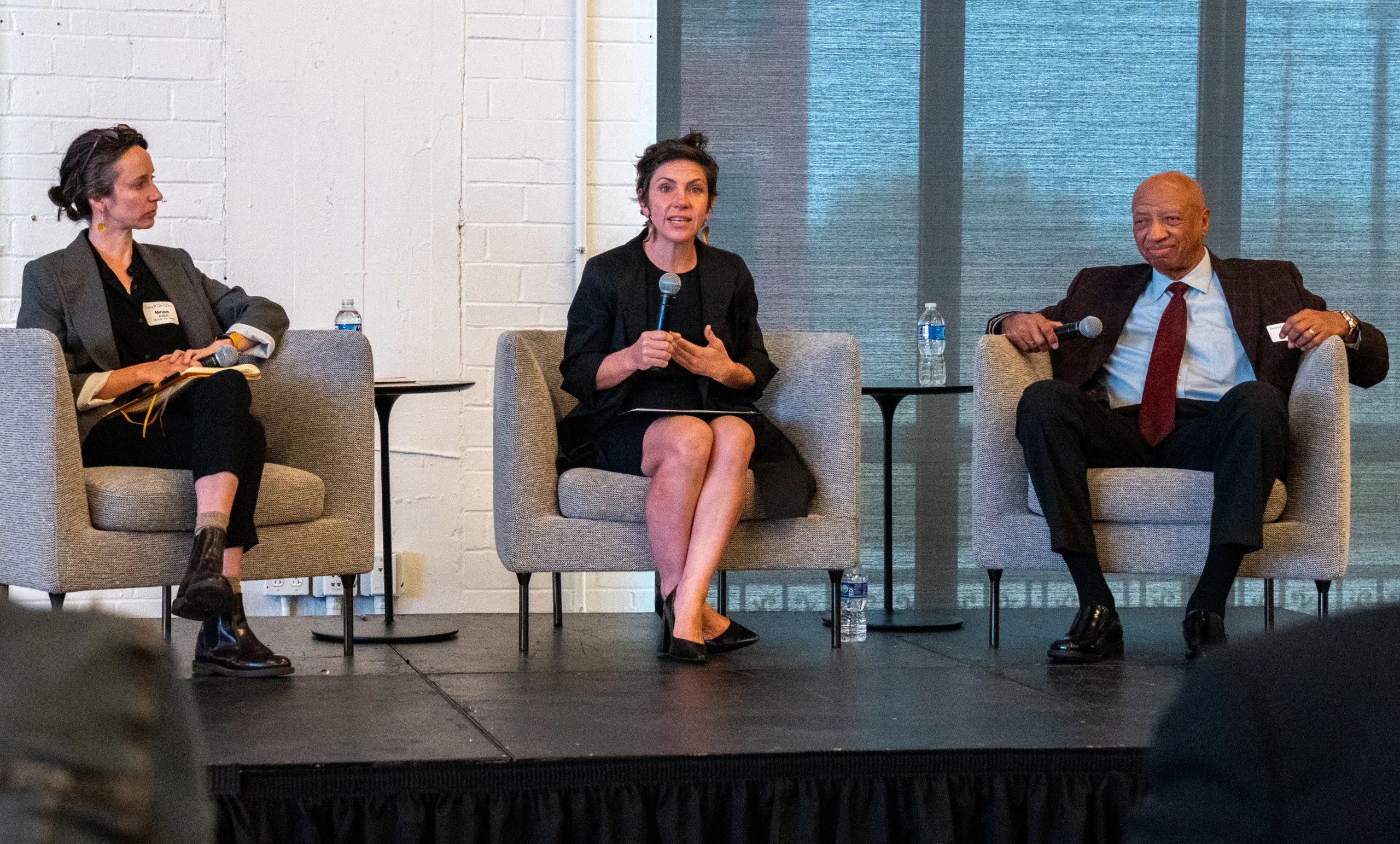
The sentiment drew robust applause from hundreds of attendees representing different parts of the local development community, including architectural and construction firms. Over the roughly hour-long discussion, which also featured city planning executive Miriam Keller and St. Louis Development Corporation interim president and CEO Otis Williams, Spencer laid out some of the challenges developers face when pursuing local projects and her ideas for fixing them, as well as other ways the city can offer support.
One challenge Williams outlined is when the city’s requirements for developers change throughout the process of pursuing a project, whether by a piece of new legislation or otherwise.
“It’s that uncertainty that comes along the way,” Williams says, explaining there’s an imperative to create a development framework that is consistent and known.
Spencer reflected this viewpoint, adding it’s important for leadership in the city to demonstrate predictability to entice people to take a chance on investing in St. Louis.
“When you’re investing in the future of a building, in the future of a plot of land, you’re investing in the future of the city,” she says. “I know that’s a risk, so it’s the fundamental job of the city to be the structure, the firm underpinning of what you’re making those investments in.”
Spencer calls it a philosophical approach that’s a departure from the past. One way the city is looking to change this dynamic is through the update to its decades-old zoning code, guided by its recently refreshed strategic land use plan.
“For a long time we’ve been in a place where the development process is a matter of navigating zoning rules rather than having zoning be supportive of developments,” Keller, the city’s planning executive, says.
Projects today can require dozens of variances to pass muster under the city’s code, which dates back to the 1950s, she says. The zoning update seeks to flip that around by adopting upfront rules that are predictable and act to support development rather than impede it, Keller says.
And not just for large-scale developers: Keller says they should also help someone looking to open a small business. Keller argues interacting with City Hall should be a positive experience rather than “the ‘final straw’ experiences that a lot of people have” when seeking permits.
“We need to make our city work for the people who are here, who invest here,” she says.
Spencer calls the zoning update the “transformational underpinning of how permitting happens in the city,” but acknowledges more must be done to streamline the permitting process. The aftermath of May’s devastating tornado illuminated some areas where red tape at City Hall was cumbersome, prompting an executive order from Spencer to expedite permit applications and relax rules governing historic districts.
But it goes beyond that, Spencer says.
“We’re in the process right now and have been for the past couple of months to get our building permits up online,” she says. “That will be the first time in the city’s history that you can apply for a building permit online.”
The city is also making a push to bring back rapid permitting, which Williams explains is a method in which all the departments with a say over a particular project come together to review it. It’s something that existed in previous mayoral administrations, most recently under former Mayor Lyda Krewson, but fell by the wayside in part because of the pandemic, subsequent staffing shortages, and new department heads who didn’t extend the practice.
That system, he argues, could help developments gain the necessary approvals in a matter of days versus the months it can take now.
Williams and Spencer also expressed the need for more housing in the city—and not just affordable housing. “I’m here to tell you that we also need market-rate housing,” Williams said, drawing raucous applause from attendees.
Spencer, for her part, adds it’s about removing barriers to increasing density, pointing to recent legislation allowing auxiliary dwelling units, or carriage house-style residences, as a way to increase the population base and thus the tax base.
Another area where Spencer says the city can encourage development is by creating better public infrastructure, including roadways and sidewalks but also public transit too, Spencer says.
“We need to make our streets safer, and we need to make the development work that you all want to do in the city of St. Louis more feasible by taking some [of this] responsibility on,” she says.
Some projects have been completed, such as improvements to 7th Street downtown that added a protected bike lane, or are getting started, like the two-way protected cycle track now underway along Tucker Boulevard. Other streets across the city have gotten curb bumpouts and other traffic-calming features this year.
Still, the work is expensive and not always consistently funded, Spencer says.
“The reality is we don’t have a reliable funding stream for that infrastructure for as long as I’ve been in city government,” she says, adding the deficit of roadway maintenance runs into the millions of dollars each year.
Even with a recent decline in the number of projects happening on an annual basis, Spencer says she’s excited for the city’s future.
“The regional collaboration here in the St. Louis region is at an all-time high,” she says. “The desire to cross geographic political boundaries is astronomical.”
Spencer says there’s a willingness from Gov. Mike Kehoe and elected representatives from across the state to not just talk over the phone about potential state incentives for development projects in St. Louis, but to actually have those discussions here. Spencer says she expects to have sidebar conversations on these topics with state officials at the upcoming gala hosted by Arch Grants.
“We have an orientation with our political partners in the state level that the city really hasn’t seen in a very long time,” she says.
Spencer left with a single ask for attendees: “Get excited about St. Louis. We are really trying to change the underlying philosophy of how we build here. This idea of saying ‘yes’ and being a place where taking a risk is supported.”
You may also enjoy this episode of The 314 Podcast: Mayor Cara Spencer reflects on first eight months in office