Editor’s Note: This article went to press shortly before the impact of COVID-19 began to ripple through St. Louis, temporarily closing many downtown businesses and attractions, in addition to affecting community events and conventions. While the long-term impact of the coronavirus crisis remains to be seen, this note and a subsequent letter from the editor reflect how St. Louis has endured countless challenges over time, finding new ways to move forward as a community.
On a crisp evening last fall, my wife and I climbed into one of the St. Louis Wheel’s heated gondolas with our 3-year-old daughter and took a ride 200 feet above Union Station. From the top of the wheel, you could see downtown’s potential.
Get a fresh take on the day’s top news
Subscribe to the St. Louis Daily newsletter for a smart, succinct guide to local news from award-winning journalists Sarah Fenske and Ryan Krull.
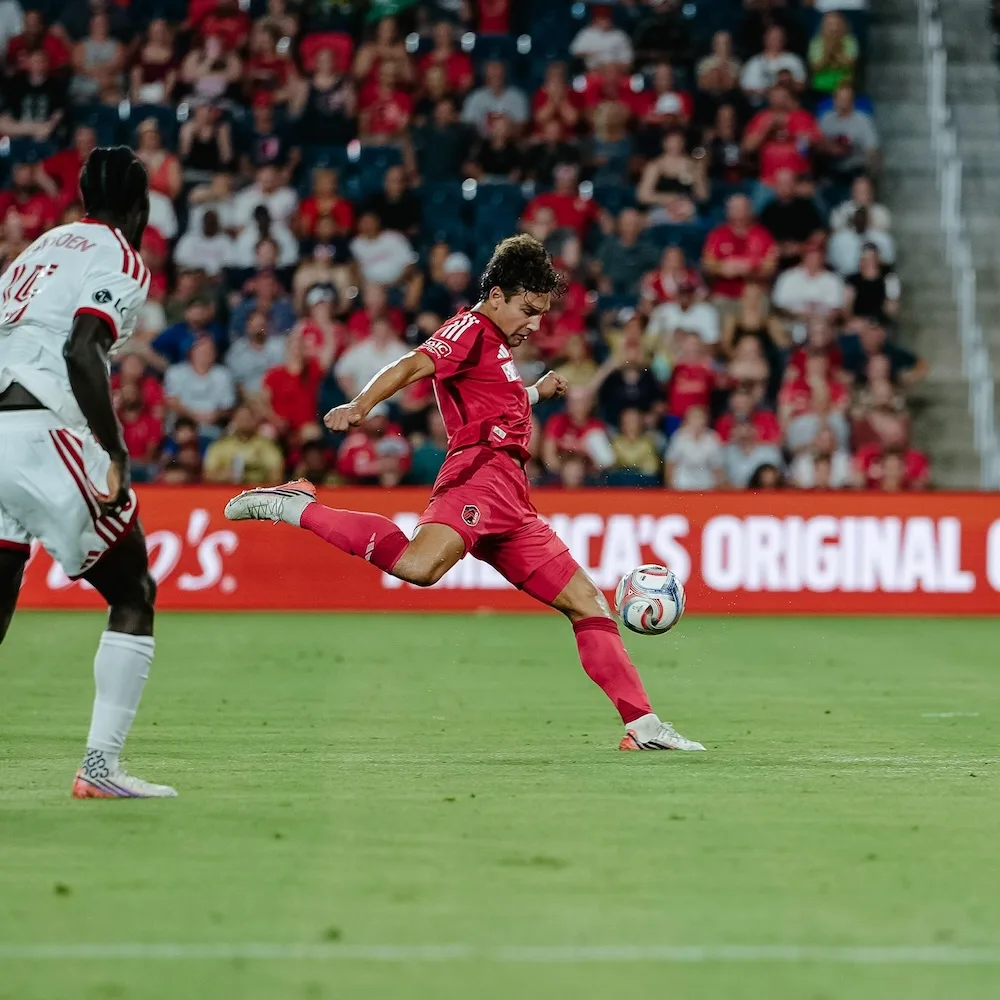
At the time, the St. Louis Aquarium was on the cusp of completion. A block northwest, just past Market, was the site of the future home of our Major League Soccer team, a planned 22,500-seat stadium, and surrounding restaurants and retail. To the east, beyond the neon green of the Enterprise Center and the elegant Stifel Theatre, One Cardinal Way was taking shape above Busch Stadium, and the nearby PwC Pennant building was preparing to open—the first new Class A office building downtown in 30 years.
In the distance, St. Louis’ iconic landmark gleamed. The grounds below the Gateway Arch had recently undergone a years-long overhaul, yielding a minimalist entrance to the new museum that perfectly mirrored Eero Saarinen’s visionary creation. A manicured stretch of green now connected the Arch to the rest of the downtown, including the recently revived Kiener Plaza and imaginative Citygarden.
Then there were the smaller gems, businesses that had sprouted up across downtown. My wife and I had recently met for lunch at Union 30 in Hotel Saint Louis, and she’d joined friends for an event on the rooftop of The Last Hotel. Nearby, some of the region’s most colorful dining concepts—Hi-Pointe Drive-In, Gringo, Sugarfire Smoke House—flanked the National Blues Museum and America’s Center, the latter of which is poised for its own expansion.
Nearby, T-REX was preparing to open its new Geosaurus geospatial resource and innovation center, a hub to connect the National Geospatial-Intelligence Agency’s forthcoming western headquarters to local corporations, startups, and universities. And Square had announced plans to transform the former St. Louis Post-Dispatch building into its own forward-looking destination.
At the same time, much work remained. A few weeks later, the Design Downtown STL initiative would host an open house in which it shared about the neighborhood’s history, progress, and residents’ concerns, including parking and infrastructure, vacant buildings, the perception of crime (largely because of car break-ins, like other major downtowns), and the need for more housing, public spaces, and street activity. The goal of the open house: to build on the new momentum and gather ideas to create a more cohesive, vibrant neighborhood.
Of course, we’ve been here before. Over the years, there have been grandiose proposals to improve downtown, some gaining more traction than others. We can certainly build buzz and create green space, but lasting change requires buy-in from residents and small business owners. There are no easy answers to some of the region’s most complex issues—education, housing, crime, employment—which ultimately affect the neighborhood’s long-term success. Downtown may never again be the same as it was a century ago, but as senior editor Nicholas Phillips notes, it is finding avenues on which to reinvent itself, both its historic institutions and its modern additions. In so many ways, it remains the beating heart of the community.
So on that fall night, as we were momentarily suspended atop the Wheel, the neon lights filling my daughter’s bright-blue eyes, I couldn’t help but gaze toward the Arch and hope for a brighter future.