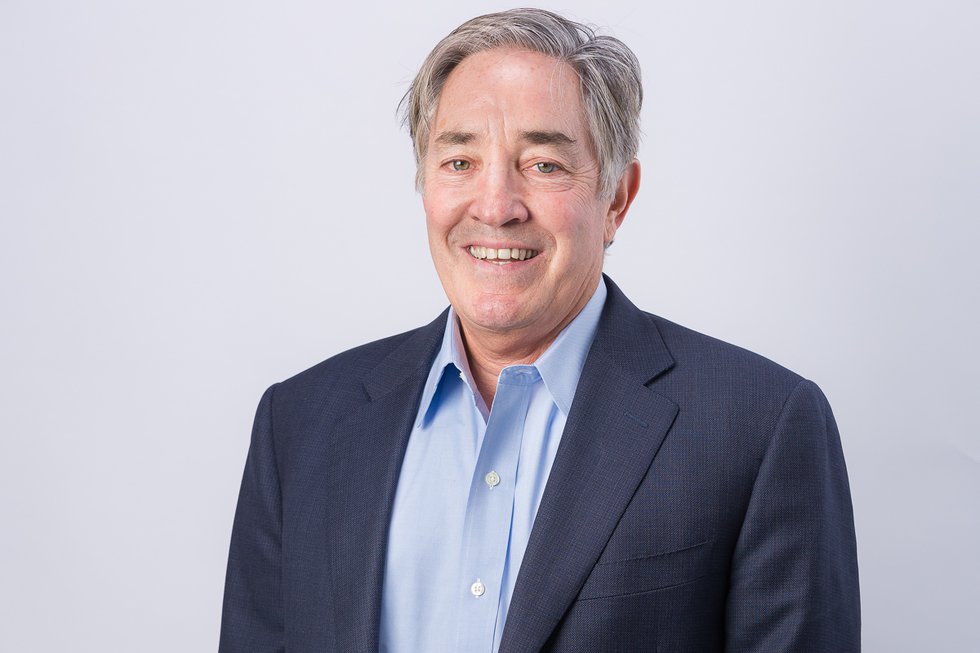
Ray Hartmann, who is rarely at a loss for words, has been quiet lately. Ever since he quit Donnybrook, the Nine PBS show where he held court for 37 years, in order to run for Congress, his Substack has gone silent. He hasn’t been issuing press releases. Even his social media has been fairly muted.
But can you blame the guy? First, there was all the drama around whether to replace Joe Biden at the top of the Democratic ticket. Then, after the Democrats did just that, the Cori Bush/Wesley Bell slugfest in Missouri’s First Congressional District kicked into high gear (and to a resolution that left both sides battle-scarred). No one wanted to talk about Missouri’s Second Congressional District—much less talk to the former journalist with the seemingly quixotic quest of challenging the well-funded and well-insulated Ann Wagner.
Get a fresh take on the day’s top news
Subscribe to the St. Louis Daily newsletter for a smart, succinct guide to local news from award-winning journalists Sarah Fenske and Ryan Krull.
“I could have set myself on fire on Market Street in July, and that wouldn’t have been a news story. It’s true, OK?” Hartmann says over coffee at Fiddlehead Fern Café in the city’s Shaw neighborhood on a recent Wednesday, a day it keeps threatening to rain but doesn’t. “Now that we’re the biggest race in town, my job is to get the media to understand I have a real chance to win this, and there’s no reason to assume that I don’t.”
Does he have a real chance to win? He’s certainly the underdog. He says he’s raised about $400,000 to Wagner’s $3 million. He’s also never run for office before. But he has something that no opponent of Wagner has had in a long, long time: Thanks to Donnybrook, a perhaps surprising ratings winner even in its fourth decade, he’s as well-known as she is. And he’s convinced that by leveraging his name and keeping the focus relentlessly on the issues, he can remind her district that she (he believes) does not have its best interests at heart.
To that end, he points to the ongoing scandal around Coldwater Creek, where federal contractors dumped, or otherwise lost track of, radioactive waste from the Manhattan Project, where it’s now seeped into the soil and creek where a generation of kids played—and where many residents now see a link between the unusual diseases they’ve suffered and the toxic materials they were indisputably exposed to. When the Senate passed a bill to add people in the St. Louis area into a longstanding program compensating those exposed to radioactive waste, Wagner publicly questioned the cost, leading fellow Republican Josh Hawley to blast her actions as “shameful.”
Hartmann is no less vehement on the subject six months later, arguing that while Wagner later changed her tune, she didn’t do nearly enough.
“The big key, and I think one of the reasons the bill never passed, is she did not pick it up as a veteran, respected member of the Republican caucus and advance it. She said, ‘Cori Bush should lead the way.’ Yeah, in the Republican Congress. Whatever you think of Cori Bush strategically, yeah, a member of the Democratic Squad is not usually who you turn to to get something passed in a Republican Congress.”
(Says Wagner’s spokesman, Arthur Bryant, “Ann Wagner has fought forcefully for passage of Senator Hawley’s legislation to expand the RECA program, including using her position and influence in the House Majority to stop an effort to simply extend the current law, an extension that would have killed efforts to expand the law for affected St. Louis region residents. She will continue to advocate for a solution that benefits her constituents in St. Charles County and others throughout St. Louis.”)
Interviewing Hartmann is akin to jousting with him on Donnybrook (and, in full disclosure, I would know: In addition to editing his column at the Riverfront Times for two years, I was a frequent guest panelist during his Donnybrook tenure and have now become one of the two people filling his seat). He’s quick with zingers, and while they often have the feeling of having been workshopped, the focus is consistently on policy. Indeed, trying to talk to Hartmann about the campaign can be an exercise in frustration: He genuinely wants to talk about the issues (and can’t seem to help himself from looping back to them), even when the question is about campaign tactics.
Ask about fundraising, and he’ll spend all of 10 seconds on the major bump he saw after he won the primary against a little-known opponent before he launches into an analysis of why he’s getting support from labor, which he says has to do with his support for paid family leave while Wagner just wants to let workers borrow from their 401Ks to go off the payroll. Ask for his thoughts on Bell toppling Bush in the neighboring First Congressional District, and he’ll briefly offer praise for Bell (“I think Wesley Bell is gonna be a real good member of Congress”) before he’s back to people exposed to radioactive waste and then the gerrymandering of Wagner’s district and then former President Donald’s Trump “cult of personality.” He has a lot of thoughts to share.
What he doesn’t spend much time on is his biography, although it’s an interesting one. Before he became the designated liberal on Donnybrook, Hartmann wrote speeches for U.S. Senator Kit Bond, a Republican, and then started the Riverfront Times at age 24. As he’s told the story, it was something of a community newspaper for people who worked downtown, but he connected with people who’d started alt-weeklies in other cities as anti-war, anti-establishment alternatives to mainstream media, and the RFT soon found its voice as a thorn in the side of the St. Louis Post-Dispatch and regional boosters who wanted to spend tax money on big projects. Twenty-one years later, he sold the publication for millions of dollars and then resurrected St. Louis Magazine, where he served as publisher (and columnist) before selling it in 2019. He spent four years hosting a radio show on KTRS and writing a column for the RFT and then Substack before, with both of his kids now heading to college, throwing his hat into the political arena.
In many ways, he sees his campaign as an extension of what he’s been doing for years: talking about the issues and trying to make St. Louis a better place. After years of sharing his every opinion each week on public television, he’s become one of the more recognizable figures in St. Louis, and he’s used to people buttonholing him at the grocery store to talk about his stance on this issue or that. That public life has given him unique preparation for a different sort of public profile. Everywhere he goes, he suggests, is something of a town hall. “It’s almost a mantra that people come up and say, ‘I don’t always agree with you’—as if anyone should always agree with me—but, ‘I don’t always agree with you, but I like your show. I like the way you talk,’” he says. From there, it can be possible to find common ground.
Wagner, he says, isn’t having those interactions, and that’s one reason he believes her initial response to the radioactive exposure bill, in which she questioned the cost of adding St. Louis-area survivors, seemed so out of touch. “There’s a wide perception, I find, that Ann Wagner has not done a good job as a congresswoman in one particular respect, which is being accessible and responsive to her voters, OK?” he says. “The box score is pretty clear: 12 years, no debates, no public town halls.” (Says Bryant, “I think Ann’s opponent is confusing Kamala Harris, who hasn’t done a serious interview since becoming the nominee, with the congresswoman, who regularly does broadcast and print interviews and is available to the public.” He notes she’s hosted public “Office Hours With Ann” beginning in 2019 and also “did virtual and tele town halls during COVID.”)
Hartmann is hoping to change that. He’s telling local media outlets that he’ll debate anywhere, any time, if they’re willing to play host and invite Wagner. He sees the invitation as the first step in ramping up a campaign that he’s certain should be the talk of the town in the next two months.
“This is in many ways a perfect storm,” he says, ticking off all the reasons this could be his year. It’s not just whatever perception people have of Wagner. It’s that, theoretically, this is a rare district that could be in play, even if it’s Wagner’s to lose. It’s that Republicans suddenly have a notable enthusiasm gap as Vice President Kamala Harris’ campaign has taken off. It’s that reproductive rights are on the ballot in Missouri this November, and that has consistently helped Democrat turnout (and the turnout of younger voters) in other red states.
And, of course, in his telling, it’s also his own profile, his own connections with voters. He can tell you that, due to redistricting, parts of Franklin County have only been represented by Wagner for two years. Those same areas had access to him on Nine PBS for decades.
“I’ve been in people’s living rooms for 37 years, and people know me, and what they know about me is I say what I think,” he says. “I say what I believe the truth is, and I don’t spin it, and I haven’t changed now, and so I think that’s as important to people as issues.” In November, the world will see if he’s right.
Hear from Ann Wagner’s 2026 election opponent, Fred Wellman, on The 314 Podcast (recorded February 2026).