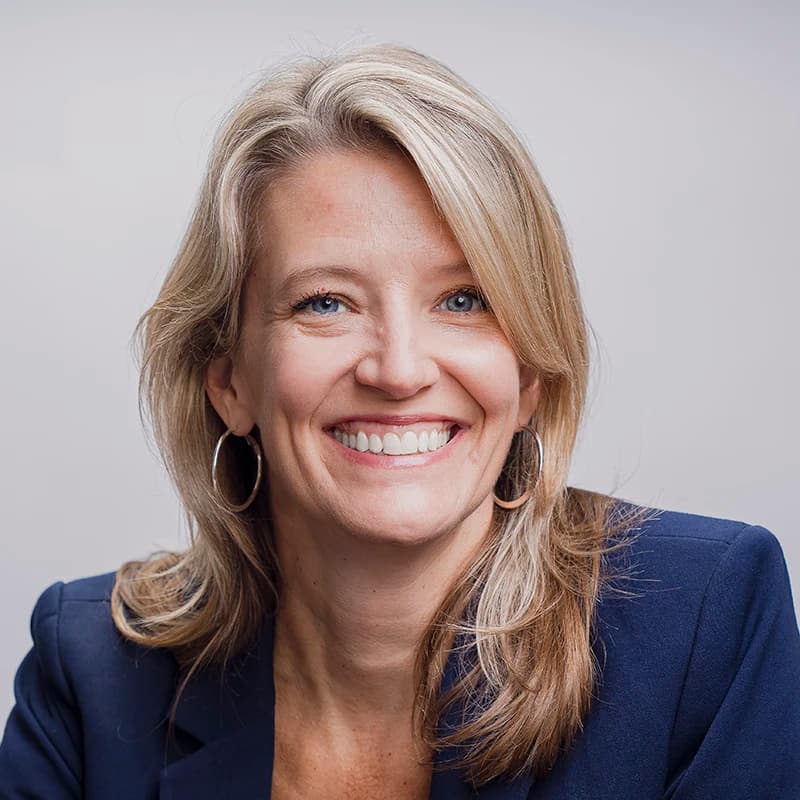
Margaret Welch has been looking for one thing among the candidates for St. Louis mayor: a vision. A native St. Louisan, Welch moved home in her 20s when she couldn’t find the job she wanted on the coasts and has tried to remain bullish on the region where she spent the next three decades. Seven years ago, she moved from Clayton to the Skinker-DeBaliviere neighborhood, making a commitment not just to the region, but to its marquee city.
In her time back, as St. Louis has grappled with cycles of disinvestment and urban renewal, she’s felt various mood shifts. “Throughout the 30 years that I’ve been back here, I have been excited and energized, and I’ve been despondent,” she says. But lately, she says, it feels like the city is stuck in neutral, trying to figure out a way to accelerate but not quite getting there.
Get a fresh take on the day’s top news
Subscribe to the St. Louis Daily newsletter for a smart, succinct guide to local news from award-winning journalists Sarah Fenske and Ryan Krull.
And that’s where, for her, the vision part comes in. “You know, you can’t run for mayor of a major metro or a small town and not be committed to patching potholes, picking up trash, and public safety,” she says. “But what ignites excitement and enthusiasm and, frankly, confidence is saying, in addition to these core functions, I’m going to do this, or I see St. Louis doing this—fill in the blank.” She thinks about Vince Schoemehl’s slogan back in the late 80s: For a better St. Louis. It’s been too long, she thinks, since St. Louis had a unifying vision like that. She’s done with clapbacks and second-guessing; she wants someone with an idea of how St. Louis can be better, and how to get it there.
As Nine PBS and SLM talked to voters in focus groups and solicited online feedback for our Citizens’ Agenda, the idea of vision came up in various ways. People wanted to know how mayoral candidates would make St. Louis the kind of place that would attract young people who might otherwise move to Denver or Austin—or older ones ready for something more exciting after raising kids in Clayton or Creve Coeur. They wanted to know how candidates would help keep young families and how they’d deal with the inequities on the North Side.
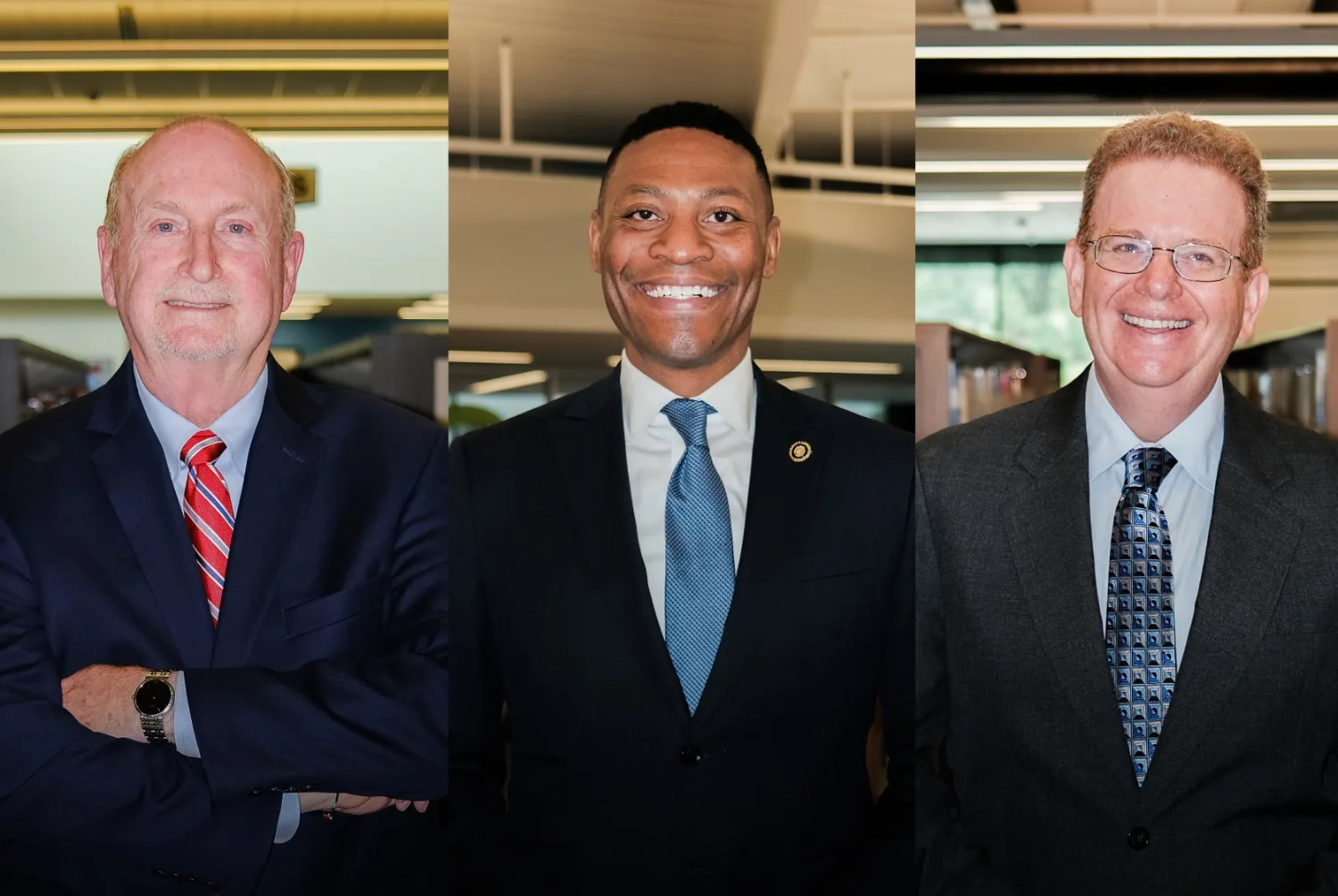
So we asked all four candidates the same question. What is their vision for a better St. Louis? We’ve reprinted each of their answers in its entirety. Maybe, like Welch, they’ll help you decide your vote before the March 4 primary.
Michael Butler: When I think about a big vision, I think what I hear first is that we’ve got to take care of our home. But the big vision, while we’re chewing gum and we’re walking towards something, is I want to improve our riverfront. I think the big product that folks want to see is our riverfront be a space that people want to go to, a retail space.
There are customers that come from all over the region, and there are projects that we can support north of the Arch and south of the Arch that improve our riverfront for housing, for retail, and a place that people can live, work, and play. Improving the riverfront will be something that we want to support with funding so that four years from now we can say, “Wow, we have something nice and new that we can point to that the city administration has done.”
Cara Spencer: My vision for St. Louis looks like a million things. You know, I think about cities that inspire me, and the first ones that come to mind would be Berlin in the early 2000s.
You had a city that was so widely and very, very, very concretely divided and destroyed in many ways, and really the rebirth, capitalizing on their tech, their creative communities, and [they] really rebuilt that city from the ground up in a very inclusive way.
Cities like Indianapolis through the ‘70s coming back and reuniting with their county, and cities like Detroit with a downtown that is quite honestly flourishing, capitalizing on the private investment of some of their major, major corporations, and rebuilding their downtown, that is really, really, really inspiring and impressive.
And I think St. Louis, harnessing some of our biggest businesses, the folks that have the most to invest, concentrating that in our downtown and in our city in a constructive way, is my vision for St. Louis. It’s a downtown that’s flourishing, that has residents from all over the world and all over the region visiting on a regular basis that are telling the story about St. Louis, including our downtown in a constructive way, and engaging our secondary educational opportunities. We have more top-notch universities than almost any city in the world, and we are educating kids here, providing the best education that is available to humankind, and these folks are leaving. Taking the concerns of the universities and their students, figuring out how to ingrain them into our communities, harnessing that enormous, enormous brainpower that we’re producing here, and pulling it back into our communities is my vision for St. Louis. But it’s one where residents trust our city, where city services are delivered on a regular and reliable basis, and one in which we all feel proud to be part of the future of a better city.
Tishaura Jones: My vision is a St. Louis that is safer, healthier and stronger in the coming years for our city. I have a vision of expanding public transit, building a new airport, making that a world-class facility because St. Louis is a world-class city, making sure that our convention and visitors industry continues to attract big conventions and tourism to our city, and have a vision of equity to make sure that no matter where you live in the city, that you have the same opportunities and the same access to resources as anyone else, no matter where you live, that your ZIP code doesn’t determine your opportunity.
And so we are making those investments to make sure that that’s the future that we want to build for St. Louis.
Andrew Jones: The vision for St. Louis is optimal performance. We want optimal performance from every endeavor within the city. From the police, we have to have optimal performance from those guys.
It sends a message to people that not only are you safe, it sends information and critical information that we will not tolerate anything from those who are breaking laws. We are law-abiding citizens here in this city, and we want people to follow those instructions. We want optimal performance from our city administrators and all of the people associated with the city of St. Louis that we perform at a very, very high level, provide optimal services to people, and that resonates with people when they can see just a small change in attitudes. You hear people, and people will judge you based off of those attitudes on whether, “Boy, I went down there, I had a bad experience because the person down there was very abrupt with me, sharp with me,” things of that nature. It’s all about appearances. It’s all about what you project, and that is how we turn things around, but you have to have leadership in order to do so.
It must be the leadership that stands there that tells people that we’re going to do it this particular way, but it also falls upon the leadership to wear that crown to be an example for everyone. So what I’m submitting is that I will be that representative that will promote the city of St. Louis in all of those ways, all of those other things. I think I touched on all of those, and I don’t want to be redundant, but it falls down to that leadership and subordinates up under me that we will perform at a high level.
We will demand it from our personnel, and this will shine through to people to give people hope to say, hey, look, in St. Louis, they’re performing a little bit better. Hey, we should consider St. Louis when we’re thinking about doing a new project. Hey, do we really want to leave? We don’t want to leave now because St. Louis seems like it’s turning around.
It starts with that germ. It starts with that germ that continues to grow and grow, but it starts with leadership as well.