Editor’s Note: On February 19, former Ansira CEO Mark Mantovani, a Democrat, announced he will be running for St. Louis County Executive, entering the race against incumbent Sam Page and County Assessor Jake Zimmerman. Below, find our Q&A with Mantovani from February 2018.
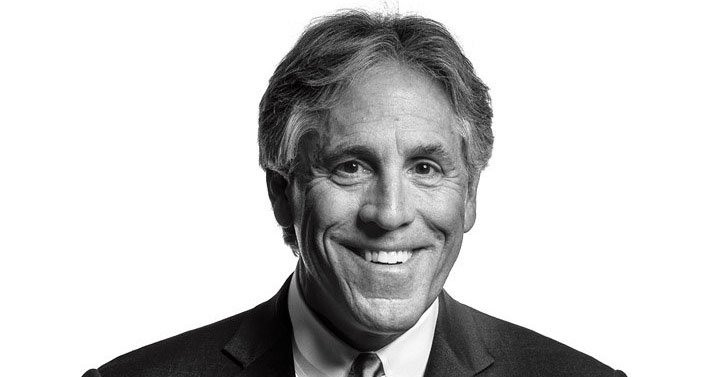
Make no mistake, it’s a campaign office. Ball caps hang on a coat-tree at the entrance, sofa pillows are red-white-and-blue, and Harvard University coasters catch the coffee drips, because Mark Mantovani did a fellowship there studying local and regional government. A Democrat vying to be St. Louis County Executive, he first practiced law, then became a CEO and grew a $5 million business to more than $120 million. He’s served on the requisite boards, coached sports, led the St. Louis Downtown Partnership. Handsome in a craggy way, with a full head of silver hair, he’s been married to the same woman for 40 years with not a whisper of bad behavior. Their three kids have all moved back to St. Louis and bring the grandkids for Sunday dinner every week, a la Bluebloods. In short, he’s almost as custom-fit for politics as the candidate he’s now kicking himself for supporting, Gov. Eric Greitens. Mantovani’s older than Greitens, though, more deeply rooted, and well aware that politics can steal your soul.
Get a fresh take on the day’s top news
Subscribe to the St. Louis Daily newsletter for a smart, succinct guide to local news from award-winning journalists Sarah Fenske and Ryan Krull.
Why run for office at 63? I’ve witnessed the relative decline of this community. I grew up with the notion that this was a place of prominence. I’d be foolish not to try to help.
What were the turning points in your life? I married a person who was better in every respect than me. That partnership is fundamental to everything else that’s happened to me. My career has been very nonlinear. When most members of my law school class were taking their first jobs, I spent another year studying business. The combination was pretty rare in my generation, and the development of competency in both allowed me a different kind of career. I’d fancied myself a trial lawyer, but a lot of those guys are criminal defense lawyers, and I discovered when I was clerking that that was not going to be the life for me.
You’ve said, “When I was a young guy, I wanted to be old, and now, I think like a young guy.” What flipped? When I was young, I think I had a different perspective, because I was close to older people. When I was a young guy, I was really fortunate to have the opportunity to work with older business leaders—advising them about finance, helping them sell their family businesses.
What did you glean? Perspective. When I hung out my own shingle as a lawyer, I was starving the first few years. One day, I was complaining about bills, and my client said, “Mark, here’s what you want to do. Take all those bills. Grab ’em. Now, I want you to hold those bills in one hand. Hold them over a wastebasket. Drop them. They will bill you again next month.” I don’t think I ever didn’t pay the bills, but it gave me perspective. My father and I would never have had a conversation like that!
There is no bubble. Global warming will find you. Crime will find you.
So they left you a little wiser than your years? At 45, yeah. But when you get older, you realize how much you don’t know. Now I’m 63, and young people have had as big an impact on me as the older people did when I was young. I took over as CEO of a marketing company, and the average age was about 29. It would have been very easy for me, as a 50-year-old lawyer, to get complacent and stuck in my ways, but I went into this fast-paced world with tech exploding, and I learned as much as I could. One of the reasons I want this job is, I don’t think our government innovates enough. There are incredibly exciting things going on based on data and analytics, and we’re not even in the game.
You stepped down as CEO of Ansira in 2014, the year you learned that you had cancer. Your wife had already survived a bout with cancer in 2004. How did it change you? We reacted differently to illness. Patty became much more focused on the family, prioritizing time with children and grandchildren. Confronting mortality, I decided that there’s a lot more I want to do. I actually got more engaged.
And by 2016, you were studying at Harvard. I had a fellowship there, all self-directed, so I studied, almost exclusively, city government. The word “transformation” is overused, but that year at Harvard really was transformative for me. I encountered people beyond my usual social circle, I developed an appreciation for challenges I haven’t experienced directly, and I became more empathetic. I used to think, for example, that we could solve the education problem in underserved communities by putting more money into education. The fact of the matter is, our educational system is challenged not because the dollars aren’t there for education but [instead] because of the confluence of a whole variety of challenges that certain members of our society have to deal with. If you don’t have effective transportation or adequate nutrition or Mom has to leave for work at 5 in the morning—would that it could be so easy as increasing funding for schools. So on almost every issue, my thinking evolved.
Had people told you that you should go into politics? My mother, God rest her soul, always told me that at some time in my life, people were going ask me to run for office. She said, “Don’t you dare!” My brother’s a physician; my sister and her husband own Bissinger’s. My family worries about people being involved in politics because it can be perceived as an unpleasant process, and people get hurt.
What was your childhood like? Ours was an Italian family; we were all perfectly willing to express our opinions. My mother was not Italian; she was more French than anything else. Quite frequently, she was the voice of calm and reason. My dad grew up in Kerry Patch—an Italian guy in an Irish neighborhood. He was a tough guy, had to be. He earned Bronze Stars in World War II; then he sold paint for a living and had big aspirations for his kids.
What would he have said about your political ambitions? I don’t know. I think he’d be concerned.
Why aim for county executive? This office, I believe, has been underutilized. It has been used on a tactical, transactional basis and not to set a vision for the community. I rarely hear vision around inclusion or diversity. I rarely hear discussion of overarching economic development issues. Oh, sure, we will address Amazon, but again, it’s transactional, not strategic. I don’t think our government innovates enough. There are incredibly exciting things going on based on data and analytics, and we’re not even in the game.
There are other ways to serve, though. And there are incredible numbers of people who are serving this community in NGOs and organizations working for the welfare of others. Local government has not always performed equally well—and this particular office, I believe, has been underutilized. It has been used on a tactical, transactional basis and not to set a vision for the community. The office has frequently been focused on a particular project—an ice rink, say—and not the fundamental issues that affect the quality of life here for many. I rarely hear vision around issues involving inclusion or diversity. I rarely hear discussion of overarching economic development issues. Oh, sure, we will address Amazon, but again, it’s transactional, not strategic.
Define “strategic.” Thinking deeper and broader about your objectives, then communicating that and reinforcing it and empowering people to move forward. I’d like to think we can regain our national place and put St. Louis more in the mainstream of leadership across the country. That will allow us to retain our young people, who are leaving town at a dramatic rate.
People will say St. Louis has always been a sleepy place. I would argue with those people. I grew up in the ’60s. The parents of the kids I played with were involved with the space program. The Arch was coming out of the ground. Though it didn’t work well for all parts of our community, downtown was being renewed. Jack Kennedy read four newspapers every day, and one of them was the Post-Dispatch. That was the St. Louis I knew and the place we committed to raise our family. There are still great things going on here, by the way. But communities I used to think of as minor-league cities—Nashville, Indianapolis—have surpassed us, and that’s going to continue and get worse if we don’t change.
Why does St. Louis leave so many opportunities on the table? I think a lot of times we don’t recognize opportunities. Witness the soccer stadium, where the county took a pass, demurring to a different part of the community. We are too conservative; we don’t act boldly.
What divides our region? I think the divisions are racial first, geographic second.White people have to recognize that it is in their interest to be more engaged with the people who are different. This bubble mentality that suggests my life can be perfectly fine if I don’t engage with people who are different from me is wrong. There is no bubble. Global warming will find you. Crime will find you.
So what’s the solution? We have to think more regionally, because to the rest of the world—to people in China or India or New York—this is just one place. If we are not thinking that way, too, then we are out of step with the way the rest of the world thinks about us. I think the city should rejoin St. Louis County as the 90th city; then we will have people at the same table. I think there’s a misperception that it would create a balance sheet problem. St. Louis County doesn’t have responsibility for the debts of Kirkwood or Florissant or Chesterfield, and it wouldn’t have responsibility for the debts of St. Louis, either.
What about merging some of the county’s 90 municipalities? I think that’s a bridge too far right now. In its essence, for a local government to be close to the people it’s intended to serve is not a bad thing. Many of the municipalities do quite nicely on local challenges. The county executive’s office is one of the best places to effect change on a regional basis.
You’re running as a Democrat, but you’ve backed Republican candidates. I think like a Democrat. The only presidential candidate I ever knocked on doors for was Jimmy Carter, because I admired his heart and he seemed so ethical. Now, I have also contributed to others I believed had the potential to be exceptional leaders—at least one, and that’s the one everybody always brings up to me: Eric Greitens. I believed Eric had the potential to be transformative for our state. His writing, his humanitarian work… I’m disappointed. Because somewhere along the line his…I guess ambition…has caused him to take positions I never would have thought he would take.
Some say politics corrupts. It clearly does. I think a lot of people go into public service for exactly the right reasons and then lose their way. I’m hopeful that at my age and in my circumstances, that won’t happen.