Tenants at the Northern Village complex in north St. Louis County—whose living conditions have drawn the ire of County Executive Sam Page—have elected to unionize.
It’s the first tenants’ union in St. Louis County, organizers say, and they’re intent on sending a message that the county needs to act on concerns about the property.
Get a fresh take on the day’s top news
Subscribe to the St. Louis Daily newsletter for a smart, succinct guide to local news from award-winning journalists Sarah Fenske and Ryan Krull.
The complex has had issues for years, county officials say, but Page’s office has recently been on a “full court press,” in the words of acting county director of human services Kevin McKenna. That was prompted by a looming deadline to pay an overdue Spire gas bill earlier this month. That bill was partially paid, avoiding shutoff. (A county official said Wednesday that the lender for the property paid the bill, but Nicholas Meador, an attorney for Mazal in St. Louis LLC, which owns the complex, said the owners had also contributed.)
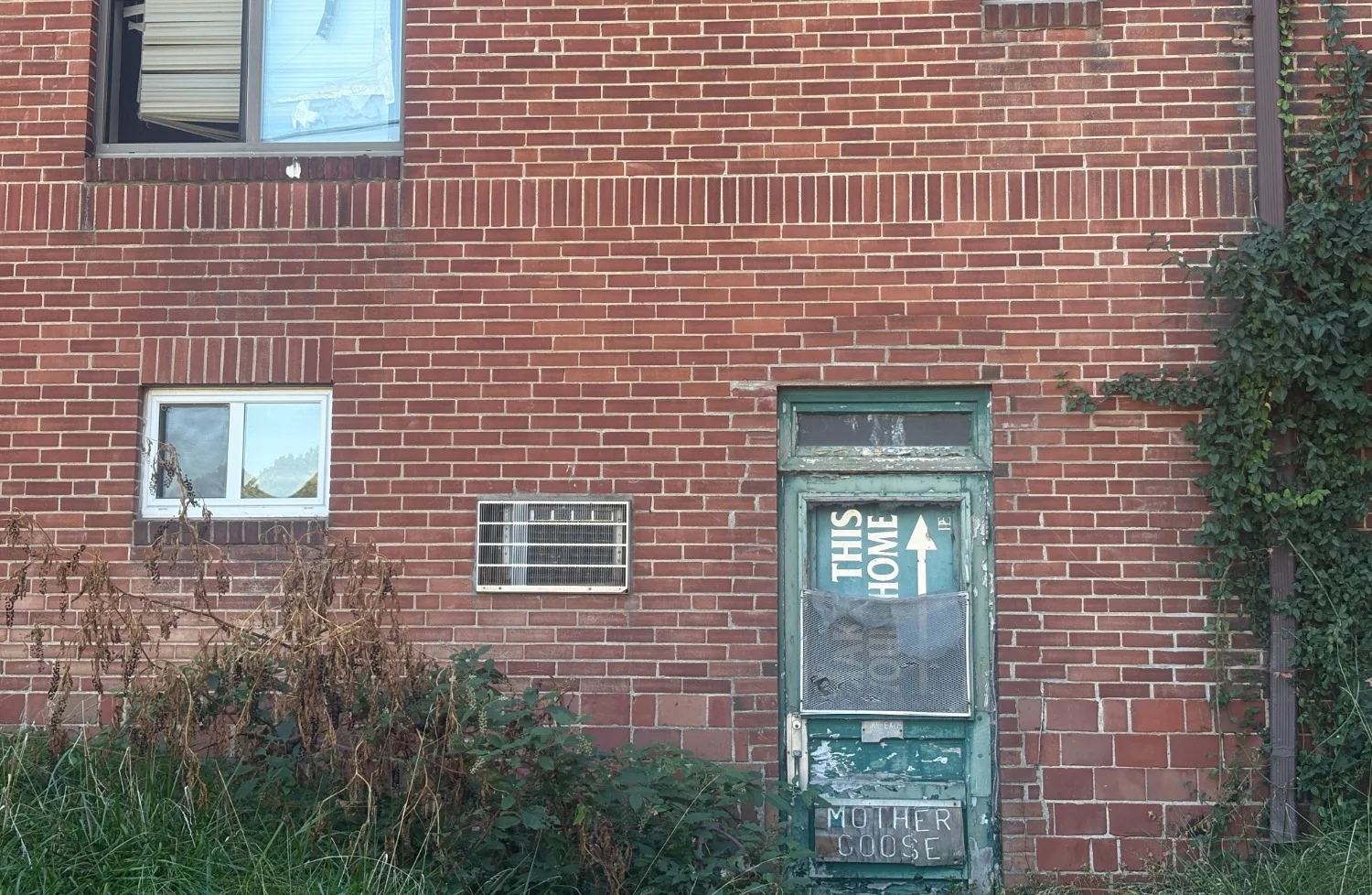
Residents have raised concerns about habitability, many of which were revisited before the St. Louis County Council Committee Wednesday. Staffers for the county’s Department of Transportation and Public Works detailed conditions like outdoor manholes leaking sewage and a collapsed subterranean sewer flooding a boiler room with wastewater to the point that frogs have now moved in.
Now organized as the Northern Village Tenants Union, the tenants want the county to provide $450,000 in emergency funds to help with relocation. (Page has pushed for the money, but the council vetoed it.) They also want an impacted tenants fund similar to the one assisting residents displaced by the tornado in the City of St. Louis. They’re also demanding that Northern Village owner Mendel Fischer meet with tenants, recognize the tenants union as a collective bargaining unit, and “explain how he will compensate them for the many harms they have suffered because of his negligence and neglect.”
“Today, the tenants of Northern Village launched the first tenants’ union in St. Louis County,” said Rachel Hurtado, a tenant organizing lead with ArchCity Defenders. “They are at a supermajority of tenants who are a part of that union and who all signed a petition backing their three demands, primarily that the landlord Mendel Fisher come to the table and negotiate fair compensation and agreements for the future of their lives and homes, and I am very excited to be supporting them.”
Unlike labor unions, tenant unions do not have legal backing that requires landlords to negotiate with them. The idea is the same, however: That strength in numbers gives renters collective bargaining power.
“My hope is that we can all stand together, be united and win, and get what we deserve,” said Brenda Flagg, a resident of Northern Village since last summer and member of the tenant union. “I need relocation assistance, that’s my biggest thing; I work hard for my money. I don’t have $2,000 to give somebody, and then to have them say, ‘Oh, … you’re not guaranteed to get this apartment,’ but I just gave you money that now I have to work harder to replace.”
Towards the end of Wednesday’s meeting Councilwoman Shalonda Webb called up Meador to respond to some of Flagg’s concerns, at one point also bringing up a member of the county’s problem property division to get them “all on one accord.” Meador said the firm pledged to stop evicting people until things stabilized. When Flagg said she’d received an order to vacate, Webb brought an inspector up to clarify that that happened because the county condemned her unit instead of an action by the landlord.
Webb made sure Flagg understood that the company was pledging to move her to another habitable Northern Village unit, one of many that Meador said the firm was working to update and bring online.
Meador did not deny the litany of complaints from residents and building officials. Under tough questioning from the council, he responded by acknowledging the issues. “We’re not here to argue,” he told the council, “we’re here to listen. I agree that every family should have heat, hot water, working plumbing, and a home free of pests. That’s the standard. It’s our job to meet that standard.”
He agreed that some of the photos shown by the county in an earlier slideshow (which depicted sewage and mold, among other problems) were the result of prior management.
“I would disagree with the lack of work that has been painted before this council,” he said. “I would agree that there are conditions that we have to do better at. We have to be better as landlords. We have to hold ourselves to a higher standard and fix those defects. … Do I think Northern Village is an abysmal place to live? No, I do not.”
The tenant union concept gathered steam across the country in the pandemic years. One of the standard bearers is the KC Tenants organization, as SLM reported earlier this year. That organization has used the power of collective rent strikes to get “junk” fees from landlords removed and stabilize rents, among other favorable concessions from landlords. It’s a model that helps advocate for the renter’s side of the equation, and has also led to long-term tenant protections becoming a part of Kansas City laws.
Organizers struggled to replicate that success in St. Louis—until now. Tenants Transforming Greater St. Louis executive director Kristian Blackmon sees the energy at Northern Village as replicable and believes that other tenant unions could catch fire, too. She hopes a region-wide organization would come next, like KC Tenants, that would afford St. Louis renters broader leverage.
“This is amazing. It’s powerful,” Blackmon said Wednesday. “It shows the power of tenants, the power of tenant organizing, the power of us coming together as community. We shouldn’t have to do this, right? Because everyone should have safe, affordable, equitable housing, right? But we know that we are at a time where that is not always the case.”
Blackmon has, in fact, published research on this very subject. In the recently released study of older housing deterioration The Other Housing Crisis, co-edited by University of Missouri St. Louis professor Todd Swanstrom, Blackmon co-authored a chapter on how tenant organizing can help address deteriorating housing.
That piece argues that tenant advocacy has made a difference in St. Louis since Tenants Transforming Greater St. Louis first came together in 2018. The chapter credits a law requiring landlords to address mold and the city’s impacted tenants fund as policy gains scored by their advocacy. Tenant organizations can stand between renters and governments.
“That is precisely why tenant organizing was essential—not just in surfacing the issues, but in helping to push these solutions beyond research and into action,” the chapter reads. “Our organizing efforts were about building power and ensuring that the people most affected by housing deterioration were not only heard, but central to every step of the process: identifying the problems, shaping the responses, and holding systems accountable for implementation.”