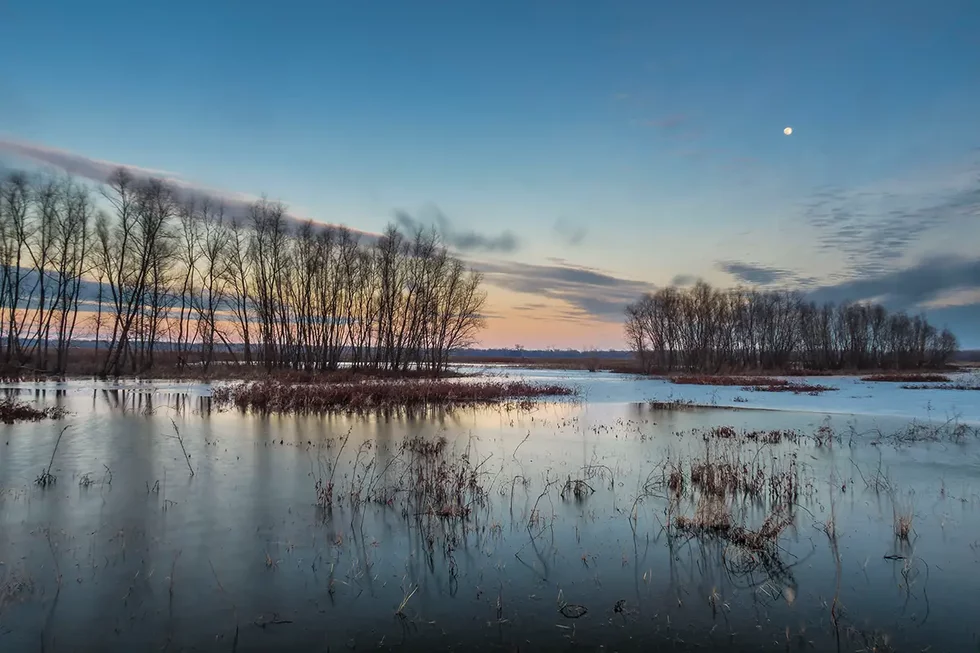
Follow the winding gravel road on a late-summer day until you see them: thick patches of neck-high sunflowers soaking in the rays, merely a short walk from the confluence of the Mississippi and Missouri rivers. Here, at the Columbia Bottom Conservation Area in North St. Louis County, visitors flock to snap selfies in these Instagrammable fields of sunflowers, watch bald eagles, or hunt ducks and doves, depending on the season. At one point, this place was designed to be the city of Columbia, but all developments became ghost towns by 1870. Big surprise: Bottomland at the confluence is too wet for everyday use. That remains true today, especially as flooding has gotten more intense in recent years.
The area’s levees and drainage pumps were no match for high-water events in 2008, 2013, 2015, 2017, and 2019. The flooding left Columbia Bottom inundated with water for months, causing extensive damage. Whole roads and trails are washed out during big floods, and significant amounts of debris and sediment—in some places, 2–4 feet deep—forces the Missouri Department of Conservation to close the area until the water recedes. This is bad for humans and the things they build, but it’s paradise for wildlife.
Get a fresh take on the day’s top news
Subscribe to the St. Louis Daily newsletter for a smart, succinct guide to local news from award-winning journalists Sarah Fenske and Ryan Krull.
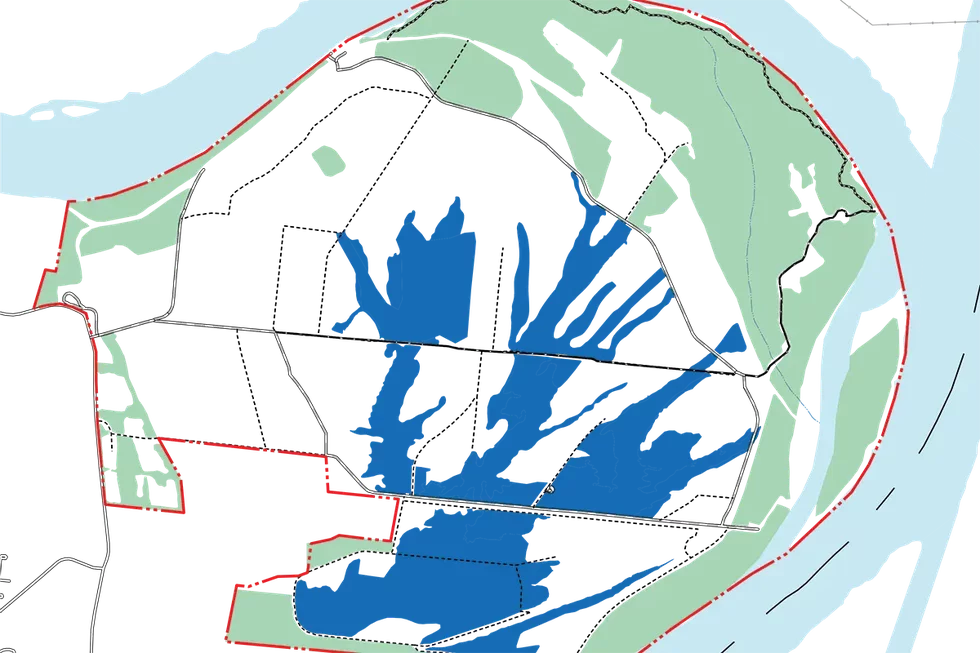
Now, conservation officials are planning a new approach to managing the area and helping the plants and animals native to the area thrive. Rather than continue with an expensive cycle of repairs and maintenance, the MDC is working to return Columbia Bottom to a natural wetland. In other words, the agency is going to let it flood.
Wetlands are vital to ecological strength up and down the food chain, and it’s estimated that Missouri has lost 90 percent of its historical wetland acreage over time. Floodplains act as natural filters, absorbing harmful chemicals and other pollution during spillovers, which makes rivers healthier and nourishes the land. Seasonal flooding allows a river’s water to reach more areas above and below ground, replenishing groundwater supplies. The reproductive cycles of fish, such as sturgeon, and plants, including willow trees, depend on flooding to regenerate. In the plain itself, islands and channels of water become vital habitats for native fish, birds, and other wildlife, while invasive plants and animals are flushed out.
Columbia Bottom offers a variety of recreational opportunities, including fishing, hunting, and birding. Visit mdc.mo.gov to learn more.
“We’re looking forward to the benefits this project will provide,” says Charles R. Miller, policy manager at Missouri Confluence Waterkeeper. “Not only by reducing flood risk and enhancing habitat for waterfowl but by giving St. Louisans an example of the beauty of a functional floodplain wetland just a half-hour from downtown.”
Although humans are incentivized to drain waterlogged areas, levees and floodwalls restrict rivers to narrow channels, causing the water to rise and flow faster. The same thing happens when you stick your thumb over the end of a hose, causing the water to spray. This leads to more powerful and rapid flooding downstream or creates a bottleneck that causes flooding upstream. Damage and upkeep costs are passed on to taxpayers.
Miller says MDC’s new vision “demonstrates that policymakers are looking for ways to solve the problems created by decades of floodplain mismanagement that has robbed our region of some of its most important ecosystems and exposed thousands of residents and businesses to increased flood risk.”
While removing portions of existing levees, the MDC will construct a small setback levee to help protect downstream neighbors. The agency is budgeting $12 million to supplement $15 million from the American Rescue Plan Act to pay for the new setback levee. It was originally planned that the area would support game-hunting of deer and geese. But birders have come to love it, too. Cool birds like the snowy egret have started to appear. These avian creatures don’t usually make their homes quite so far north. But their unexpected presence is an elegant illustration of the beauty of returning the land to what it was always meant to be.
MORE TO KNOW
BY THE NUMBERS
FLOODING IN COLUMBIA BOTTOM IS PROJECTED TO INCREASE AS THE CLIMATE CONTINUES TO WARM. HERE ARE SOME ADDITIONAL POTENTIAL IMPACTS OF CLIMATE CHANGE ON THE REGION.
10%
St. Louis can expect up to a 10 percent increase in heavy rainfall in the next 30 years.
26%
There’s a 26 percent chance that the St. Louis region will experience another 100-year flood in the next 30 years.
200%
Over the next 30 years, it is expected that St. Louis will see a 200 percent increase in the number of days over 108 degrees Fahrenheit.
86%
This past summer, St. Louis faced a 53 percent chance of experiencing a heat wave lasting three days or more. Thirty years from now, that likelihood jumps to 86 percent.
DATA COURTESY FIRST STREET FOUNDATION, A NONPROFIT DEDICATED TO PROVIDING ACCESSIBLE INFORMATION ON CLIMATE CHANGE.