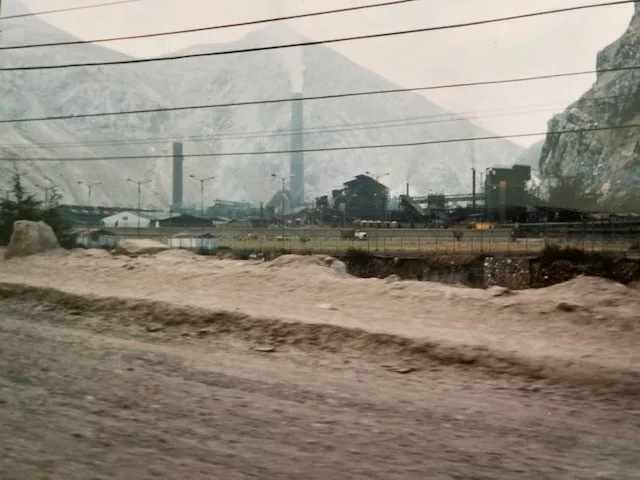
If the lawsuit filed against New York billionaire Ira Rennert were a person, it would already be able to drive a car, buy a lottery ticket and, fittingly enough, serve on a jury. The lawsuit, originally filed in 2007 appears as though it will finally reach a Missouri jury this June.
And if things don’t go the way of Rennert and his company, Renco, they could be on the hook for more than a billion dollars.
Get a fresh take on the day’s top news
Subscribe to the St. Louis Daily newsletter for a smart, succinct guide to local news from award-winning journalists Sarah Fenske and Ryan Krull.
Noted St. Louis trial attorney Jerry Schlichter, of the firm Schlichter Bogard, represents more than 1,000 Peruvians who were children when the lawsuit was filed. Now adults, they are suing Rennert over a lead smelter in La Oroya, Peru. Rennert’s New York-based Renco is the parent company of Doe Run Resources, based here in St. Louis, which bought the smelter via a subsidiary, Doe Run Peru, in 1997.
La Oroya is a town of about 24,000 about a 100 miles inland from the country’s coast. A 2005 study conducted by Saint Louis University researchers found that nine out of ten children in La Oroya had levels of lead in their bodies exceeding the point that can cause permanent injuries.
Schlichter’s 2007 lawsuit—filed on behalf of 17 children and later consolidated in federal court with 40 other cases—makes heavy reference to that Saint Louis University study. It accuses the smelter operators of a “failure to adequately control emissions” and releasing toxins into La Oroya’s air and water, exposing plaintiffs to those pollutants. A separate study found La Oroya to be one of the most polluted cities in the world. Schlichter’s clients accuse Rennert, Renco, Doe Run, and others of negligence and civil conspiracy. The suit seeks an unspecified amount of damages. Schlichter has previously stated that, given Doe Run’s and Rennert’s wealth—and the number of plaintiffs suing them over the Peruvian smelter—punitive damages could eventually exceed a billion dollars.
“After 18 years, the first trial of five children, who are now young adults, will start on June 23,” says Schlichter. “It will be the first of numerous trials, and we look forward to presenting their cases to the jury.”

A Doe Run spokesperson tells SLM that the company is not to blame for the pollution around the smelter. When the Renco subsidiary purchased the facility in 1997, it was 75 years old and had for decades been operated by the government of Peru, who exercised virtually no environmental controls. “The entities responsible for the conditions at La Oroya—the companies and the Peruvian government that ran that smelter for more than 75 years—are not the ones being sued,” the spokesperson said.
Renco has invested $300 million into the smelter, they say, dramatically reducing emissions. The company says that the theories put forth in Schlichter’s suits have been undercut by two decades of evidence.
Schlichter has been a fixture in St. Louis for decades, having co-founded Arch Grants and been integral to the revitalization of the Chase Park Plaza. In the courtroom, he is perhaps best known for winning more than $150 million from a series of suits against numerous large companies for overcharging employees on their retirement plans.
Though it is not as if Rennert is lacking for strong legal representation. Thirty-one attorneys have entered appearances on his behalf in the case over its lifetime, according to court filings. He can apparently afford it: The multibillionaire’s residence is so large it has its own Wikipedia page. The 63-acre Long Island estate was described in a 2024 New York Post story as being worth $425 million. The compound has 39 bathrooms, three swimming pools, and a 100-car garage. It has been dubbed “the house that ate the Hamptons.”
There are myriad reasons that this lawsuit has taken nearly 18 years to get in front of a jury. Rennert’s defense has unsuccessfully tried multiple times to have the matter dismissed or moved to Peru. There have also been years-long battles over discovery. In 2020, U.S. District Judge Catherine Perry ordered Rennert’s attorneys to pay Schlichter and other plaintiffs’ attorneys $429,260 in sanctions related to the defense’s handling of discovery disclosures, which she said were conducted “willfully and in bad faith.”
What’s slated for June is what’s called a “bellwether” trial, likely to last many weeks but involving only a few of the more than 1,000 plaintiffs Schlichter represents. The outcome of that trial will inform what size settlement, if any, Renco and Rennert could be on the hook for.
Doe Run operated a lead smelter in Herculaneum, Missouri until 2013. It closed operations there after paying $65 million for violations of the federal Clean Air Act and Clean Water Act.