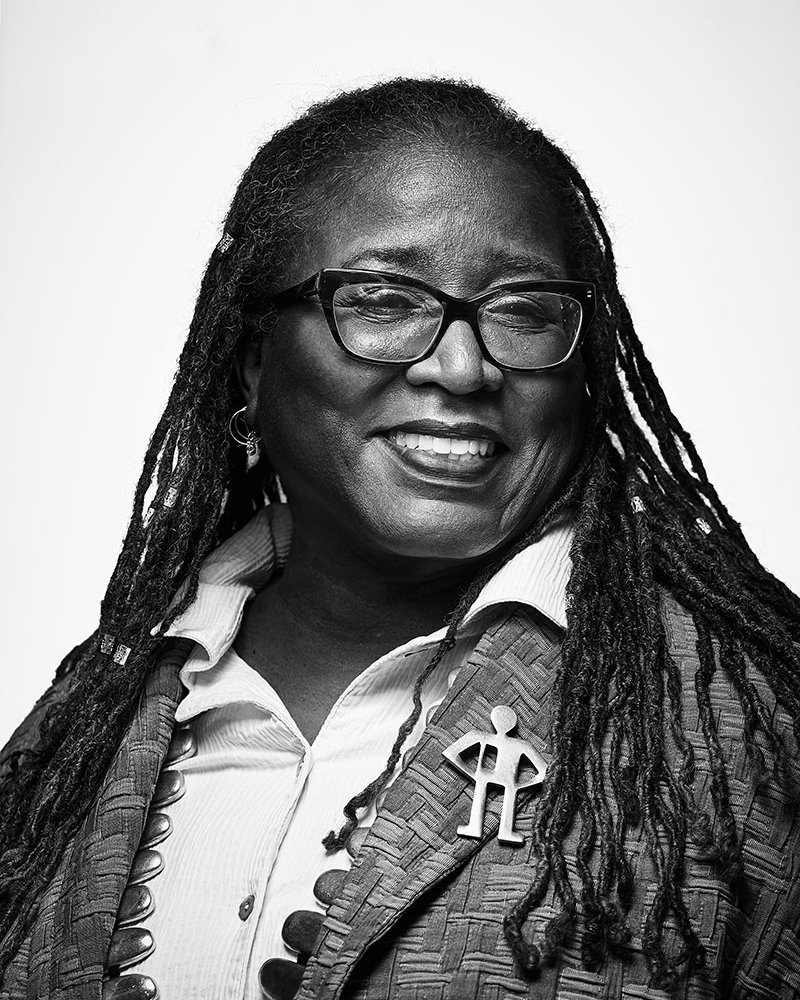
If you’ve cruised down Highway 40 between the zoo and Science Center lately, you’ve probably spotted it on the south side: The sleek new Center for Nursing and Health Sciences on the Forest Park campus of St. Louis Community College. From big projects like that one, which cost $39 million, to much smaller ones, such as a student play requiring copyright permission, the school’s general counsel, Mary E. Nelson, must ensure everyone’s complying with federal and state laws. And that’s no mean feat.
What’s it like being the chief legal officer for a school with four campuses? They’re like several cities within a city. We have streets, buildings, police. We have First Amendment issues, immigration issues, environmental issues—every time an art class disposes of paint or clay, we have to account for the hazardous waste. Colleges and universities are highly regulated institutions.
Get a fresh take on the day’s top news
Subscribe to the St. Louis Daily newsletter for a smart, succinct guide to local news from award-winning journalists Sarah Fenske and Ryan Krull.
You also, as general counsel, must navigate complicated budget and personnel matters. Several years ago, for example, tensions were high after faculty and staff layoffs. I think the college has gone through cycles where our enrollment has been very high, and now enrollment is down. Throughout these cycles, we’ve kept our number of faculty pretty much the same. But when we faced the prospect of a sharp decrease in state appropriations to our budget, it was time to make a right-size adjustment of our faculty so that we could avoid having to increase our costs on a smaller student population and make education less accessible to them… The impacted faculty didn’t like it at all. There continues to be tension. But the administration does what it does not because it hates faculty or disrespects faculty—obviously we need a great faculty. It’s just that sometimes we have to make hard decisions about how to control costs. At the same time, we’re trying to increase enrollment.
Speaking of which, STLCC recently invested $39 million in the Nursing and Health Sciences building on the Forest Park campus. Why? There’s a huge deficit of trained people in all the health care professions, everything from nurses to dental hygiene assistants. The college needs to play a role in helping fill that gap.
Any plans to expand into other areas? We’re partnering with organizations like LaunchCode to get people trained in IT skills so they can have access to great-paying jobs in a short period of time. That’s exciting, that you could take an eight-week class and, starting from scratch, learn to code and be well qualified to apply for a job or be placed into a job that pays $50,000 per year. I think that’s tremendously promising.
There is some debate over pushing all high school grads to college. What do you think? Not everybody is going to be an intellectual. There are a lot of people whose skills are in a trade. But either way, in the society we live in, you need training to find meaningful, fulfilling employment… We need to focus on the jobs of the future.
What advice do you have for a young person who isn’t sure what to study? You need to be exposed to a lot of different things—even if you do have your heart set on something. Let’s say you’re passionate about nursing. I’d hate for you to find out after you become a nurse that you hate nursing; you just liked the idea of nursing. Maybe what you really have a passion for is helping people and easing suffering. So maybe instead of being a nurse, you should be a social worker. But you don’t know that if you’ve never studied it.
What’s your passion, outside work? I’m a huge soccer fan. I love watching the English Premier League, and I’m so excited at the prospect of having a team here. There’s a tradition called “march to the match,” where people gather beforehand at a bar, have a pint, then join this huge parade of hundreds or thousands of people. The thought of having that in St. Louis, with St. Louisans wearing our football club’s colors and walking together into that stadium, it’s something that gives me chill-bumps.
I understand you’re a mean cook but you never consult recipes. Why not? My dad was the chef of the family. He was a medical technologist—a scientist. And one of the things he taught me is how ingredients interact with each other. Once you understand the basics, whether it’s in the oven or in the skillet, then you understand how to control the results of those interactions. He paid attention to textures and seasonings and just worked his way through it. That to me is the best kind of cooking.
What’s your preferred escape from St. Louis? I love scenery that gives human beings a perspective on how insignificant they are. You think you’re so big and important, and the things you’re working on are so monumental? Stand in front of a mountain that’s been there for millions of years. It’s humbling. I like being put in my place like that.