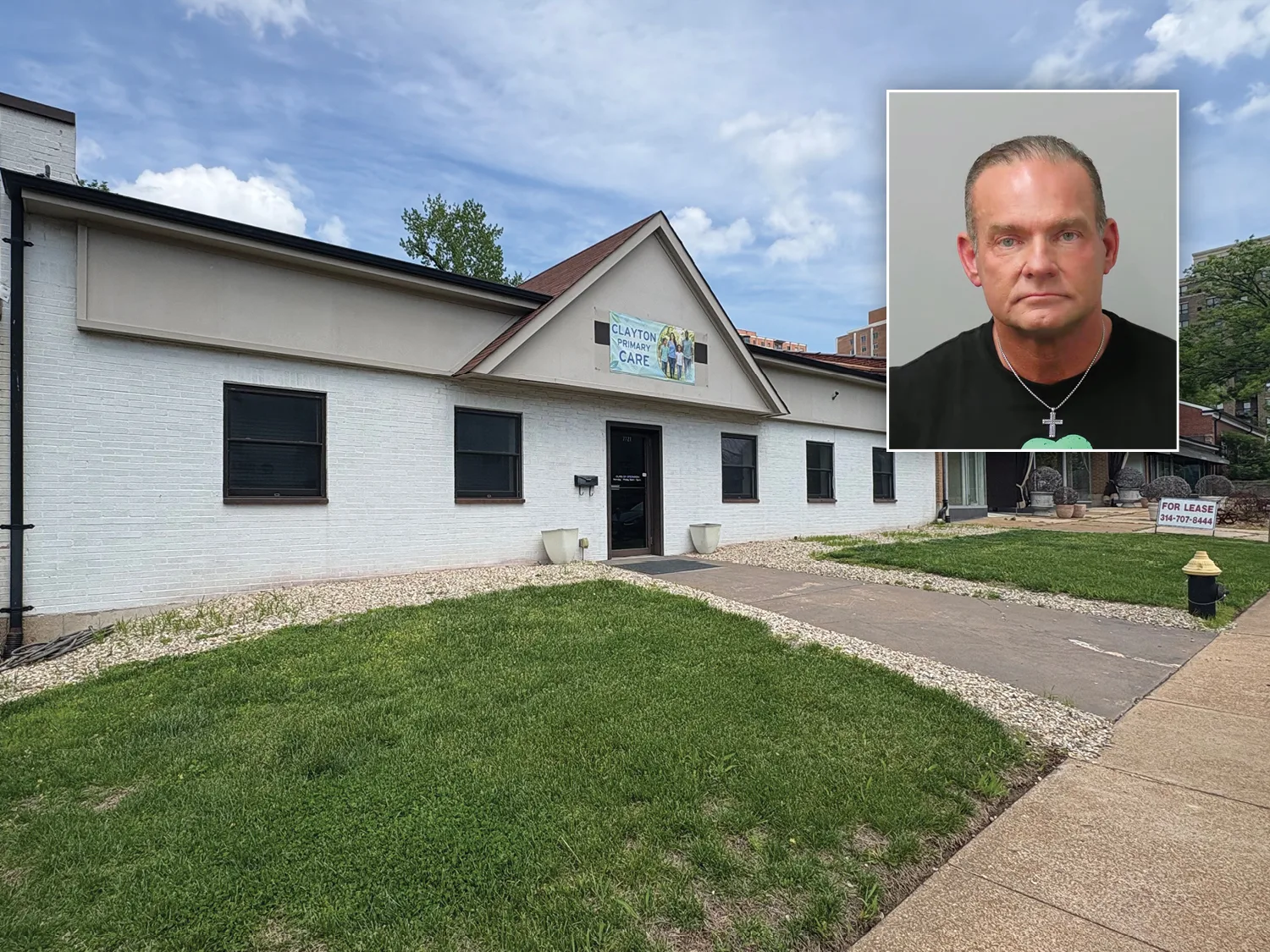
Chiropractor Jerry Leech helped perpetrate a fraud that robbed the government of almost $5 million. His lawyer says he’s also the victim of a fraud that cost him five years of freedom.
Leech’s practice was on Clayton Road just east of highway 170, next to a dry cleaner and a florist. Heavy-hitter Republican political consultant David Barklage has an office just down the street and Leech frequently dropped by. Barklage had a lot of people coming in and out and made a habit of always having food available. “Doc was one of these guys that if there was food laying around, free food, he would come,” Barklage recalls. The food put the chiropractor in the same orbit as a who’s who of county and state politics—everyone from Democratic County Executive Sam Page to influential Republican lobbyist (and former House speaker) Steve Tilley. Leech sometimes showed up with a turban-wearing friend at his side and left a big impression. “He’s from Mississippi County, and so he talks Southern,” says Barklage. When Leech had been a pharmacy rep, Barklage says, he was one of the top ones in the nation. “He’s got a very outgoing personality.” “Doc” was generous with medical advice. One of the politicos who hung around Barklage’s office says he thought of Leech sort of like Kramer from Seinfeld—the always around neighbor, always getting into something. Leech owned a $2 million home in Ladue, a stone’s throw from the elite St. Louis Country Club. He maintained a minor fleet of luxury vehicles.
Get a fresh take on the day’s top news
Subscribe to the St. Louis Daily newsletter for a smart, succinct guide to local news from award-winning journalists Sarah Fenske and Ryan Krull.
As it turns out, Leech’s riches came as much from doling out pills as from cracking spines. In February 2020, he and 10 others were indicted for conspiracy to distribute controlled medications without a legitimate medical purpose. A year later, Leech pleaded guilty to using pre-signed prescriptions from doctors who had not examined patients to prescribe painkillers. Leech, who was not licensed to practice medicine, also signed real doctors’ names on the prescriptions. In total, Leech admitted in his plea agreement he was responsible for doling out 97,867 oxycodone pills. He also got kickbacks for referrals to laboratories. All this cost Medicare and Medicaid $4.7 million in bogus billings, prosecutors said.
Leech managed to forestall his sentencing for five years after his guilty plea. (One of the county politicos who regularly dropped by Barklage’s office says he assumed Leech’s Kramer-like eccentricity was due to the federal prison sentence hanging over his head.) According to documents filed by prosecutors in his case, the chiropractor made the most of his freedom. He tested positive for cocaine and was being prescribed Xanax, Adderall, and pain killers. He got caught diluting the urine samples he had to turn into the court.
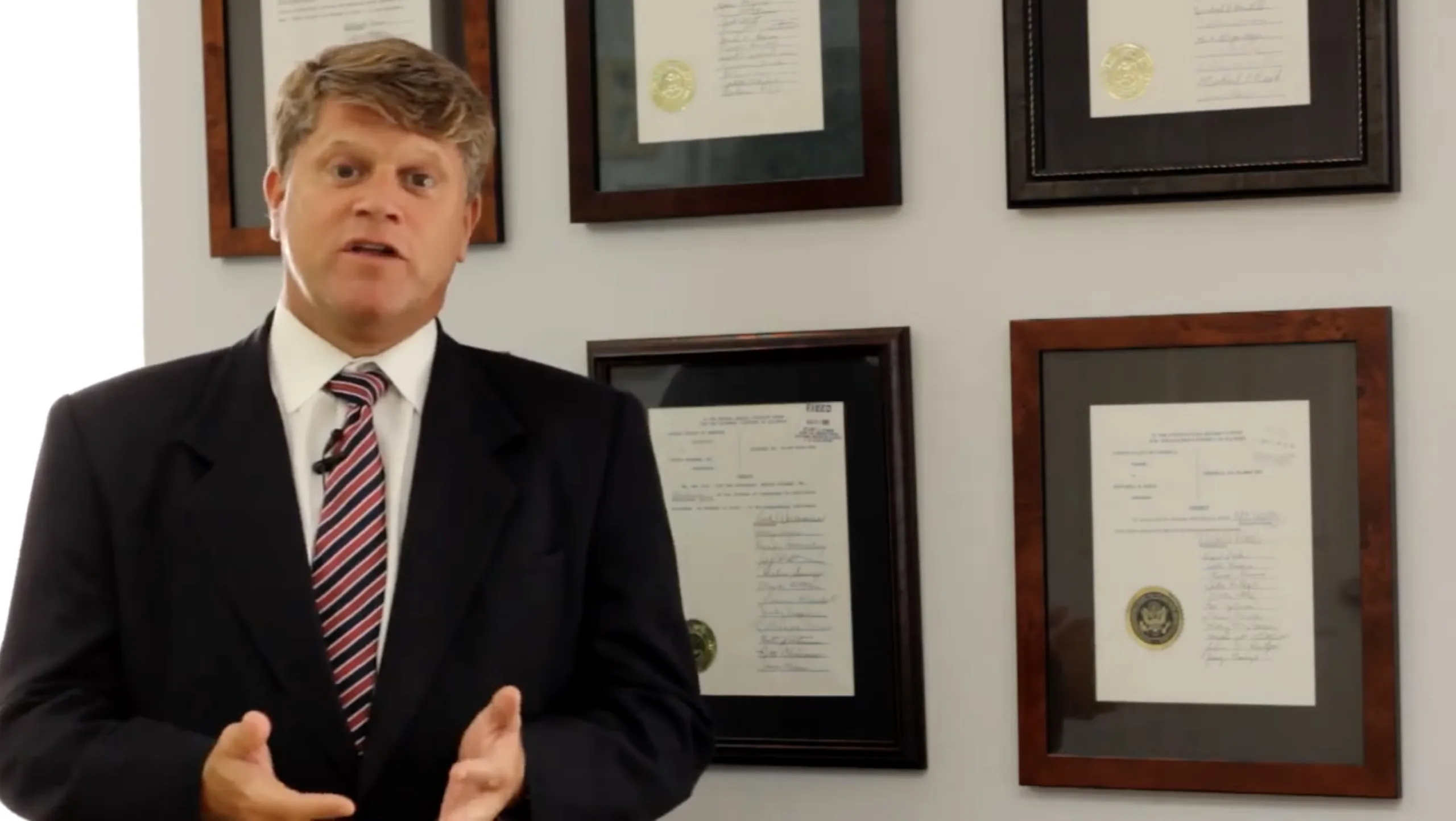
Still, the beginning of this year brought what could have been some good news for Leech: His attorney John Stobbs worked out what Stobbs later called the deal of a lifetime. Leech would serve a three-year sentence and pay $3 million in restitution. Stobbs has worked in criminal defense for 25 years and has handled more than 1,000 cases in federal court. Considering what Leech had pleaded guilty to, he believed this was the best sentence he had ever negotiated.
But as Stobbs was striking the deal of his career, he says Leech was also taking the counsel of someone else: Jamison Sterling.
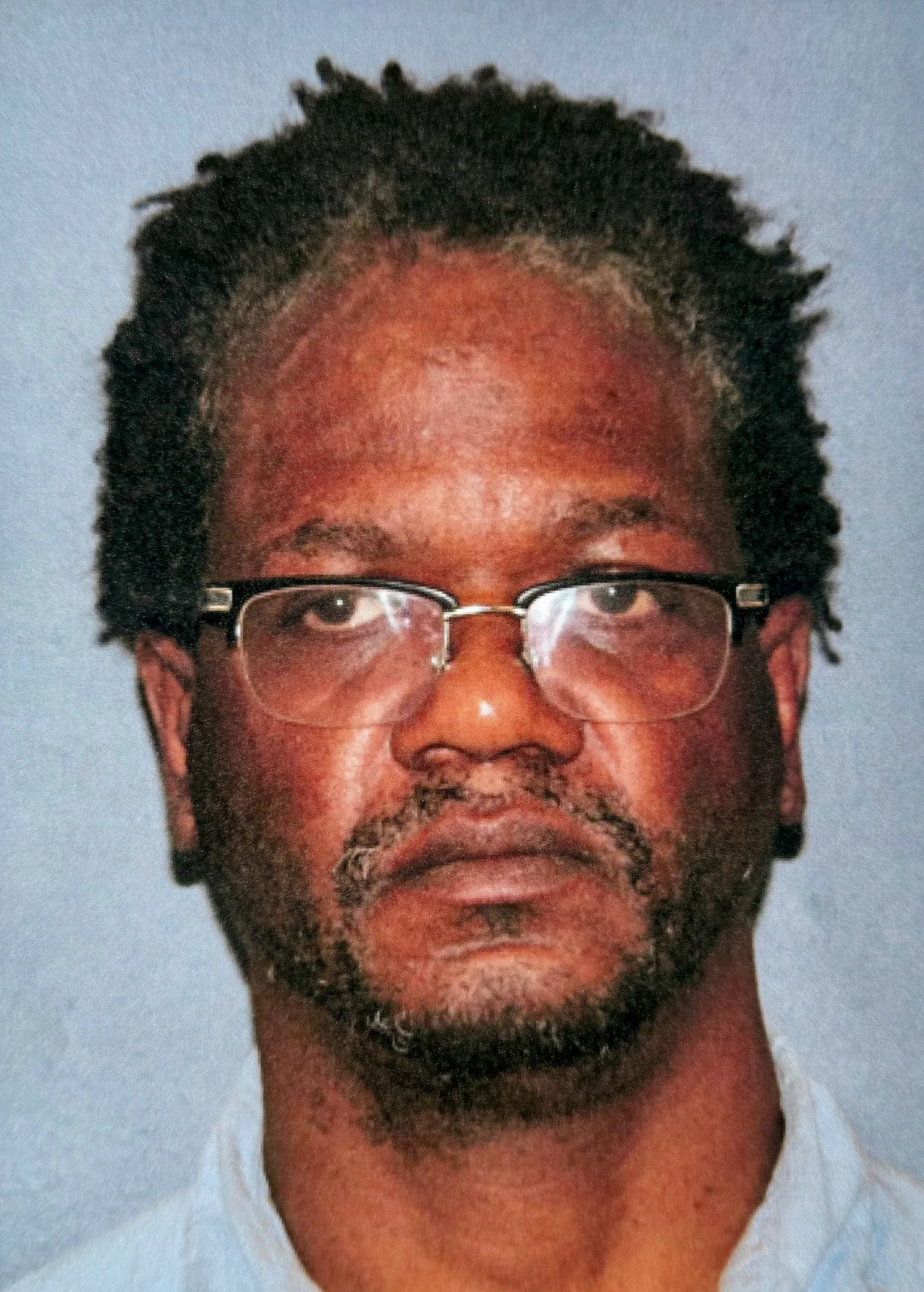
Stirling is a well-dressed Black man in his mid-50s who speaks with a thick country Southern accent. “I don’t know how Jerry came upon him,” says Stobbs. “I think it’s one of those things where he just looked for someone who’s going to tell him what he wanted to hear.”
According to Stobbs, Stirling convinced Leech to contest his sentencing, telling him he could get him probation and if that failed, for $250,000, he could get him a pardon from President Donald Trump.
Stobbs detailed all this in a supplemental sentencing memorandum filed with the court late last month, just prior to Leech being sentenced to more than eight years—five more than the deal Stobbs had struck. The memo is overstuffed with sentiment: anger at Stirling, disappointment in Leech, sadness for the people Leech will leave behind while in prison.
The memo notes that by the time Leech is released, his elderly mother will have in all likelihood passed away. It says that Leech is a widower, and by the time he’s released, his now teenage daughter will have started and finished college and “begun building a life without him.”
The Stobbs memo was the first court filing in which this reporter had encountered the use of clip art. The second page features a man, presumably Stirling, wearing a Hamburgular-style prison uniform driving a clown car. “The case has become a three-ring circus closely resembling an episode of The Jerry Springer Show,” wrote Stobbs. “In these three short months, the case has supplied an endless source of material including tragically stupid decisions, a charlatan providing legal advice, and a crazy DWI arrest.”
Every circus has a clown car, Stobbs wrote, and in the circus surrounding the sentencing of Leech, Stirling was the clown car’s driver.
Andrew Russek, another one of Leech’s defense attorneys, says he got the impression Stirling was something like a general counsel for Leech and his business. Despite never officially entering Leech’s criminal case as an attorney, Stirling certainly acted as though he was one, both Dobbs and Russek say. “Rich people have that kind of fixer-type attorney,’ Russek says. “That’s how he made himself to be.” He adds that Stirling emailed him numerous drafts of motions he thought should be filed in the case. “They weren’t terrible, but the legal theories inside of them were a little over the top.”
The arguments were largely based on technicalities and “novel legal theories,” says Russek.
“Goofy clients, sometimes they’ll be like, ‘Well, they spelled my name with an E at the end so that means this warrant gets thrown out.’ Well, any real attorney that practices knows that that’s not what happens, even if it’s what happens on Suits. Jamison’s stuff would be like that, and a little more sophisticated … I’ll give him props.”
Both Russek and Stobbs are adamant that Stirling made himself out as if he were an attorney, though in retrospect they acknowledge it’s possible he never explicitly stated as such. “He would talk about things like, ‘Oh, yeah, I remember when I used to appear in front of Joe Dueker,’” says Russek. “Which is normally something an attorney says.” (Currently a judge on the federal bench, Dueker was a longtime judge in St. Louis County prior to that.)
Stirling isn’t licensed to practice law in Missouri or in any other state. Stirling may not even be his real name.
***
Leech’s more than five years of post-guilty plea freedom came to a screeching halt on March 14 of this year when he was arrested for driving while intoxicated in Frontenac. Stobbs wrote in his lively memo that the arrest involved Leech driving a Lamborghini 92 mph with “a carload of 23-year-old women.” Stobbs tells SLM Leech called Stirling from the scene of the arrest asking for advice.
The DWI triggered a bond revocation hearing in Leech’s federal case. Prosecutors had grown weary of allowing the chiropractor to await his formal sentencing outside of jail.
Russek represented Leech at the bond hearing on March 25. So too, at least in a sense, did Stirling. In the courtroom, Russek says that Stirling asked him, “Can I cross the bar?” and sit at the defense table. Russek says that, by this point, he and Stobbs had joked with each other that maybe Stirling was a disbarred lawyer. Russek responded, “If you’re licensed in the E-MO (the Eastern District of Missouri), you can sit here.” Stirling did just that. (Stirling insists he never claimed that he was an attorney.)
At the hearing, Leech’s bond was revoked, and he was taken into federal custody to await his sentencing. About three weeks later, on April 15, a judge sentenced Leech to 100 months in prison, nearly eight and a half years—about five years more than he would have otherwise. He was also ordered to pay another $1.7 million, or $4.7 million, in restitution. At the sentencing hearing, Stobbs says that Leech made comments blaming Stirling for his misfortune. Something along the lines of, “I wish I hadn’t hired that fake lawyer.”
Stobbs’ memo in part blames Leech for allowing himself to get duped. He put his trust in someone who was simply telling him what he wanted to hear. If Stirling was the clown car driver, Stobbs writes, “Jerry is the willing assistant filling it with gas and air.”
Stobbs tells SLM that Stirling was selling hope. “That’s an expensive item to sell.”
“My mom, God love her, she’s deceased, but she would just find it comical that a fraudster ripped off a fraudster,” Stobbs adds.
Russek is marginally kinder in his assessment of Stirling. “He’s like a sophisticated jailhouse attorney, I’ll give him props on that.”
***
What does Stirling have to say about all this?
Quite a bit, actually.
In a phone call with SLM last week, he says that he met Leech in January 2025 through a long-time friend. She told him that Leech had “a lot of stuff going on…why don’t you talk to him?” Stirling says he had the chiropractor sign a consulting agreement that acknowledged that Leech wasn’t licensed to practice law in Missouri. “I was extremely thorough with Dr. Leech,” Stirling says. “It was extremely clear.”
Stirling acknowledges that he is not licensed in Missouri. Directly asked if he is licensed to practice anywhere, he says no. He’s not a lawyer. However, he adds, “I still consult with a lot of St. Louis attorneys on pleadings and writing documents. If you see a 40-page complaint, chances are I wrote the thing.”
Asked which attorneys he regularly consults with, Stirling names two lawyers in town. One confirms that he did use Stirling in a sort of paralegal role. The other did not respond to requests for comment.
When it comes to Leech, Stirling says that he helped Leech set up trusts and looked at some of his business structures. “The plan was always that I would take over and try to maintain a degree of stability in the businesses while he was gone,” Stirling says.
Despite Leech’s many faults, Stirling says, “I hazard to say I actually loved the guy.” He adds, “He was a good guy, but he was hiding a bunch of shit.”
He adds, “When I met him, I went to his house one day, and outside of his house is a Rolls-Royce Cullinan, a McLaren in the garage. A Bentley Bentayga, a BMW convertible, a Bentley Continental GTC convertible, a Lamborghini Urus. He had about $3 million of cars sitting outside of his house. And I said, ‘Dr. Leech, come on now. Here, you’re under investigation for fraud, millions of dollars in fraud. Think about the optics of this.”
He also tsk-tsked Leech for driving drunk and for spending all his energy on “all these 22-year-old girls running around that you’re paying for titty jobs for, and all these million-dollar fucking cars, all of what you’re gonna lose, and these 22-year-old girls aren’t even gonna fucking speak to you while you’re in jail, and once you get out, they won’t know your name.”
He hastens to add this about the chiropractor: “Dr. Leech was paying me a lot of money, so he was one of my best clients.”
***
Hear more about this story from Ryan Krull on The 314 Podcast.
Stirling himself has done time in prison—an assertion that is both true and not true. It would be more accurate to say that Joel Monteiro has done some time in prison.
Monteiro has a “very substantial” criminal record, according to an order for detention prosecutors filed in one of his federal cases. It notes that since 1990, he’s been convicted six times of using checks to deceive, twice of burglary, twice of forgery, twice of unauthorized use of an access device, once of possession of more than five identification documents, once of possession of a forged document, once of possession of a stolen motor vehicle, and once of trespass.
In a 2006 case, Monteiro was on supervised release when he and his brother allegedly used fake IDs and checks in the name of a person from North Carolina to purchase construction materials from a lumber company in Festus. They then used a similar check to make another purchase at a different store. Returning to that store a second time, they were arrested, and law enforcement reported finding a briefcase in their possession containing 17 blank checks.
According to a federal judge’s detention order filed in that case in 2006, Monteiro was born Joel Christopher Sayles in Milwaukee, then lived in Illinois (he had family in Champaign), and as of 2006 was living in St. Louis.
That same judge’s order noted that Monteiro had undertaken substantial steps to change his identity. He seems to have legally changed his name from Joel Christopher Sayles to Joel Monteiro but then, in 1996, he used what the judge called a “bogus” order from Illinois state court to try to change his name to Jamison Avion Stirling. The document included a falsified court stamp and a fictitious judge’s name. Sayles/Monteiro/Stirling then used the bogus state court order to change his Social Security Administration records, the judge wrote.
To SLM, Stirling denies that he ever went by the name Joel Monteiro. He also denies that it makes any difference one or the other.
“Those charges don’t relate to me at all,” he said of the cases filed against Monteiro. “I don’t understand the relevance … Dr. Leech gets 100 months. Somehow, Joel Monteiro, Jason Christopher Sayles, Jamison Sterling are somehow responsible.” He adds, “I could be Donald Duck. What difference does it make?”
SLM sent Stirling the federal judge’s order from 2006 that seemingly connects Sayles to Monteiro to Stirling as the same person. Stirling replied, “What a decades-old record has to do with my opinions given to Dr. Leech in this matter is, at best, unclear.” He added that “what may or may not have occurred 20 years ago” was a “red herring” with no connection to the analysis he gave Leech about the deal Stobbs had worked out for him—which he is adamant was sound. The chiropractor should have gotten a sentence more lenient than three years because of his cooperation with the government, he insists. It was Stobbs’ fault, for not having a cooperation agreement put into black and white and signed by all parties. He calls Stobbs’ memo—the one with the clown car clip art—”completely inappropriate.”
He says that after he helped Leech with his business affairs, Leech asked him to look at his federal criminal case. Stirling did just that, and came to the conclusion that Stobbs and Stobbs’ co-counsel Joe Passanise had done “basically nothing.” Stirling strenuously denies that he offered to get Leech a pardon for $250,000, though he does say he facilitated communication between Leech and two pardon attorneys—one in Florida and the other in Oklahoma.
As for the 36-month deal that Stobbs struck for Leech, the one Leech tossed away earlier this year, Stirling concedes that if he knew then what he knows now, he would have urged his friend to take the deal.
“What I didn’t know at the time was that Dr. Leech was still actively committing Medicaid and Medicare fraud. I had no idea. How would I know that? He never told me that, right? So he didn’t say, ‘Hey, Jamison, by the way, I’m still ripping the government off of millions of dollars and and so hopefully that doesn’t come to light.’”
To Stirling’s point, on March 26, just a few weeks before Leech was sentenced, FBI agents raided his practice on Clayton Road. Russek, who was Leech’s criminal defense attorney in the original case, says that he is unaware of any new charges that have resulted. Generally speaking, though, he adds, “The feds normally don’t just raid your office for fun.”
Stirling seems to have a better idea of which crimes could have been committed—though he stresses he had no part in them. He was actually on site when the federal agents showed up to raid the business.
Stirling said that he was working out of an office he uses nearby but its plumbing was broken. So he went to use the bathroom at Leech’s office, which is coincidentally the headquarters of the business Stirling says he and Leech had agreed he would run while Leech was locked up. March 26 just happened to be Stirling’s first day taking over the business to try to maintain a degree of stability during Leech’s time in prison. He says one of his main duties was just making sure Leech’s employees continued to get paid. He used the bathroom and then stopped to talk to some employees to explain “a lot of things are coming to light that I didn’t know about relative to some illegal conduct here.” Then, boom, the FBI arrived.
He says that the feds started throwing open filing cabinets and refrigerators, inside one of which was “hundreds and hundreds of urine samples.” Another cabinet had as many samples from blood draws. Stirling says he’s since become convinced that Leech was sending a technician out to someone’s home to do a blood draw or to swab for a respiratory infection or to collect urine. But the technician would collect much more of a sample than was necessary. “He may send one sample in, and then the other four or five, he would take back to the lab and then send those in over a period of weeks or months, one at a time,” Stirling claims. “So that sample is paying him individually, $800…He’s now turned that $800 into, you know, $4,000 or $4,500 or whatever the case may be, because he’s got he’s swabbed them five times.”
He adds, “Had I known Dr. Leech was committing fraud, would I have still worked with him? Yeah, I probably would have. Because he was paying so well. Would I have been sitting my ass in his office to be there when the feds came in? There’s no fucking way. Nobody wants to be in the middle of a federal investigation. So they’re saying all of this stuff, and they’re saying somehow it’s my fault. But ultimately, the only person’s fault it is, is Dr. Leech’s because he was the one committing the fraud.”
Stirling adds that he himself isn’t worried about federal prosecution. What would he be charged with? Paying Leech’s employees? It would be a crime for them not to get paid.
Despite the seeming headwinds for Leech, Stirling thinks the chiropractor still has solid ground for an appeal. “Primarily, the ineffective assistance of counsel,” he says. He says he plans to reach out to Leech and maybe even help him in that appeal.
In that same conversation, though, Stirling says he’s going to file a lawsuit against Leech, among others. Over the course of two conversations, Stirling says he is gearing up to sue a number of people, including Stobbs and Passannese. “They’re trying to blame me because they didn’t do their job,” he says. He plans to sue Barklage, who has been working to preserve Leech’s assets as much as possible for the benefit of Leech’s daughter. He also plans to sue Sam Page’s former chief of staff Winston Calvert. An attorney, Calvert is working on Leech’s behalf both in regards to his daughter and his restitution to the feds. Calvert denies he’s saying anything untrue about Stirling to anyone. “This is a sad story. The truth here is outrageous enough without making anything up.”
Stirling doesn’t see it that way. “They’re saying things that aren’t true,” he says. “I’m going to end up just having to sue everybody and then let it work its way out in court.”
Asked who he might use as an attorney, Stirling replies that he’ll probably represent himself.
Hear more about this story from Ryan Krull on The 314 Podcast.