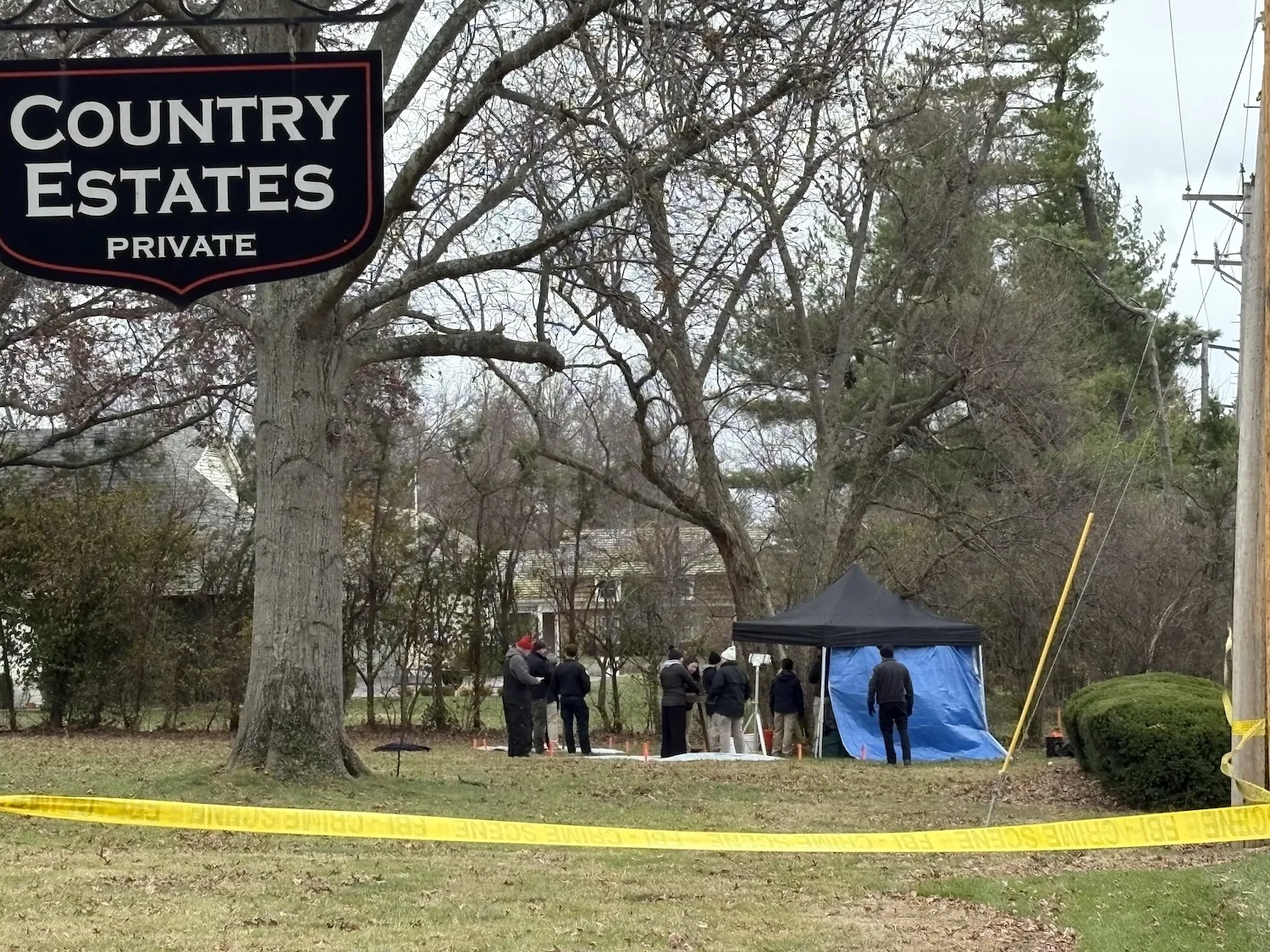
Residents of a leafy Frontenac subdivision woke up yesterday morning to quite a surprise: a full complement of police and FBI vehicles outside one of their neighbor’s homes, with agents and officers digging in the corner of a side lawn.
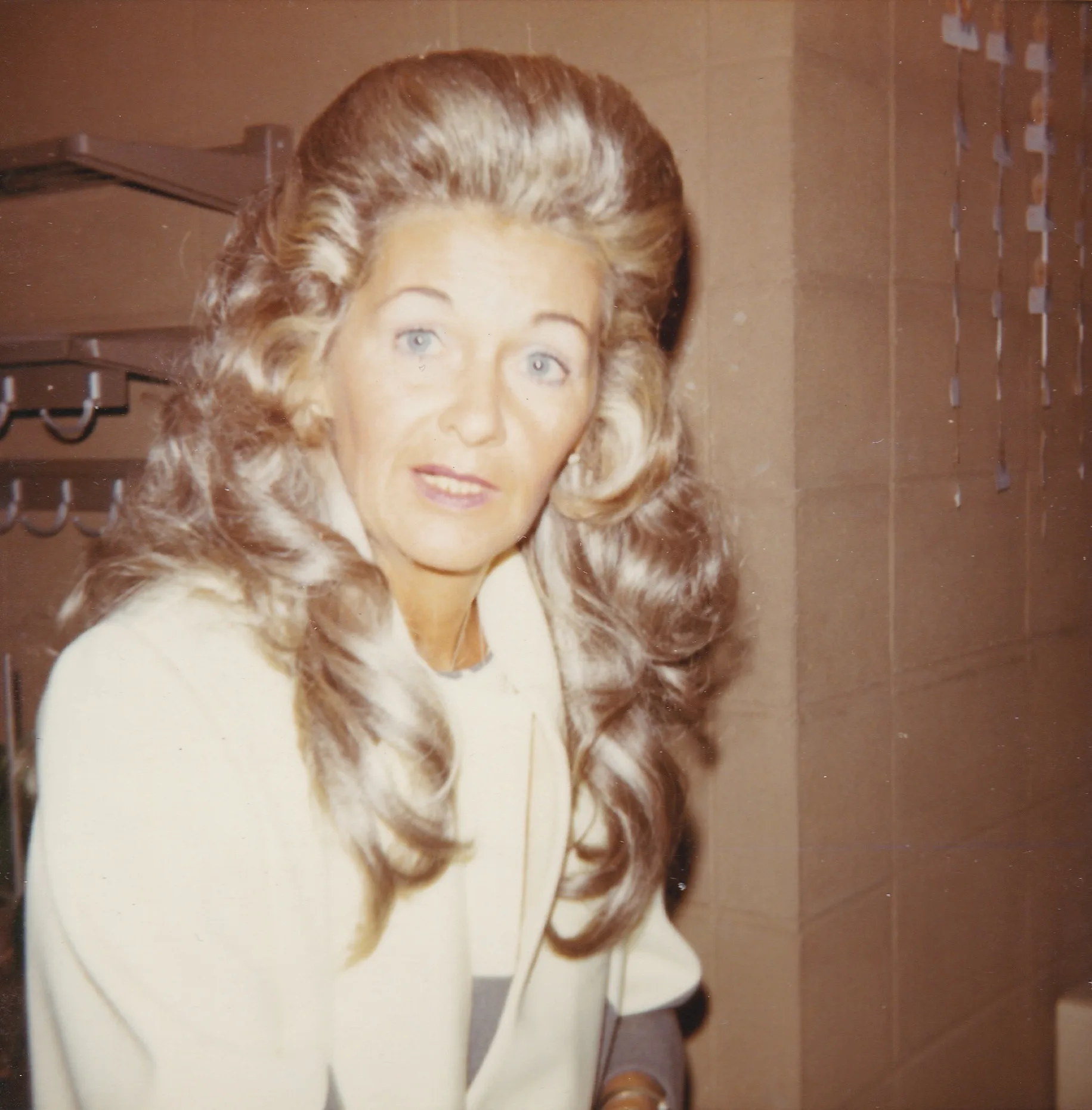
Frontenac police confirmed their officers were active at the property near North Geyer Road near as part of the more than 50-year-old missing person case of Marie Beula Smith Mueller. She went missing in March 1972, when she was 43 and in the process of leaving her husband, Dr. Donn Mueller, who at the time owned the property being searched yesterday.
Get a fresh take on the day’s top news
Subscribe to the St. Louis Daily newsletter for a smart, succinct guide to local news from award-winning journalists Sarah Fenske and Ryan Krull.
“I looked out my window and saw the big black truck pulling in,” said neighbor Cindy Heffernan. She said Mueller’s former house is under contract and she initially thought the people on site were conducting an inspection related to the pending sale. “All of sudden, I see the police presence, I wonder what’s going on.”
Near the end of the day yesterday, Frontenac police said in a statement that the search of the property failed to turn up any positive results, meaning that for the meantime the 53 year-old case will remain cold for at least a little while longer. The department did stress that, “This case remains as an active and ongoing investigation.”
The disappearance of Marie Mueller has received scant media attention over the years, with the most in-depth exploration of the cold case coming in the form of a 2023 episode of the podcast Missing Persons, which includes a lengthy interview with the Muellers’ daughter, Donna, who was 7 in 1972
The reporters on that podcast cite police reports detailing the Frontenac police investigation into Marie’s disappearance—reports that paint a suspicious picture of her husband, Donn.
Marie had filed for divorce the year before, and a colleague of Donn’s told police that the doctor had conveyed to him that if he wanted to get rid of Marie, he knew how to do it.
Donna herself spoke on the podcast about her parents having a volatile relationship, marked by intense fighting interspersed with periods of relative calm.
Then, on March 10, 1972, Donn visited the Frontenac police station and told an officer he hadn’t seen his wife in five days. He didn’t want to make a formal missing persons report but was just letting them know in case any other law enforcement agencies made inquiries.
About three weeks later, at 3 p.m. on March 30, 1972, the doctor returned to the police station and made a missing persons report “on the advice of his attorney.” He told police that back on March 5, he and his wife had an especially nasty row. A hobbyist pilot, Donn said that in order to get away from his wife that night, went to Lambert airport to watch planes take off and land. When he returned, his two kids were home, but Marie was gone, along with a suitcase, a significant amount of cash, jewelry, and “a pistol of unknown caliber.” He was at work the following day when his wife called him, taunting him, and saying, “Well, how do you like it?” before hanging up.
Donn conveyed to police his wife may have had “suicidal tendencies.” He later hired a man to plant a tree in his yard, the police report says. The arborist, when he arrived, found a hole already dug.
Police interviews with Marie’s hairdresser and a friend indicated that Marie feared her husband. In October 1973, Marie’s brother, Herb, brought patient records to Frontenac police that had belonged to Dr. Mueller’s medical practice and, according to the Missing Persons podcast, had been given to Herb by Marie with instructions that they be handed over to police should anything happen to her. The significance of the documents isn’t known, though the police reports cited in the podcast include a police interview with a former nurse at Mueller’s office who said the doctor conducted “fraudulent transactions as a routine part of his practice.”
Those same reports indicate that on two occasions, police presented a criminal case against Mueller to the St. Louis County Prosecuting Attorney’s Office and the charges were declined. That almost certainly had to do with no body having ever been found.
Donn Mueller subsequently moved to Arizona and has since passed away.
The statement issued by the Frontenac PD yesterday stressed that, “At this time, we want to reassure the public that there is no safety risk to the community connected to this case.”
There were more than a dozen personnel on the scene yesterday, searching in a corner of the yard near a tree. Heffernan said that police dogs had been out a few days prior. Presumably those dogs had hit on an area warranting further investigation.
The crew working under a tent employed gear that looked high tech, as well as gear that decidedly wasn’t, indulging several wood-framed sifting devices.
Heffernan tells SLM that the same woman had lived in the house for more than 30 years, keeping the mid-century modern interior largely intact. It has seven bedrooms, most of which include in-suite bathrooms. Photos on Zillow show other hallmarks of mid-century architecture: a sunken living room and wood-paneled basement bar. The master bathroom had a sunken tub with mirrored walls on three sides. The woman who has owned it for the past several decades is elderly and recently moved out of state to be closer to family. The house was under contract to a younger couple when police cadaver dogs showed up in recent weeks.
“It’s like Dateline,” said Heffernan. “We’re kind of Dateline junkies like a lot of people, and here it is right across the street.”
Frontenac police ask that anyone who may have information about the disappearance of Marie Mueller to please call 314-994-9300.