In 2017, Army veteran Will Batie, newly diagnosed with a serious illness, needed help. He felt too sick to eat, so he visited St. Louis nonprofit Food Outreach, which has been helping people living with cancer, HIV, and diabetes access healthy food for 34 years. The Ensure nutritional shakes that Food Outreach provided kept him going. “Food Outreach saved my life,” says Batie, who has since encouraged many fellow veterans to visit the nonprofit.
Batie eventually started cooking for himself, using produce and other grocery items from the agency. He’d never eaten vegetables much before, but working with a dietitian and hanging around Food Outreach, he learned how to best prepare them. In particular, he loved the veggie lasagna they offered. Now he talks about superfoods, fiber, and omega-3s. But it wasn’t just the food and nutrition advice that Food Outreach offered that helped him—it was the care the community provided. “The family I found at Food Outreach was closer than my actual family,” he says.
Get a fresh take on the day’s top news
Subscribe to the St. Louis Daily newsletter for a smart, succinct guide to local news from award-winning journalists Sarah Fenske and Ryan Krull.
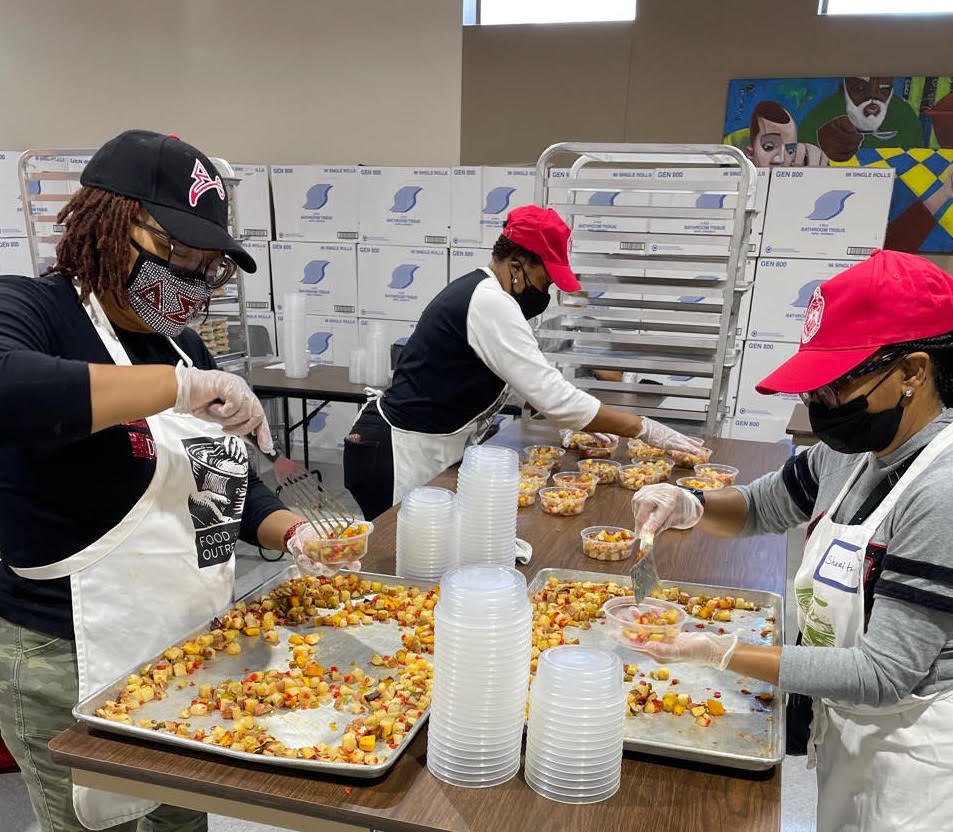
Each year, the organization welcomes hundreds of new clients like Batie. Founded in 1988 in a church kitchen by a group who wanted to feed seven friends living with HIV, Food Outreach moved to a 10,000-square-foot center in Midtown in 1999. This allowed them to expand with a commercial kitchen and a one-stop grocery center where clients could shop. In addition to growing their space, they expanded their mission, adding patients with cancer to their clients.
In a typical year, Food Outreach serves the equivalent of 350,000 meals in groceries and scratch-cooked dishes designed by registered dietitians and tailored to each client’s medical diagnosis. Clients qualify for services based on medical diagnosis and income. Food Outreach serves those with an income lower than $40,000 per year. Seventy percent of clients live on $14,000 per year or less.
Then came COVID-19. “The pandemic put a delay on our referral process because of fear about going out into the healthcare world,” says Julie Lock, executive director of Food Outreach. With people skipping routine doctor’s appointments during the pandemic, fewer were diagnosed, and referrals were down.
With slowing intakes and in-person visits, Food Outreach changed its approach. They increased home delivery service five-fold over the next two years. The intake process had to change, too. For more than two decades, a dietitian had welcomed each new client with a face-to-face meeting. During the pandemic, Food Outreach staff started admitting clients by phone.“The fact that we can introduce them to our services, finish their intake over the phone, and get them started on home delivery is a new way to think about mission,” Lock says. One surprise? They saw a dramatic increase in referrals for patients with cancer. Lock theorizes that some who were “sick and suffering” found the trip to do an intake or pick up food prohibitive.
According to the USDA, 18 percent of the St. Louis–area population lives in a food desert, meaning that they are a half mile or more away from a grocery store in urban areas and more than 10 miles away in rural areas. This suggests delivery will be a crucial strategy to fight food insecurity. A half mile from the store might not seem far, but for someone who feels ill and is reliant on public transportation, it can be insurmountable.
Food Outreach is still looking for new ways to evolve and grow, hoping to return to pre-pandemic numbers and serve 2,000 clients this year. The brand-new refrigerated delivery truck they are christening this month will help. So will new delivery drivers they’ve hired. Lock hopes the drivers will be more than just couriers, providing an opportunity for social connection that homebound clients may lack. The organization is also working to recruit clients through two pilot programs focusing on veterans with uncontrolled diabetes.
Lock is optimistic about the agency’s future. “There’s never a day where it’s exciting to know how much our nutrition is needed,” she says. “But it’s a privilege to work in a place where everyone is so committed to expanding and helping more people.”