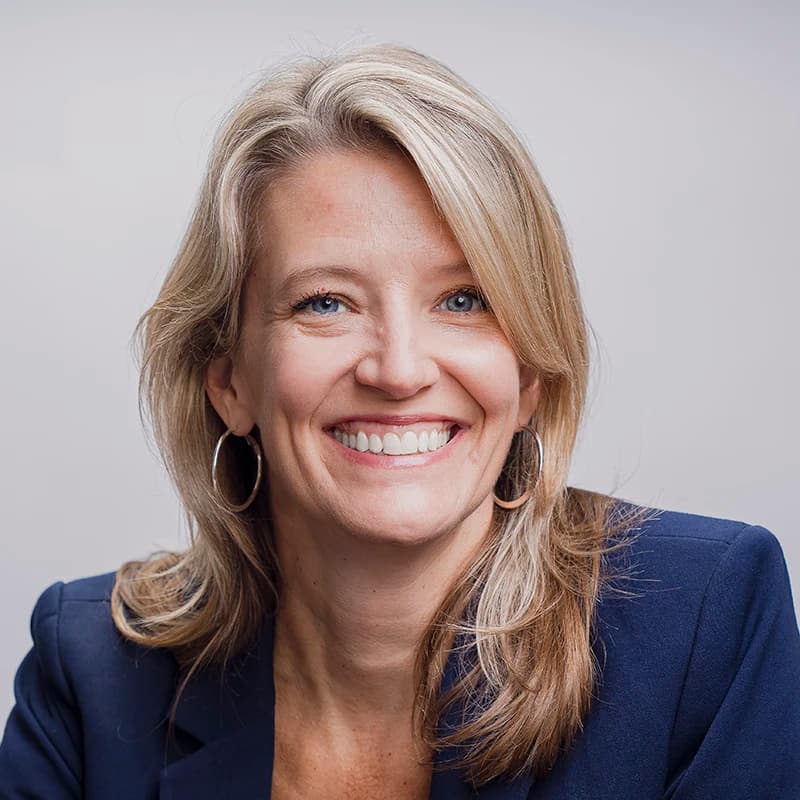
Julie Gilbert has been in St. Louis less than three weeks, but she’s already gearing up to spearhead an assignment that’s so big, and so complicated, it’s hard not to take a big gulp as you wish her luck. The new chief marketing officer for Explore St. Louis, Gilbert is tasked with developing a “unified brand for the region”—an action item the travel and tourism agency identified in a December 2025 report.
And Gilbert is ready for the challenge.
Get a fresh take on the day’s top news
Subscribe to the St. Louis Daily newsletter for a smart, succinct guide to local news from award-winning journalists Sarah Fenske and Ryan Krull.
“I knew it was going to be a lot all at once,” she says of her agenda after arriving in St. Louis on February 21. “We have to ensure that we take action strategically now. And so simultaneously, we’re looking at some pretty big initiatives, and I want to make sure that I get them in place, so that people know that if we’re saying that this is what we’re going to do, well, this is what we’re going to do.”
Gilbert comes to St. Louis from Door County, Wisconsin, where she was president and CEO of its tourism agency. A native of Missoula, Montana, she also worked for Destination Niagara, promoting Niagara Falls, and for a Scottsdale-based travel consulting group. She says she was drawn to St. Louis in part for the chance to work with new CEO Brad Dean, who himself arrived just last year and has already been making some big changes to how Explore St. Louis operates.
“He’s just incredibly well respected,” she says. “I think we are all in really good hands. He’s got a great vision, and we just need to get the work done.”
For Gilbert, the branding exercise revolves around a big question: “What is that essence of St. Louis?” She’s only beginning to explore that question herself, but even from her temporary rental downtown while she shops for a house, she likes what she sees. The urban core is gritty, yes, but it’s interesting as are the neighborhoods, she says. She’s enjoyed visiting City Museum, like any number of visiting rock stars before her. “It just blew me away,” she says.
She sees real opportunity in the way younger travelers gravitate toward grittiness rather than away from it.
“They’re tactile,” she says of younger travelers. “They want to touch and want to feel.” Rather than staying in a sterile downtown like many cities have worked hard to create to woo the convention crowd, younger visitors often want to see the real St. Louis, to explore neighborhoods where people actually live. Explore St. Louis can help by promoting those kinds of experiences, she says.
“We really need to do a better job of that,” she says. “And by doing that, then we help with pride in place. It’s almost a simultaneous exercise, because as people become more understanding that other people really like their neighborhoods and are digging into their culture and history, that makes people feel pride, too.”
Why It Matters: In recent years, campaigns like Greater St. Louis Inc.’s “STL Made” initiative and the Missouri Historical Society’s “I am St. Louis” campaign have sought to bolster pride in locals and define a place full of contradictions. But it’s been awhile since there was a major outward facing branding campaign—and Explore St. Louis’ Stakeholder Engagement Report suggests that people in the local hospitality business are eager for that to change.
They also suggest that putting some energy into branding could pay dividends. The report concludes that St. Louis doesn’t suffer from a bad brand so much as no brand. In its words, the “biggest barrier to visitation is low brand visibility, not safety.”
The report continues, “Industry research shows that St. Louis suffers most from being ‘not on the radar’ of potential visitors. Stakeholders tend to overestimate the role of safety as a deterrent. This gap indicates the need to modernize and reinvigorate the destination brand, tell more compelling stories about the region’s unique cultural assets and experiences, and reach new audiences, including younger travelers, who already show more favorable perceptions of St. Louis.”
What’s Next: Gilbert says her team is now working on a request for proposals for a branding campaign. The agency is also planning a major redesign of its website, which Gilbert says will be in the works simultaneously.