Eager to provide more scrutiny to data centers, but also stressing that the city of St. Louis is open for business, city leaders announced a plan today that would allow such projects to move forward even while giving the city, and its citizens, more of a voice in where they go. The plan takes off the table the idea—backed unanimously by the city’s planning commission last week—of a one-year citywide moratorium for such projects.
Mayor Cara Spencer said she plans to enact the new regulations through an executive order that she’ll sign Friday. The order would require any new data center in the city to have a public hearing as well as provide detailed information about water and energy use, among other things. She described it as “a thoughtful framework for incorporating data centers into the city zoning codes and water codes.”
Get a fresh take on the day’s top news
Subscribe to the St. Louis Daily newsletter for a smart, succinct guide to local news from award-winning journalists Sarah Fenske and Ryan Krull.
Spencer stressed she wanted the city to be open for business and that having data centers will help create an ecosystem that makes St. Louis more desirable for other technology companies to set up shop here, too.
Spencer was flanked by Aldermanic President Megan Green and Ward 1 Alderwoman Anne Schweitzer, who previously proposed a one-year moratorium on data center development in the city, saying that the city needed time to develop appropriate regulations.
Schweitzer said Thursday that a reason she felt the moratorium was necessary was that the city wasn’t getting a lot of answers to questions on data center projects—specifically their water use and energy use, as well as the size and scope of the jobs and tax revenue any one project would generate. Because the city previously hasn’t had zoning specific to data centers, at least a dozen are now operating within its limits—and many have been treated like warehouses, with no need for additional scrutiny. (In neighborhoods like downtown and Downtown West, which have seen the bulk of data centers, warehouses do not require a conditional use permit, Schweitzer says.)
“We’ll now be able to get answers to which helps us make better decisions as a city,” she said.
Green added that she feels this new approach balances community protections while acknowledging the “the potential to bring value to our city in terms of tax revenue.”
Alderman Michael Browning, who was also present, agreed the executive order adroitly “splits the difference”
“It asks important questions to help protect our communities. At the same time, let’s make sure that whatever investment we are making in St. Louis benefits St. Louis.”
Data centers have drawn massive pushback in cities such as St. Charles, which saw residents rise up against a $1 billion project whose backers declined to reveal which big tech company was behind it. (After the project was scuttled, St. Louis Public Radio obtained records identifying it as Google.) Data centers have drawn criticism for their voracious energy needs (they require massive amounts of both water and electricity). They have also led to complaints in other cities around the country that they emit a “dull aural hum” that can cause headaches, vertigo, and nausea.
Schweitzer told SLM Wednesday that understanding more about water use could allow the city’s municipal water department to assess these projects at a different rate. “That is in their purview to assess different users at different rates,” she says.
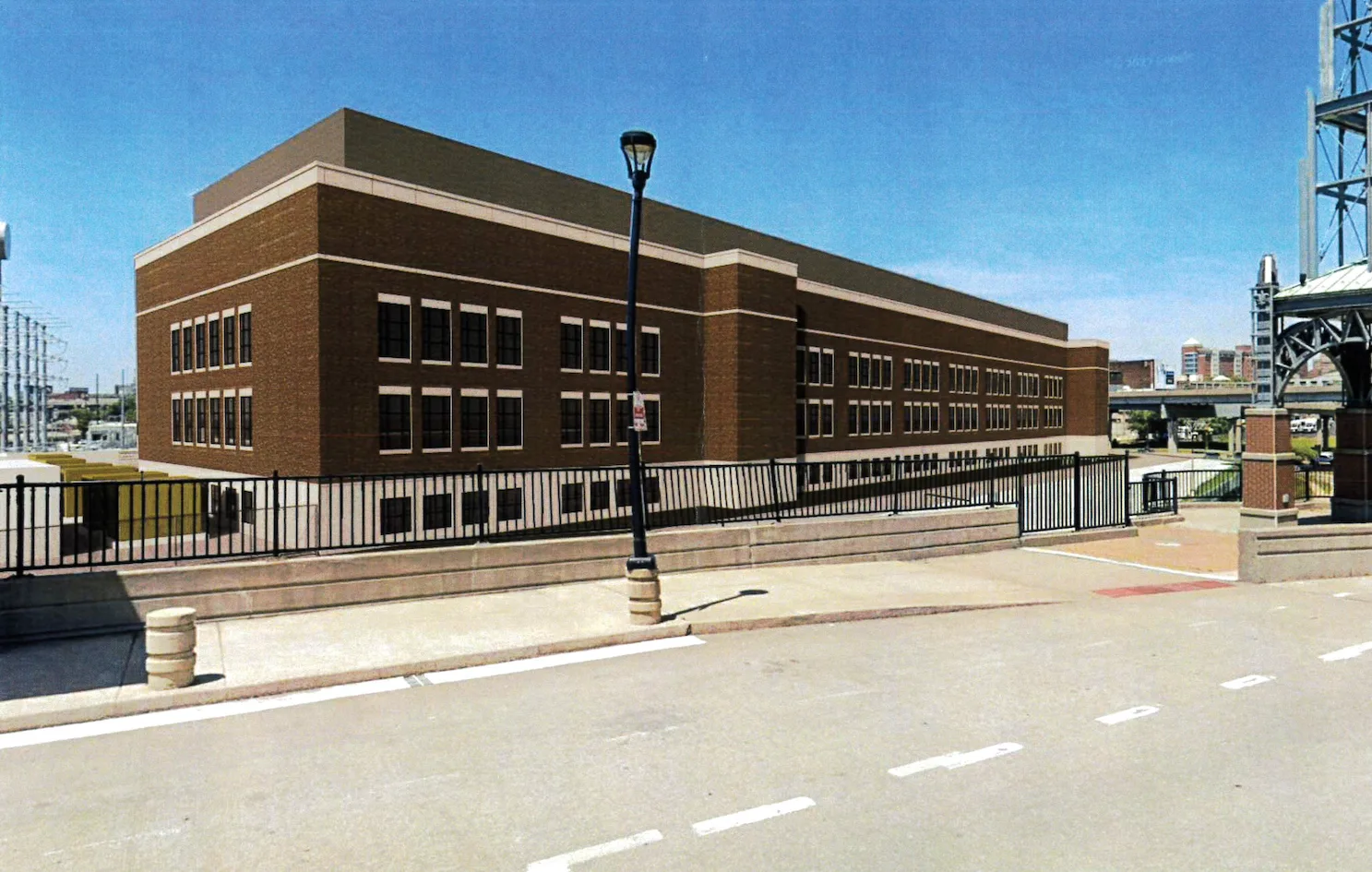
The first project that will use the city’s new framework is almost certainly the data center proposed for Midtown by Green Street Real Estate Ventures. The executive director of the city’s planning commission, Don Roe, previously wrote that the project “could require the same energy as nearly 13,000 homes—roughly the number of homes as in Shaw, Tower Grove South, and Tower Grove East combined.” The multistory data center, which would be built just off South Grand in a parking lot next to the Midtown Power Substation and the Armory, has a hearing for a conditional use permit set for next Wednesday, Sept. 25.
Schweitzer acknowledges that her prior proposal for a moratorium drew pushback from far more people than just Green Street. Of the compromise forged with the mayor’s office, she said, “I wouldn’t say there’s any one entity who was for or against this in a way that pushed it in any direction. It’s trying to be collaborative and listen to the stakeholders and move forward in a thoughtful way and get more information than we’d have if we had done a straight moratorium.”
She says the city still plans to tackle the issue as part of the zoning overhaul that is just getting underway. But she sees this framework as a good next step. “The goal is having good regulations,” she says. “At the end of the day, I think this brings us closer to that goal.”