St. Louis Alderwoman Anne Schweitzer plans to introduce a bill to put a moratorium on new data centers in the city—putting the issue front and center as the Board of Aldermen reconvenes after its summer break.
Schweitzer said she was catalyzed by the debate in St. Charles, where residents’ vehement opposition to a $1 billion project led to the developer withdrawing their proposal. The city of St. Louis has also recently been studying the issue, with a memo issued by the executive director of the city’s Planning Commission, Don Roe, examining some of the issues around data centers and suggesting the city’s zoning code is not prepared to deal with them. That memo spurred the commission last night to vote unanimously in favor of a moratorium, Schweitzer says.
Get a fresh take on the day’s top news
Subscribe to the St. Louis Daily newsletter for a smart, succinct guide to local news from award-winning journalists Sarah Fenske and Ryan Krull.
“There are cities of smaller sizes across the country that are having to lead the regulation charge in data centers, because that’s where the buildings or land is available to build these,” she says. “So we have large vacant properties that create some opportunity, which is a good thing. But with a new industry emerging, I think it makes sense to know what that industry is, what it needs from the place where they do business, and whether it makes sense for the surrounding community.”
Mayor Cara Spencer, for one, says she is in favor of the moratorium. But, she cautioned in a statement, “Following reporting on a proposed pause on new permits for data centers in St. Louis, it is important that we as a city are clear that we are not seeking to ban data centers. While I have concerns about data centers’ effects on the environment, utility prices, vibrancy and urban living, I also recognize their importance to key industries in St. Louis, including biotech, the geospatial field, agtech and health care, and my office is working closely with the Board of Aldermen and key stakeholders to propose responsible regulations to allow for their appropriate development.”
As SLM previously reported, at least a dozen data centers are already in operation in the city. Most are not close to the scale of the $1 billion project shot down in St. Charles (the largest now open is one-third its size).
But city leaders are concerned about their potential impact on the environment, on neighbors, and on the urban streetscape. Many of the existing data centers in the city of St. Louis are downtown. Schweitzer said there are also unique concerns specific to that neighborhood when it comes to data centers. “The vibrancy of our downtown is a pretty much universally agreed upon necessity for the revival of our city, and data centers are not the way to get there.”
Roe’s memo compares them to warehouses, noting that they generally involve valuable jobs only during construction.
“However, permanent jobs associated with data centers are very limited,” he wrote. “Compared to traditional industrial uses, very large data centers require only a small number of people to secure and manage the building (e.g., 10 people at any given time for a 100,000 square foot facility, or 30 jobs total for individuals working in 8 hour shifts).” And that’s even as they suck up enormous amounts of power and water—and, Roe wrote, sometimes create “a loud buzz or hum” audible to neighbors.
Outlining the issues, and the city’s current lack of data center-specific zoning, Roe suggested
suggested the city had two options: rapid action to develop interim zoning regulations limiting data centers to appropriate places, or a moratorium mimicking the first-of-its-kind one enacted in St. Charles earlier this summer.
Of the latter, Roe wrote, “A time-limited moratorium would mean that no new permits would be accepted while the City develops a full understanding of the issue and develops quality land use, environmental, and other regulations. This path may very well be in the public’s best interest.”
Schweitzer says the planning commission discussion was a fruitful one. “It was eye opening, I think, for everyone on the planning commission to learn more about what data centers are and what they do and what they don’t do,” she says, adding, “The discussion around energy use was really interesting.”
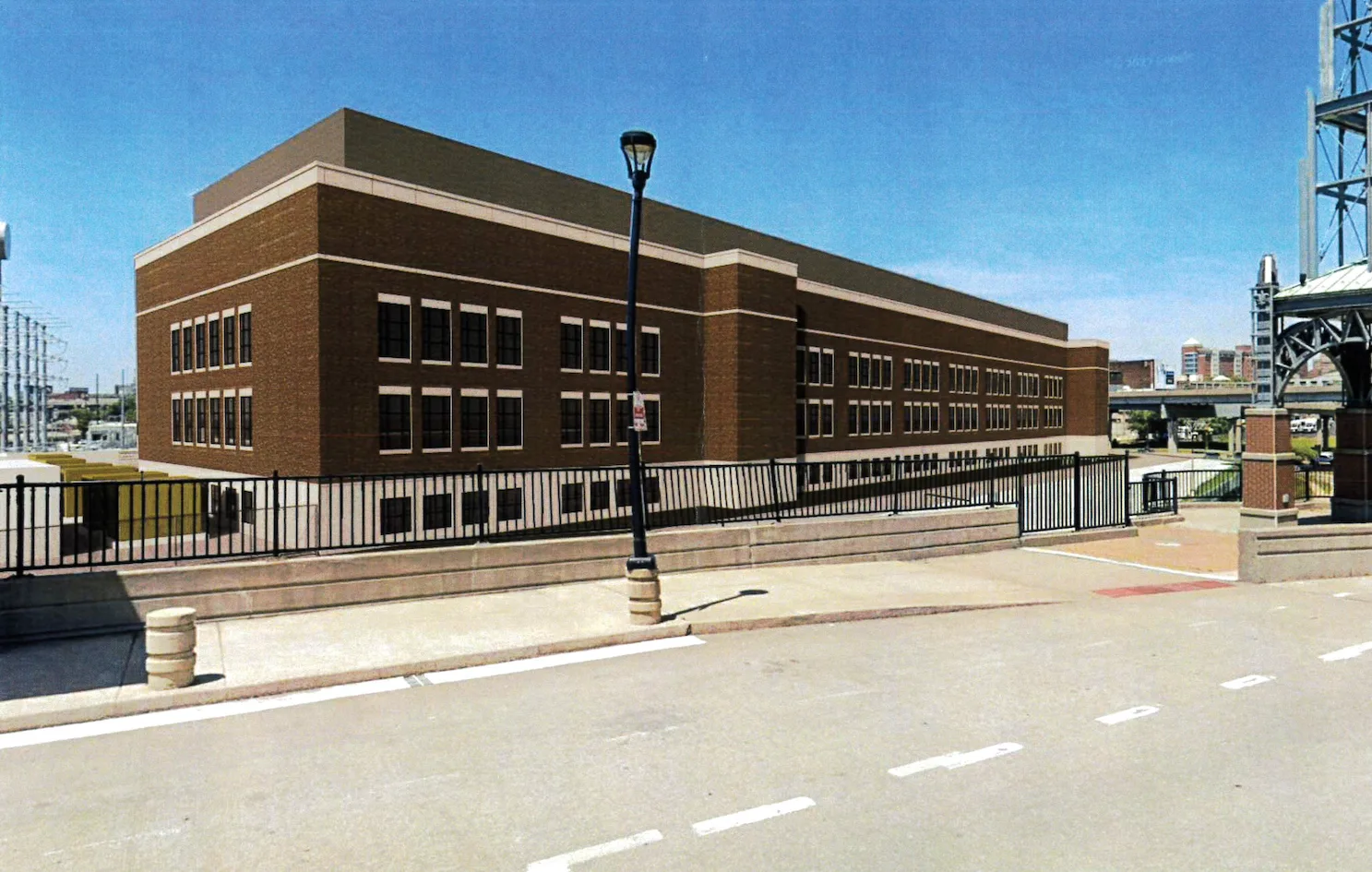
Indeed, Roe’s report notes that a single data center like one proposed in Midtown by Green Street Real Estate Ventures “could require the same energy as nearly 13,000 homes—roughly the number of homes as in Shaw, Tower Grove South, and Tower Grove East combined.” At a time when the city has been requiring businesses to benchmark their energy use in hopes of cutting emissions, that would represent a major setback. (It’s worth noting that the Green Street proposal, which shows a multistory data center being built off South Grand in a parking lot next to the Midtown Power Substation and the Armory, could be in peril if the moratorium goes through.)
St. Louis and St. Charles aren’t the only government entities inspired to get ahead of the issue (or at least not fall further behind). At the last meeting of the East West Gateway Council of Governments, on Aug. 27, St. Charles County Executive Steve Ehlmann initiated a conversation about data centers, asking the board if they felt the topic was something the organization should research. Members agreed, and staff now plans to share what they learned at the meeting in October, a spokeswoman said.