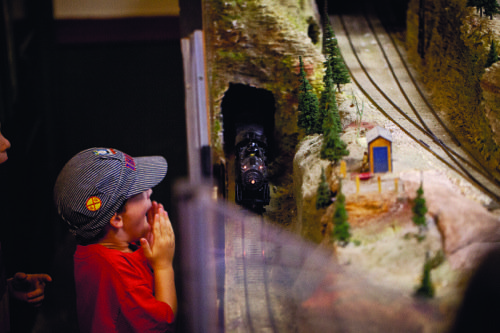
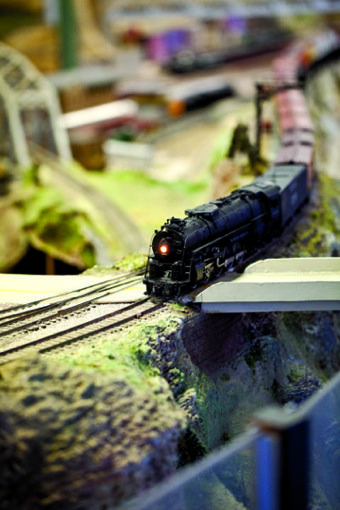
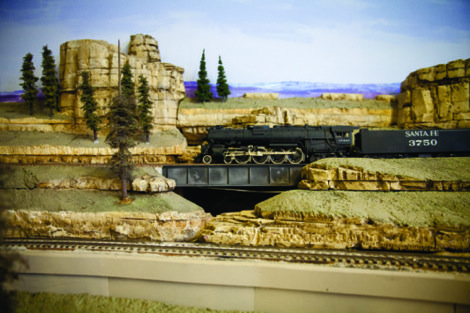
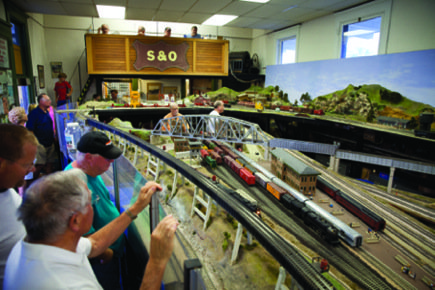
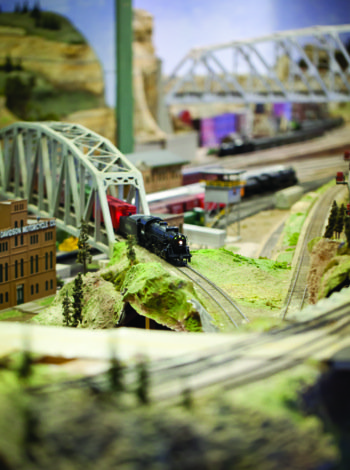
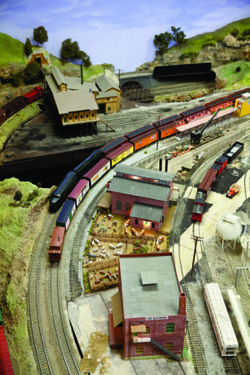
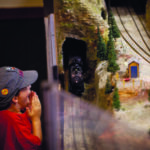
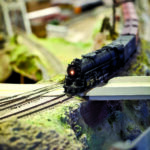
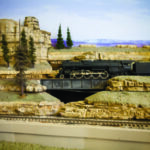
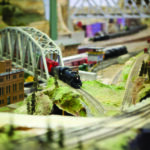
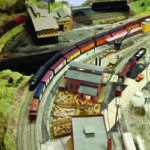
The O-scale diesel engine hums down the track, pulling a parade of freight cars across the countryside, over rolling hills, past lush stands of trees. It passes a mine, a Harley-Davidson dealership, and a meatpacking plant, fake blood painted on the model carcasses. Sometimes, a child will notice the detail and exclaim, “Ew, look at that, fresh meat!” The engine passes through a tunnel, then crosses a 10-foot bridge, the equivalent of a 480-foot span. The structure appears to be metal, but it’s actually wood and cardboard painted silver, the imitation rivets made with a Braille embosser.
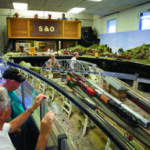
This layout, assembled over decades by the Big Bend Railroad Club (8833 Big Bend, 314-968-6847), the area’s oldest model-railroading group, occupies the old Webster Groves train depot.
Get a fresh take on the day’s top news
Subscribe to the St. Louis Daily newsletter for a smart, succinct guide to local news from award-winning journalists Sarah Fenske and Ryan Krull.
“Operating a model railroad gives you a chance to build your own community, your own environment, and you can operate it the way you want,” says secretary Ken Rimmel, who’s been a member for 30 years. This month, for the holiday season, the club will host public events every Tuesday and Saturday.
Ten students from Webster Groves High School founded the group in 1938 and moved into the depot that same year, reaching a handshake deal with the Frisco railroad. It was a challenging time, as the Depression ended and World War II began, but the club held together through the years, purchasing the building in 1994 to save it from demolition. The club’s collection of track, scenery, and trains includes many valuable antiques.
Hobbyists operate the trains from a loft, using a complicated system of switches and sidings. It’s a testament to their talent as engineers that the trains don’t collide while traversing the 800 feet of track. When four or five are running at once, it can take 15 or 20 minutes for a train to make it from one end of the layout (called Ozark) to the other (Springfield), depending on how often it must pull off to let others pass.
A shining moment for the club came in 2005, when a sick kid from Kansas was making periodic trips to have his lungs drained at St. Louis Children’s Hospital. He was interested in seeing the display, but his treatment schedule never lined up with the club’s regular operation nights, usually the first Tuesday of each month. So the club held a special event in the child’s honor. “The kid was like, ‘Wow,’” Rimmel recalls. That feeling keeps members coming back for life; it’s the eternal thrill of watching an engine chug around the bend.