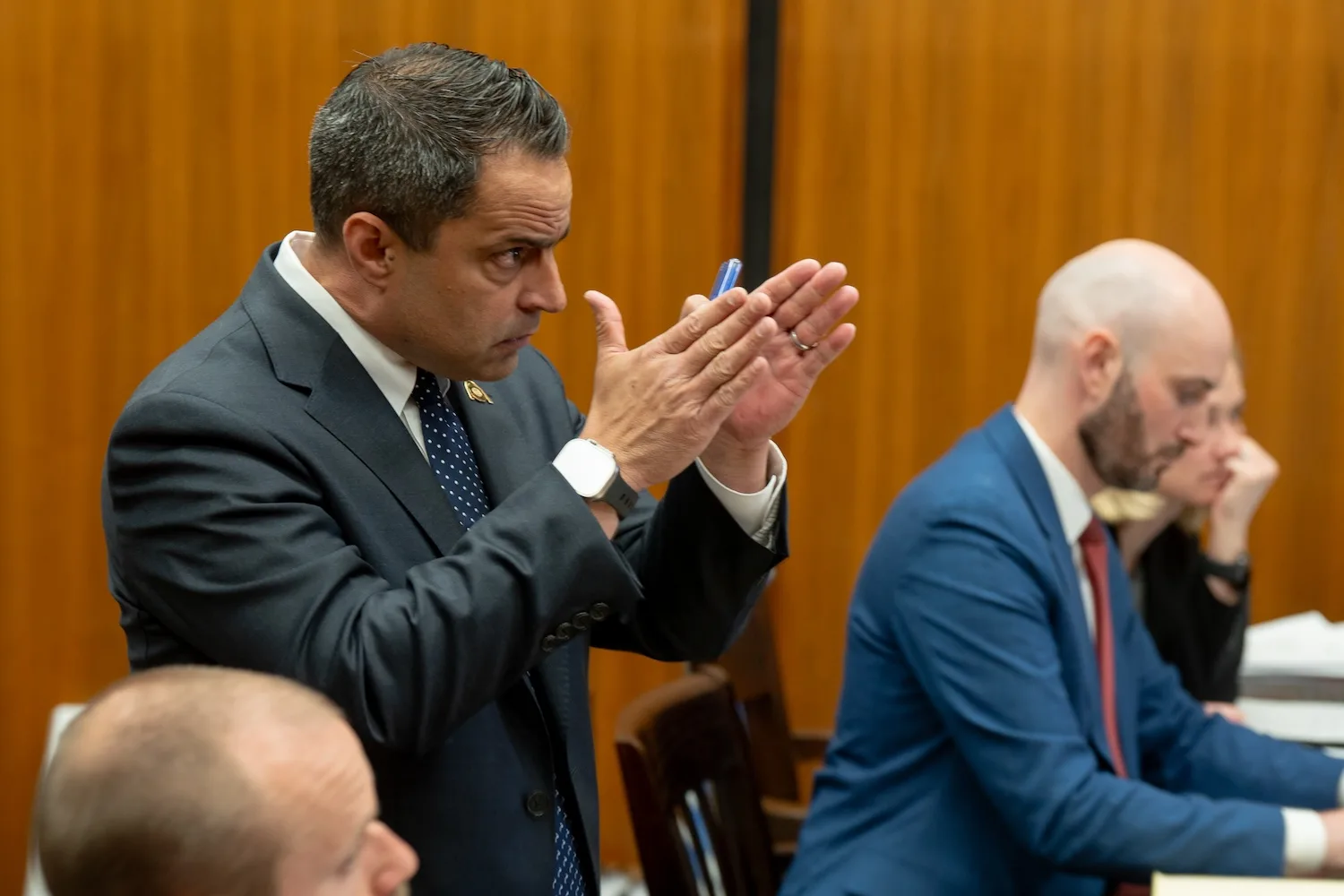
Last week, the Missouri appeals court dismissed an appeal filed by the state-appointed Police Board, saying it had failed to follow proper procedure in its demands that the City of St. Louis give it an additional $67 million this fiscal year. The board’s lawyer, Chris Graville, swiftly refiled.
But on Monday, the same court ruled against the board again. Judge John Torbitzky suggested in his brief denial that the litigation previously filed by the city was a better way to sort out the legal questions Graville was attempting to fast-track.
Get a fresh take on the day’s top news
Subscribe to the St. Louis Daily newsletter for a smart, succinct guide to local news from award-winning journalists Sarah Fenske and Ryan Krull.
The Police Board’s filings “leave numerous unanswered questions, including the practical ability of these funds to be appropriated and put to use before the end of the fiscal year,” he wrote. “In other words, it is unclear whether issuance of the writ would have any practical effect.”
He continued, “The City’s fiscal year ends in eleven business days, including today. This is an inadequate time for the parties to fully brief and argue the issues. Many of these same issues remain pending before the circuit court in separate litigation filed by the City in regard to fiscal year 2027, where they can be considered in full and in conjunction with related issues.”
Mayor Cara Spencer responded to the ruling Monday evening saying, “The judge commented that this appeal didn’t make any sense and we agree.”
Mitch McCoy, a spokesman for the police department, said, “Litigation has many steps and other suits are underway. We will hold off on commenting until there’s ultimate legal clarity.”
It was a busy Monday for litigation concerning the Police Board. A Cole County judge mostly agreed with the board, ruling that its creation did not violate the Hancock Amendment, a provision of the state constitution that prevents the state legislature from imposing laws on municipalities that increase costs without providing funding for them.
That same judge, however, found that a different part of the law was a Hancock Amendment violation: The provision requiring the city to pay for health insurance and life insurance for retired officers for the rest of their lives after leaving the force.
The lawsuit in Cole County was brought by Jamala Rogers and Mike Milton, two St. Louis residents. They were represented in the suit by ArchCity Defenders.
Two separate additional challenges to the state takeover continue—one by Aldermanic President Megan Green and the more recent one filed by Spencer. The latter is the one Judge Torbitzky referred to when he suggested that lawsuit was the proper place to determine how much the city must pay police. While the law returning control of the department to a state board required an escalating percentage of the city’s general fund to go to police, the Police Board’s attorney has suggested the general fund also includes the city’s reserves and its portion of Rams settlement funds. Spencer’s lawsuit had sought a ruling that those funds were not revenue this year and shouldn’t be the basis of the total.
The Police Board later filed its own lawsuit suggesting that money was in fact general revenue and demanding the money be paid out before the end of the fiscal year on June 30. Judge Joan Moriarty ruled against them on June 2, setting the stage for the three separate, unsuccessful appeals the Police Board has pursued in the past week.