From the east, the skyline view of St. Louis is dominated, naturally, by the Arch.
And from the west, might the view be dominated someday by the Food Tower?
Get a fresh take on the day’s top news
Subscribe to the St. Louis Daily newsletter for a smart, succinct guide to local news from award-winning journalists Sarah Fenske and Ryan Krull.
St. Louis architect Peter Tao of Tao + Lee Associates says it’s fun to imagine.
The tower that Tao has in mind already exists at 909 Chestnut and is better known to St. Louisans as The Giant Vacant Building That Used to Be AT&T’s Offices. At 44 stories and 1.4 million square feet, the building has been empty since AT&T moved out several years ago. It’s under contract—but four other potential deals have fallen through in the past three years. It presents one of downtown St. Louis’ biggest challenges, as city officials and commercial property investors seek to ensure downtown retains its stature as the region’s biggest employment center and a hub for creative industries.
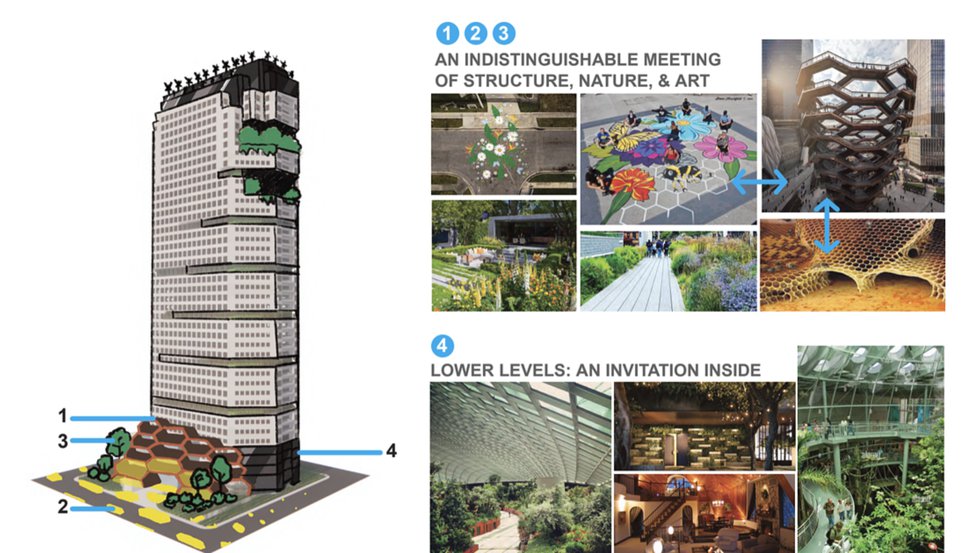
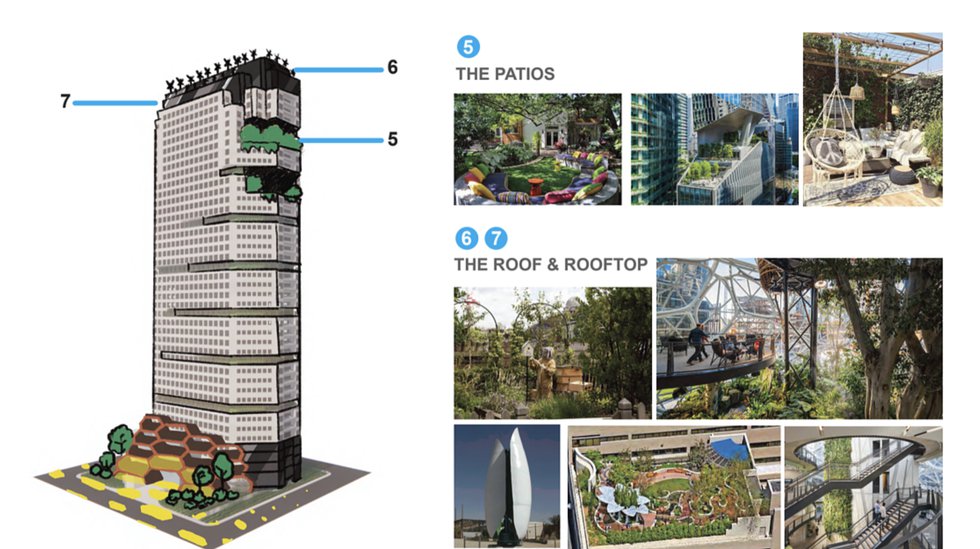
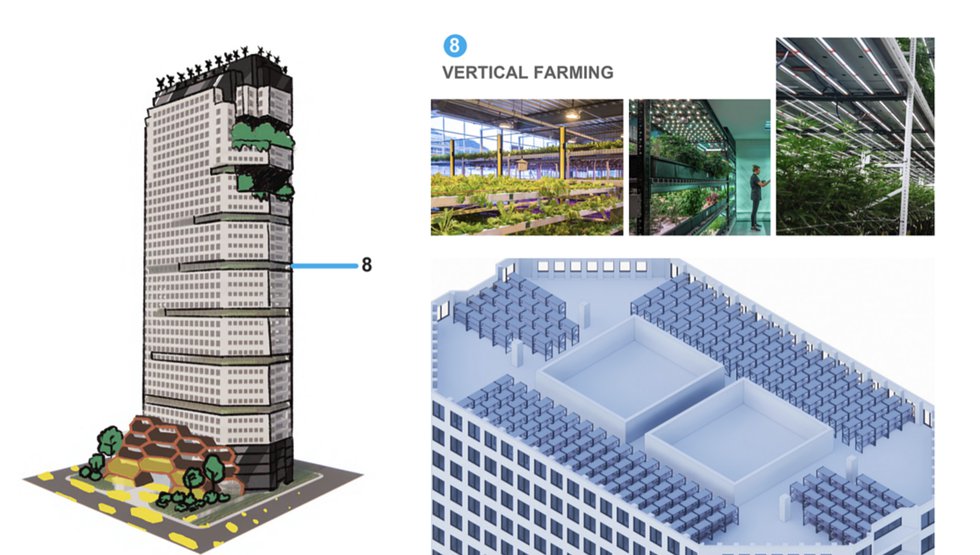
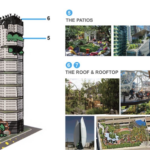
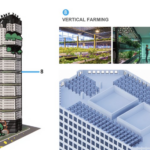
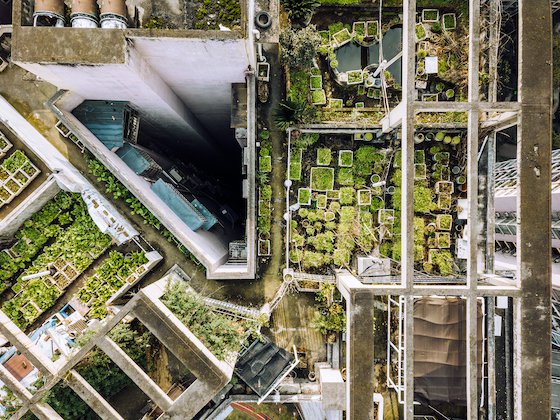
Tao, in collaboration with St. Louis experiential designer and Loutopia creator Jayvn Solomon, has developed a concept for a repurposed tower with lush, plant-filled outdoor terraces on some of its upper floors, a green rooftop, and reimagined lower floors that could attract visitors and help activate the streets below. The heart of the Food Tower would be 28 floors that Tao imagines as a massive indoor vertical farm. The math—and the plants—could stack up this way: three tiers of stacked plants on each floor, with the 28 floors combined offering approximately 12 acres of growing space.
“When we saw this building, and we were thinking about what to do, we just imagined it as: What if this building could feed the city?” Tao says. He has a couple of personal connections, too: The offices for Tao + Lee Associates are a five-minute walk from the tower. His father, engineer William Tao, worked on the building when it was designed in the early 1980s as the headquarters for Southwestern Bell. (Peter Tao hasn’t worked on a venture like the Food Tower before, but his firm has done research and work on other projects that involve farming in controlled environments, as well as work on projects like the new visitor center at the Missouri Botanical Garden.)
For a crop like lettuce, which can be harvested four times a year from indoor farms, the growing space would be the equivalent of a 48-acre outdoor farm, Tao calculates. And why stop at vegetables, he muses, when you consider that Missouri and the Midwest are hot markets for products like cannabis?
“If you look at the development of high rises all around the world now, they are introducing everything possible… Why not have fun with this building?” Tao asks. “Take away some of the enclosures, making them into viewing decks. One deck facing east looks directly at the Arch. Could this structure under its repurposed vision be a new symbol of our region and city and our thinking, rather than just another commercial tower?”
It’s a symbol that’s popped up in other places. The world’s largest indoor vertical farm, by an indoor farming company called AeroFarms, is housed in a former steel mill in Newark, New Jersey. Nearly 2 million pounds of greens are harvested from the 70,000-square-foot facility each year. But it could soon lose its “world’s largest” title to Brooklyn-based Upward Farms, which is working on a 250,000-square-foot vertical farm in Luzerne County, Pennsylvania. In the United Kingdom, Edinburgh-based company Shockingly Fresh is working on a vertical farm in Scotland that it hopes will lessen some of the reliance on imports.
Back in St. Louis, Tao’s collaboration with Solomon brought additional layers beyond the idea of feeding the city, adding elements that would help educate people about where their food comes from. Closer to street level, plants both outdoors and in would provide a seamless meeting of structure, nature, and art, inviting passersby inside. Tao and Solomon imagine a light-filled, honeycomb structure that takes its cue from the Vessel at New York’s Hudson Yards.
By serving not only as a center for food production but also as a gathering spot for people to explore such topics as nutrition education, food equity, and sustainable energy, the Food Tower could become a “self-sustaining pillar” for the community, Tao says.
St. Louis is a natural place for concepts like the Food Tower to sprout, given the region’s existing concentration of agricultural science workers at such places as the Donald Danforth Plant Science Center. In August, AeroFarms announced plans to build a 150,000-square-foot indoor farm in the St. Louis area, marking its expansion to the Midwest.
AeroFarms was selected for the project by the St. Louis Controlled Environment Agriculture Coalition, a group convened by the World Wildlife Fund (WWF) with backing from St. Louis business executive and former McDonnell Douglas chief executive officer John McDonnell. Members of the coalition include business/civic organization Greater St. Louis, Inc.; the Danforth Center; Schnuck Markets; and the Yield Lab, a St. Louis–based investor in early-stage agrifood companies.
Controlled environment agriculture, or CEA, “is a very small, nascent industry still, and it’s very disparate,” says Julia Kurnik, director of innovation start-ups for WWF. “To us, St. Louis was a big, exciting place to put it because of its expertise in agriculture and plant science. To be at the forefront of indoor ag is a natural sort of position for St. Louis to hold.”
There are plenty of hurdles that CEA (also known as “soilless” ag) needs to clear, however, before it can become a mainstay of the nation’s food supply, according to the first phase of an analysis that WWF released in May 2020. One of these hurdles is cost. Most leafy greens produced by soilless farming have to be sold at a premium (think: organic) price point due to the high energy costs associated with producing them, Kurnik notes. This leads directly to a second issue: environmental impacts. WWF’s analysis found that conventionally grown lettuce in California had a lower climate-change impact even after being shipped to St. Louis than CEA lettuce grown right here in town, because it uses less energy to grow and California has a cleaner mix of energy sources than Missouri. Still, CEA excels in other areas. Greenhouse hydroponic agriculture scores best when it comes to land and water use, for example.
The second phase of the WWF analysis will probably wrap up sometime this summer, Kurnik says. At that point, the coalition will announce a specific site for the AeroFarms project (development incentives must still be approved by state and local officials) and provide an update on a new center of excellence that could cement St. Louis’ status as a hub for the emerging CEA industry.
As for Tao, his Food Tower is just a concept so far; he stays in touch with groups such as Greater STL, Inc. but says he’s not had discussions with anyone about taking the concept beyond the drawing board.
Solomon echoes Tao’s view that it’s important to be able to dream about big things. And he notes that if downtown boosters want to imagine a new space that people from all across the community can enjoy, they can look to plenty of places that already do a good job of drawing visitors in.
“My personal answer would be to look at what’s working,” Solomon says, “the Forest Parks, the Arches, the Citygardens—these types of spaces, and just represent those values in new spaces.”
View renderings of Tao and Solomon’s concept below: