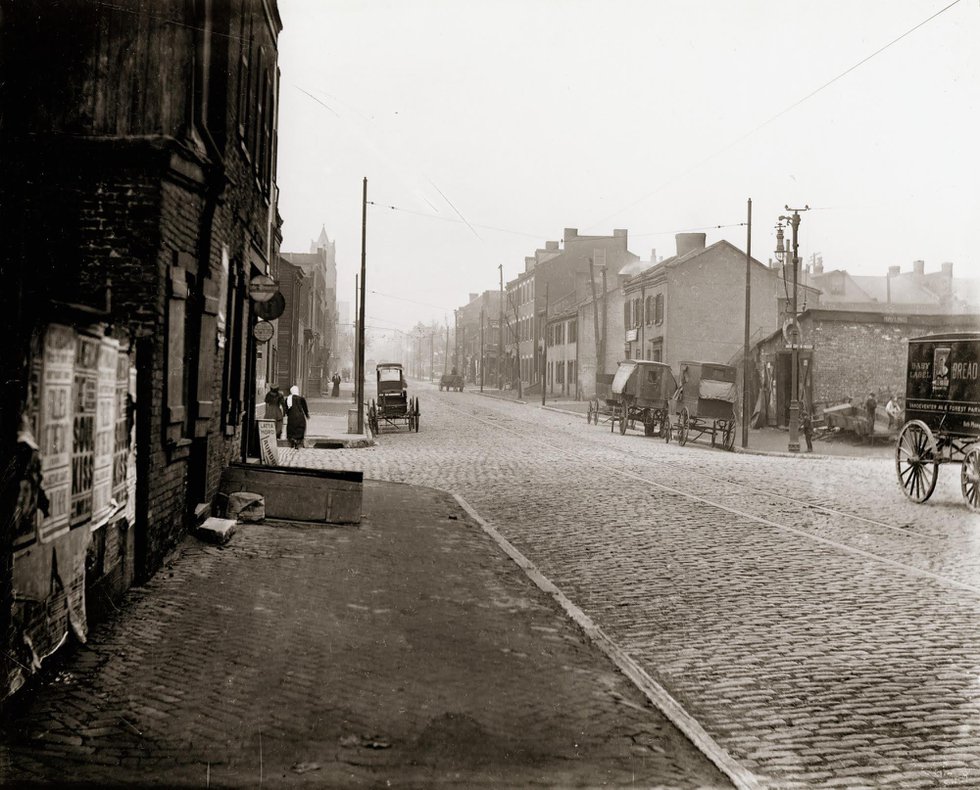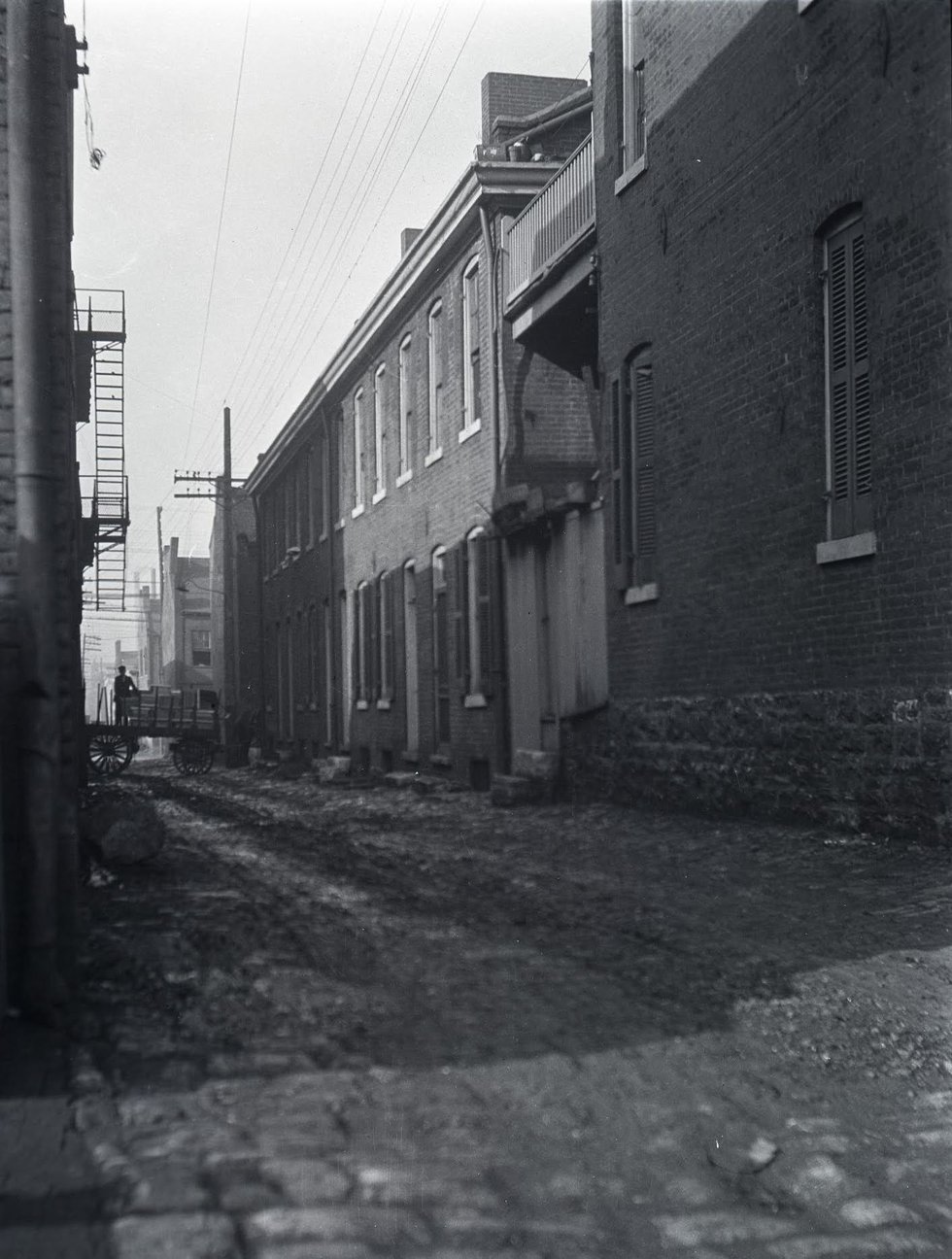
Carr Square in the years between the World Wars was a thriving neighborhood: dense, urban, and messy—a St. Louis version of the Lower East Side in the words of local business owner Randy Vines. But as we saw last week, as early as 1878 according to A Tour of St. Louis, written by and for the wealthy elite of the city, it was also a misunderstood and feared part of the city. It was only blocks away from Washington Avenue and the heart of downtown. The burgeoning modern field of urban planning, which had grown out of the City Beautiful movement, saw the perfect opportunity to impose order…and to crush the sometimes disobedient neighborhood. City planners were already doing just that in the central corridor, demolishing century-old houses for the construction of a new municipal plaza around City Hall. In the process, they created new buildings such as the Civil Courts.
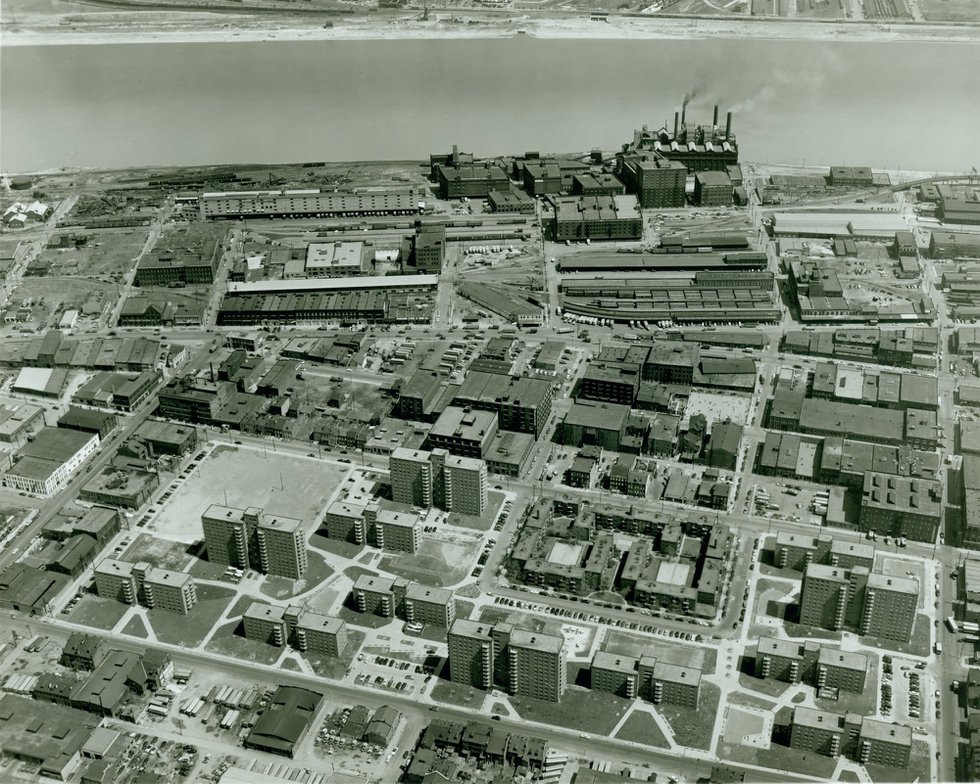
Urban planning is as old as human civilization, and certainly the planners in the 1930s and ’40s in St. Louis were looking to the ancient Greeks and Romans for the rigid grid they were placing on the city and its neighborhoods. But even by modern standards, Greek and Roman cities were messy, mixed-used conglomerations, with industry, shops, apartments, and houses sitting next to one another in a hodgepodge of urbanity.
Even more horrendously, early city leaders had not enforced a standard block or lot size, so each private developer, whether it was William C. Carr or Adam Lemp, could choose how he developed his addition to St. Louis’ street grid in a manner he felt would maximize profit at the auction block. The result is a wonderfully contorted and extemporaneous street grid that twists and jogs at random intervals. The numbered streets north and south of downtown have actually shifted over the years as officials sought to impose some sort of logic to the disorder. Twentieth-century city planners hated it.
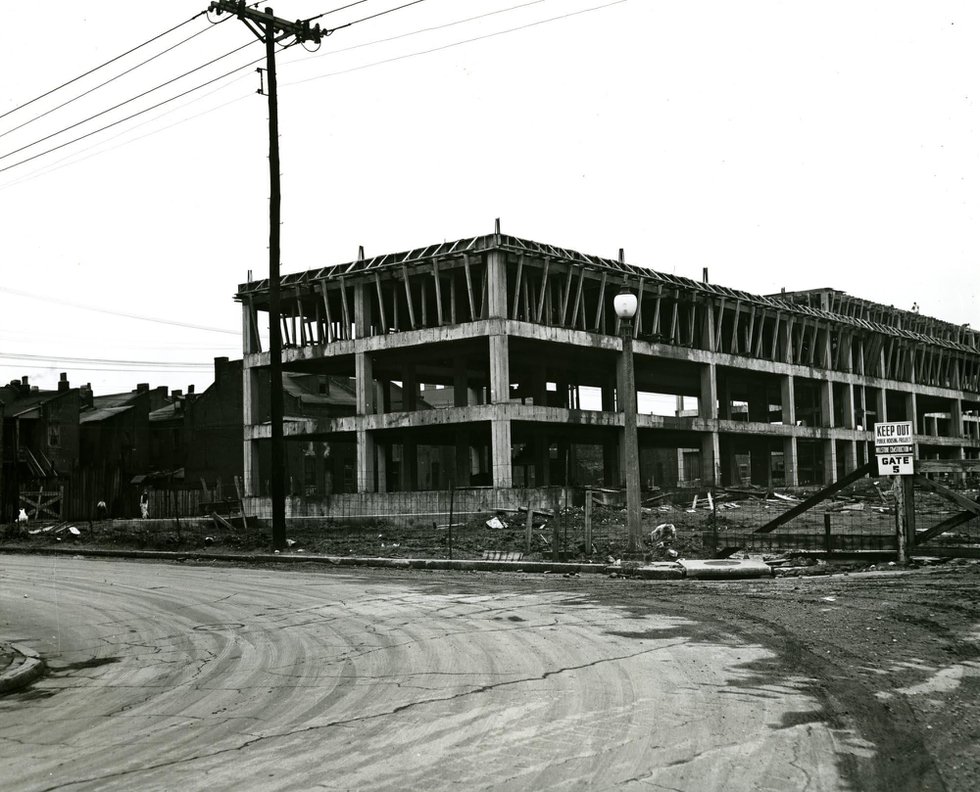
When it came time to demolish the neighborhoods north of downtown, including the Carr Square neighborhood, the residents of the century-old streets found few allies. As the previous generations before them, the ultimate goal was to move out to the west, to the more spacious neighborhoods of the city or county. And it was time to experiment on the low-income residents who remained.
Perhaps most derisible was the destruction of the modicum of integration that had existed between white and African American residents in the neighborhood. Richard Rothstein’s The Color of Law: A Forgotten History of How Our Government Segregated America is a must-read about how this phenomenon affected cities such as St. Louis, including Carr Square. The early highway plan, which I examined a couple of weeks ago, even funneled traffic straight onto Franklin Avenue, the former commercial corridor of the neighborhood, which would have surely decimated the urban, walkable environment of the storefronts if they had survived.
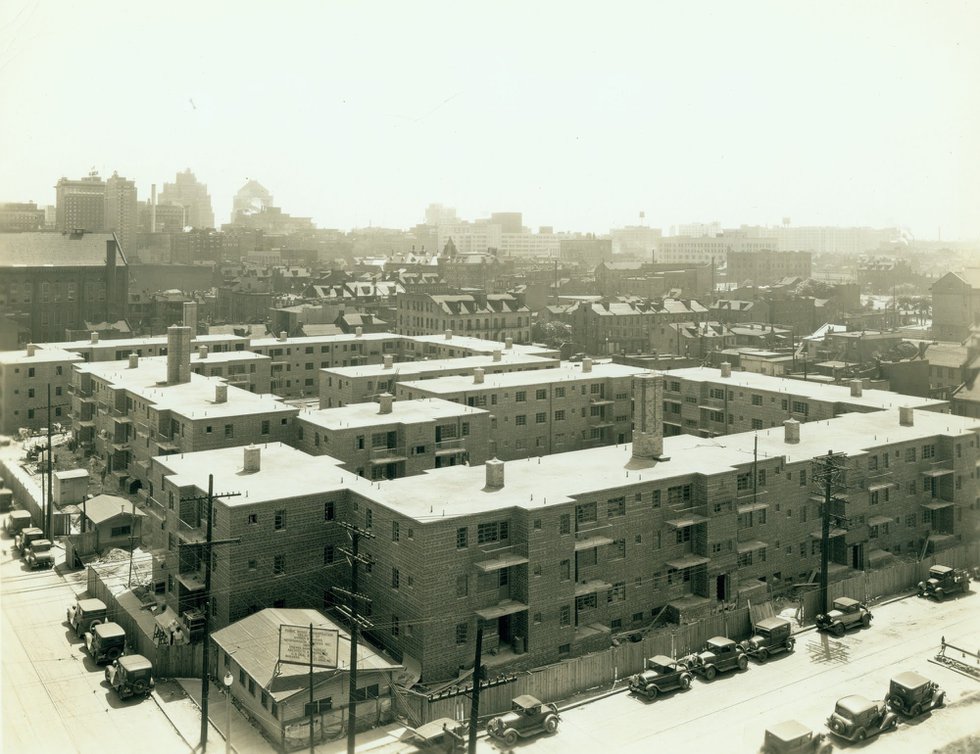
Ironically, unlike Mill Creek or Kosciusko, which were also destroyed in this era, Carr Square and other neighborhoods nearby were actually rebuilt and not left as permanent vacant land—though their demolition, in turn, would come another half-century later. There was, in fact, one complex built that has some architectural merit, and it survives to this day. Neighborhood Gardens was one of the earliest attempts at replacing the worst slums in St. Louis in the 1930s. Completed in 1935, the apartments had balconies overlooking gardens, making the small parks such as Carr Square that once existed in such small, valuable quantities obsolete.
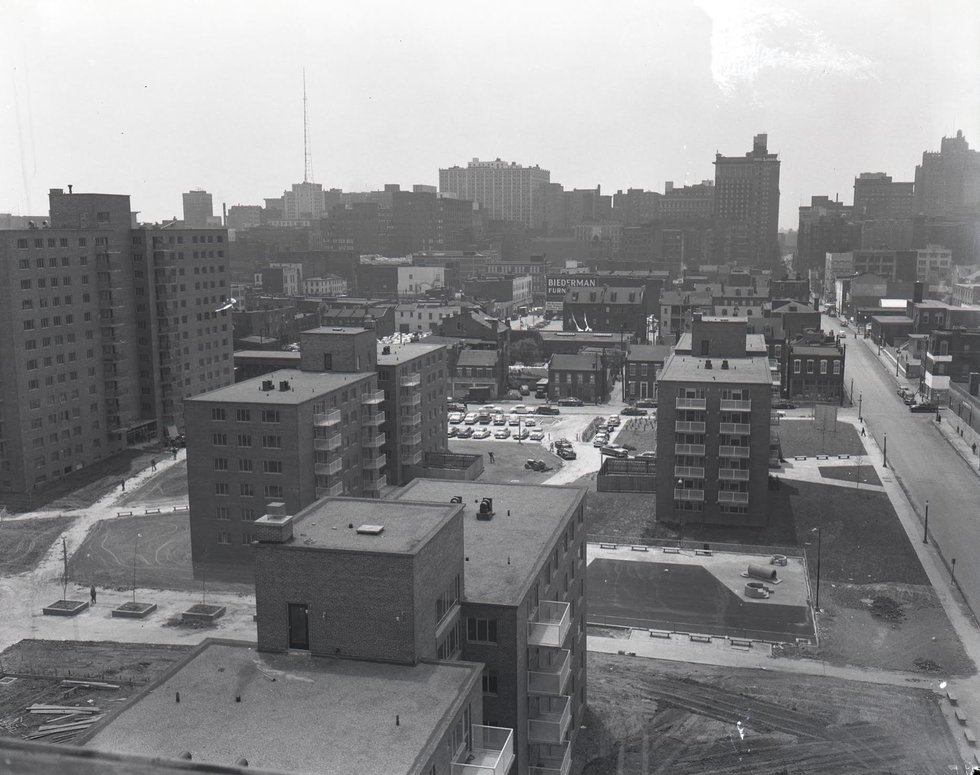
The inevitable darling of modernism, the tower in the park, soon appeared north of downtown in the Cochran Gardens housing project. Replacing the density of two- and three-story buildings constructed next to each other with nary any space between them, density now meant towers 10 stories tall with broad grass lawns surrounding. People were now stacked in silos without the luxury—or the choice—of where they could live. And the press in 1948 repeated ugly stereotypes about the residents of these buildings:
“One of the questions encountered by the leaders of the campaign for the $16,000,000 slum clearance bond issue has been whether St. Louis Negroes, in the mass, would appreciate good quarters and take care of them, if provided with decent more housing.”
The article continued, explaining that the new Carr Square Village housing project was clean and well-maintained, and seemingly had eliminated all of the urban ills that the 19th-century neighborhood, with its aging housing stock, had caused. I wonder how the author could explain the current high asking prices for similar houses in Soulard today, another neighborhood that had been deemed “obsolete” and just barely avoided demolition in the mid-20th century.
Now every single one of the public housing towers in St. Louis have been demolished, and this city might have the strange distinction of having fewer tall apartment buildings today that it did in the late 20th century. What was considered undesirable in the 1950s is now desirable, and what was considered the future is the past. The past—humanly scaled, walkable communities built in the 19th century are now what is selling today in St. Louis. We can only wonder if Carr Square could have survived to become the future yet again.