The ancient city of Cahokia and the current state park cover about 6 square miles in Illinois. Some of the pre-Columbian Mexican civilizations were larger. For instance, the Mayan city of Teotihuacán was almost 14 square miles, although the ruins occupy only about 10 percent of that area. That said, our beloved mound city lays legitimate claim to being the biggest north of Mexico—and certainly one of the most important.
In large part thanks to TV and film, many people envision our land’s indigenous peoples as living in small, transient camps of wigwams and teepees scattered across the prairie, rather than inhabiting established cities. Cahokia’s massive earthworks stand as proof to the contrary. At its zenith, between 1100 and 1200 C.E., Cahokia was a city of as many as 20,000 Mississippians. In 1250 C.E., it was larger than London at that time. Drawn to the confluence of trade routes along the area’s rivers and fertile soil of the surrounding flood plains, the natives built an urban settlement complete with houses, workshops, public works, giant “woodhenge” calendars, and (of course) 120 mounds.
“Seeing it makes people realize that American Indians in this area were highly organized,” says Bill Iseminger, assistant manager of the Cahokia Mounds State Historic Site. “They had a complex society.”
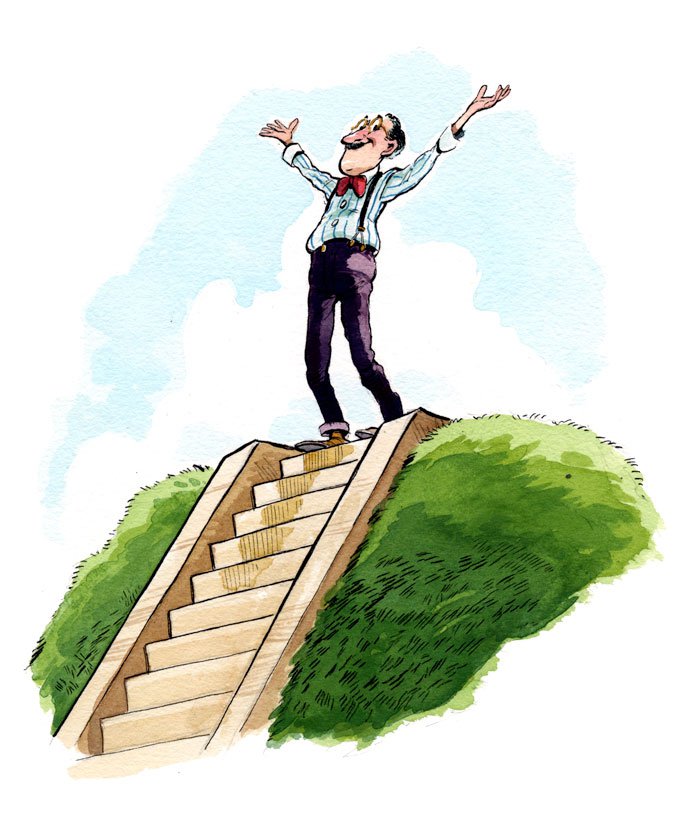
Today, about 80 mounds remain, amng them the multi-terraced Monks Mound, which rises 100 feet high and covers 14 acres—the largest man-made earthwork on the entire continent. Iseminger says the grand monolith was probably built by hand, one woven basket of dirt at a time. Those poor workers may have wished that Cahokia were more technologically advanced—though who knows what sort of ancient gadgets and gizmos wait to be exhumed from the sprawling city?
Less than 1 percent of the grounds has been excavated, Iseminger notes. The concern is to minimize human impact and maintain the site. Using modern remote sensors, though, archaeologists can now better target their excavation.
“We don’t dig just to be digging,” says Iseminger, “ but every time we do dig, something new comes up.”