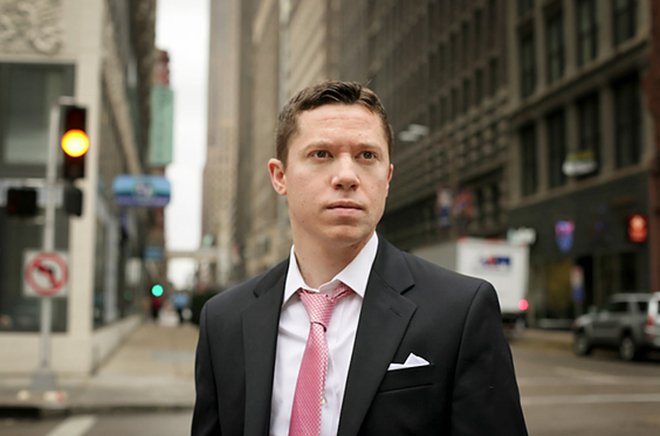
As a native son of Millstadt, Illinois, former St. Louis Post-Dispatch reporter Nick Pistor grew up with Abraham Lincoln playing an outsized role in his schooling. The study continues with his latest book, Shooting Lincoln, which explores how two rival photographers, Mathew Brady and Alexander Gardner, forever changed the media landscape with their work during the Civil War and the hunt for Lincoln’s killers.
How did you become interested in the stories of Brady and Gardner? It started in my previous book, The Ax Murders of Saxtown, about the massacre of a rural German family. I was doing a lot of photography research, and I know battlefield photography was part of how that advanced. After I finished the book, I saw an article about Alexander Gardner’s photos—the hanging photos that he took of the [assassination] conspirators and how they had been auctioned for a lot of money. I was struck by those photos, and I thought it would be interesting to look at what led up to that.
Why are those photos so important? I think it is the most important event in media: that one single day, July 7, 1865. It’s the first time a live, unfolding news event was photographed in sequence. Gardner had a multi-camera shoot, so he was actually able to get those shots in a sequence where, if you put them all out together, you can almost see the bodies drop in real time. That really is the first time anything like that has occurred, and that really is the bedrock of all the media that came after that. It was about 10 years later when real motion pictures were invented.
Who are the modern-day versions of Brady and Gardner? If you look at the way they innovated, how everything goes back to them—newsreels, television, Twitter, Instagram—everyone with a camera is a modern-day Mathew Brady.
What was your most exciting find? One photographer was able to convince officers guarding Lincoln’s casket to allow him to take a photo of the open casket. It was never seen by the public or published for almost a century because the secretary of war had ordered it destroyed, but it finally surfaced—one print, almost a hundred years later… But what I found in an old journal was that Mathew Brady had actually intervened with the secretary of war to have that photo destroyed, because he was not the one who got to take it.