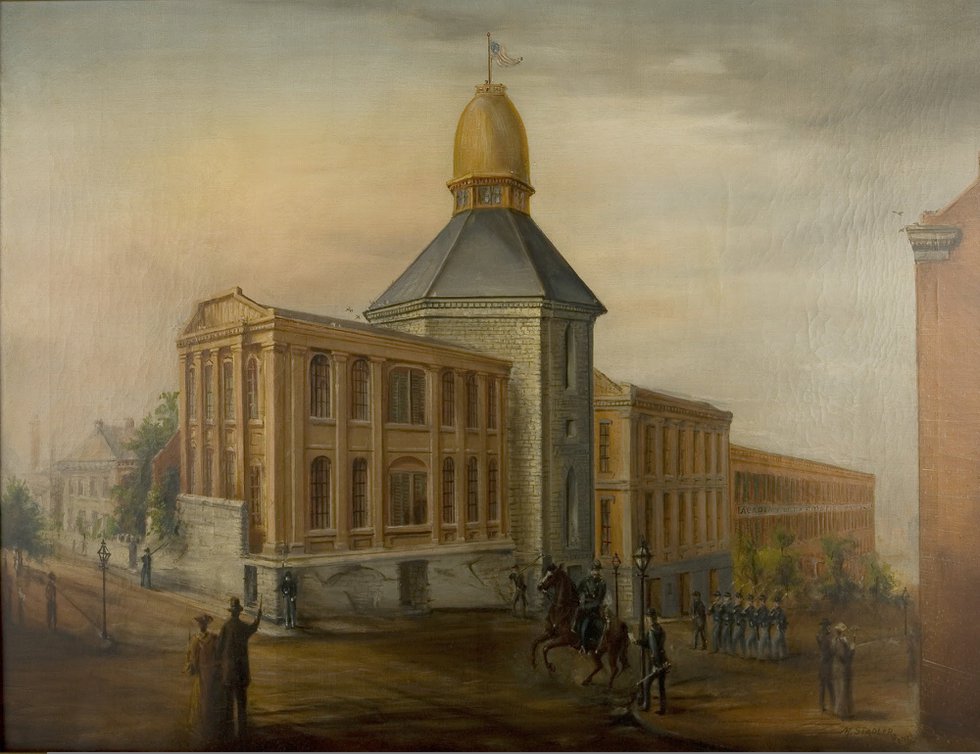
When the Union Army seized control of St. Louis in 1861, it had a problem. While a large portion of the immigrant population was anti-slavery, much of the native residents, whose wealth and economic ties relied on the “Peculiar Institution,” were openly hostile to their new occupying military government. As I’ve written about before, it even broke out into deadly riots on several occasions throughout the duration of the Civil War. But the Union Army, under the command of different leaders over the course of the war, turned to two different prisons in downtown St. Louis to not only control rebellious citizens, but also to send a message to the rest of the city.
Lynch’s Slave Pens—at South Broadway and Myrtle Street—and the McDowell Medical College, at Gratiot and Eighth streets, were seized by the Union Army and used as prisons over the course of the war. I wrote about the slave pens two weeks ago, and certainly, the irony of imprisoning slave owners and their sympathizers in such a lockup was obvious, particularly since the early commander of the Department of the West based in St. Louis was John Charles Frémont, a known abolitionist. The abolition of slavery was the goal of many Union officers early in the war, even before the Emancipation Proclamation of 1863. President Lincoln even rescinded Frémont’s emancipation of Missouri’s slaves in 1861.
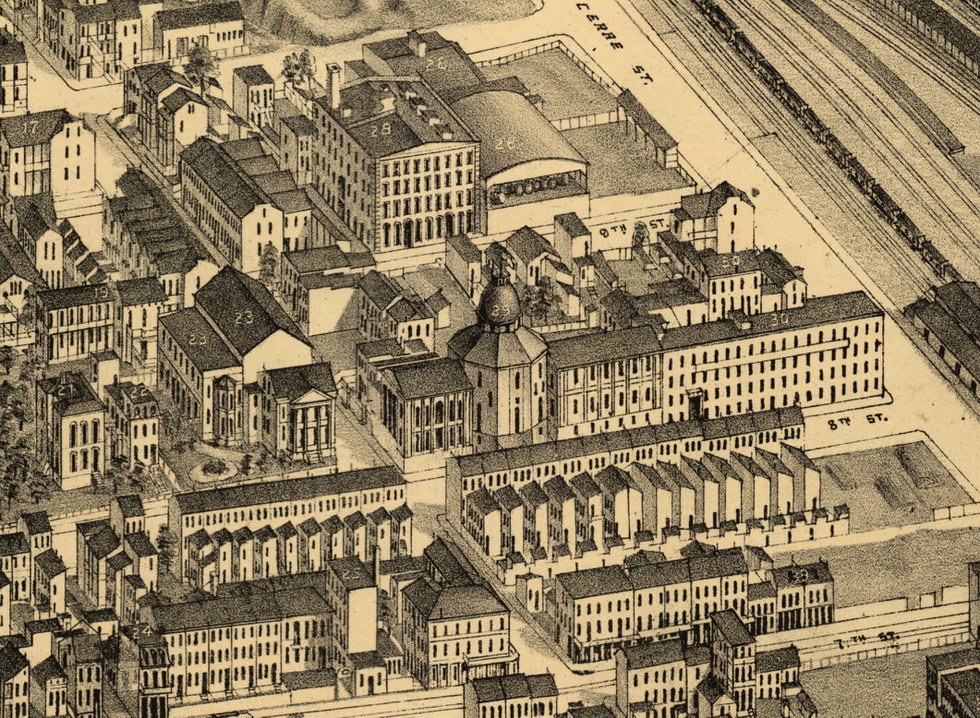
The McDowell Medical College was also a logical choice for two reasons: The owner and proprietor was the infamous Joseph Nash McDowell, who was not only pro-slavery but hardly the most respectable doctor in St. Louis. He was known for purchasing cannons to protect his college, which was perhaps a good idea after riots broke out in 1843 when outraged mobs found bodies in the yards of local medical schools. He was surely also a target of German American doctors such as Adam Hammer, a revolutionary and abolitionist, who had been working to professionalize medicine in St. Louis. But there was another important reason, and this applied to Lynch’s Slave Pens as well: The medical college was located right in the middle of the neighborhood where many pro-slavery families lived, just south of downtown.
There is considerable documentary evidence about who was imprisoned in the two facilities. That’s thanks to extensive regular coverage in the Daily Missouri Republican newspaper. The first order of business was stripping the former names of the owners from the buildings. Lynch’s Slave Pens became the Myrtle Street Prison, and the McDowell Medical College became the Gratiot Street Prison. Gratiot Street Prison was much larger, but overflowing numbers of prisoners required the use of the Myrtle Street Prison. I suspect that the old slave pens, with their subterranean cells, were used to punish prisoners that the Union Army deemed to be troublemakers. The massive Alton, Illinois, prison also handled prisoners from St. Louis. Ordinary Confederate prisoners of war were kept at Benton Barracks in North St. Louis, and they would be involved in the Hyde Park riots of July 4, 1863.
An average report in the Daily Missouri Republican such as one from September 14, 1863, would read:
“PRISONERS FROM SPRINGFIELD—A lot of forty-one prisoners were received at Gratiot Street Prison, on Friday, from Springfield, Mo. A list of their names may be found in our regular prison report, this morning. They were captured in Southwestern Missouri and Arkansas, at different times during spring and summer, and a few last winter.”
The prison was prone to overcrowding, as an article from 1862 reported. Frémont had been replaced by this point by General Henry “Old Brains” Halleck, and when he visited the Gratiot Street Prison, he discovered deteriorated conditions. The general listened to recommendations from Dr. Colegrove to improve the prison, as “these people, although guilty of crimes against the best Government on earth, should be protected from the ravages of diseases so far as lies in our power…” It was also recommended that prisoners be transferred to Alton, which was ironically infamous for the large number of inmates who died from disease while imprisoned there during the Civil War. When Myrtle Street Prison was reopened in 1862 to deal with overcrowding at the Gratiot Street Prison, 20 prisoners were brought in to clean out the old cells while five soldiers guarded them.
Food was not always bad for the Union soldiers who guarded the prisoners. The Reverend Galusha Anderson, who wrote about his experiences living as an abolitionist in St. Louis in A Border City During the Civil War, devotes a whole chapter to the prisons. His next-door neighbors, who were pro-secession, planned a giant feast with others in the neighborhood to be delivered to friends imprisoned for sedition in the Gratiot Street Prison over the Thanksgiving holiday. Anderson relates that the food was “piled high in their front hall,” and was then delivered to the officer on duty at the prison; he accepted it graciously, assuring that the food would be delivered to the “most needy.” While not explicitly lying, Anderson admits, the officer interpreted the “most needy” to be his guards who had been stationed outside during the cold and wet weather of late November.
It was best to keep one’s mouth shut in St. Louis, too, as even the smallest indiscretion could land one in prison. D.R. O’Neil was arrested and jailed in the Myrtle Street Prison for the charge of “use of disloyal language” at the famous Planter’s House hotel in downtown St. Louis. Bonds were exorbitantly high, as well, ranging from $1,000 to $5,000. By comparison, a skilled laborer earned between $1 and $2 in the 1860s, and wealthy brewer Adam Lemp possessed $20,000 in cash when he died in 1862. I wonder if anyone other than the very wealthy were able to bail themselves out of the two prisons. Likewise, in an article titled “Not Sharp,” the Daily Missouri Republican reported on the Henry Roger’s ill-timed escape from the Myrtle Street Prison. As it turned out, he was scheduled for parole the next day, so he needlessly turned himself into a fugitive.
Not all escapes were so successful, and the attempts could be deadly. In 1863, George Hesserman climbed out onto the roof of the Myrtle Street Prison, and then descended to the street by way of a tree. A guard ordered him to stop, but he kept running away and was shot in his side. An investigation discovered that he had been planning to meet up with his wife in Illinois.
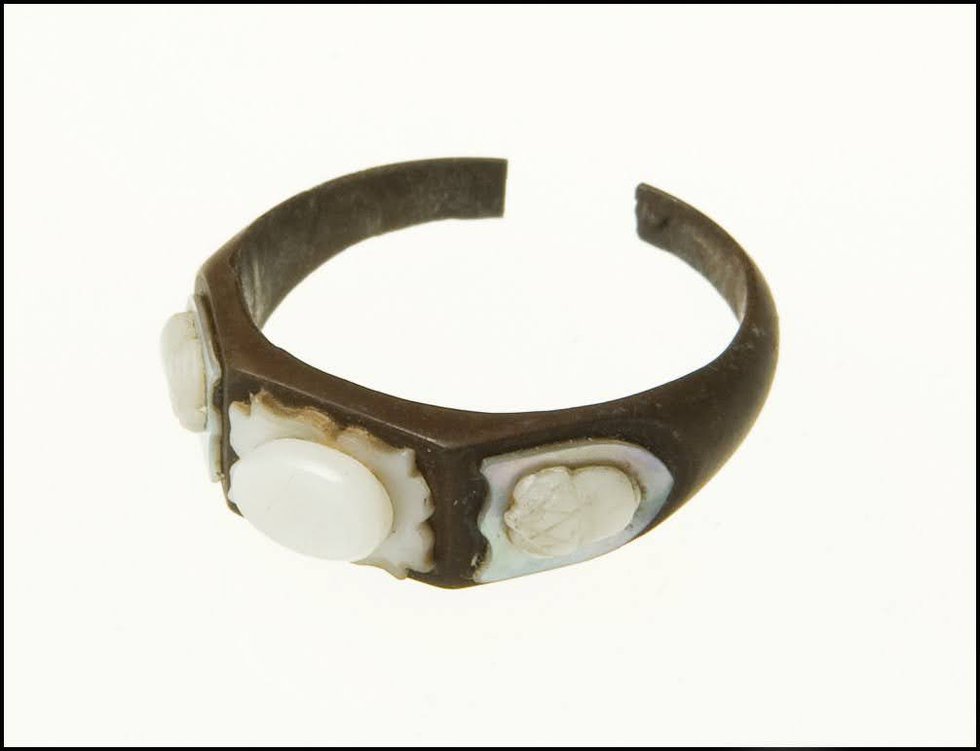
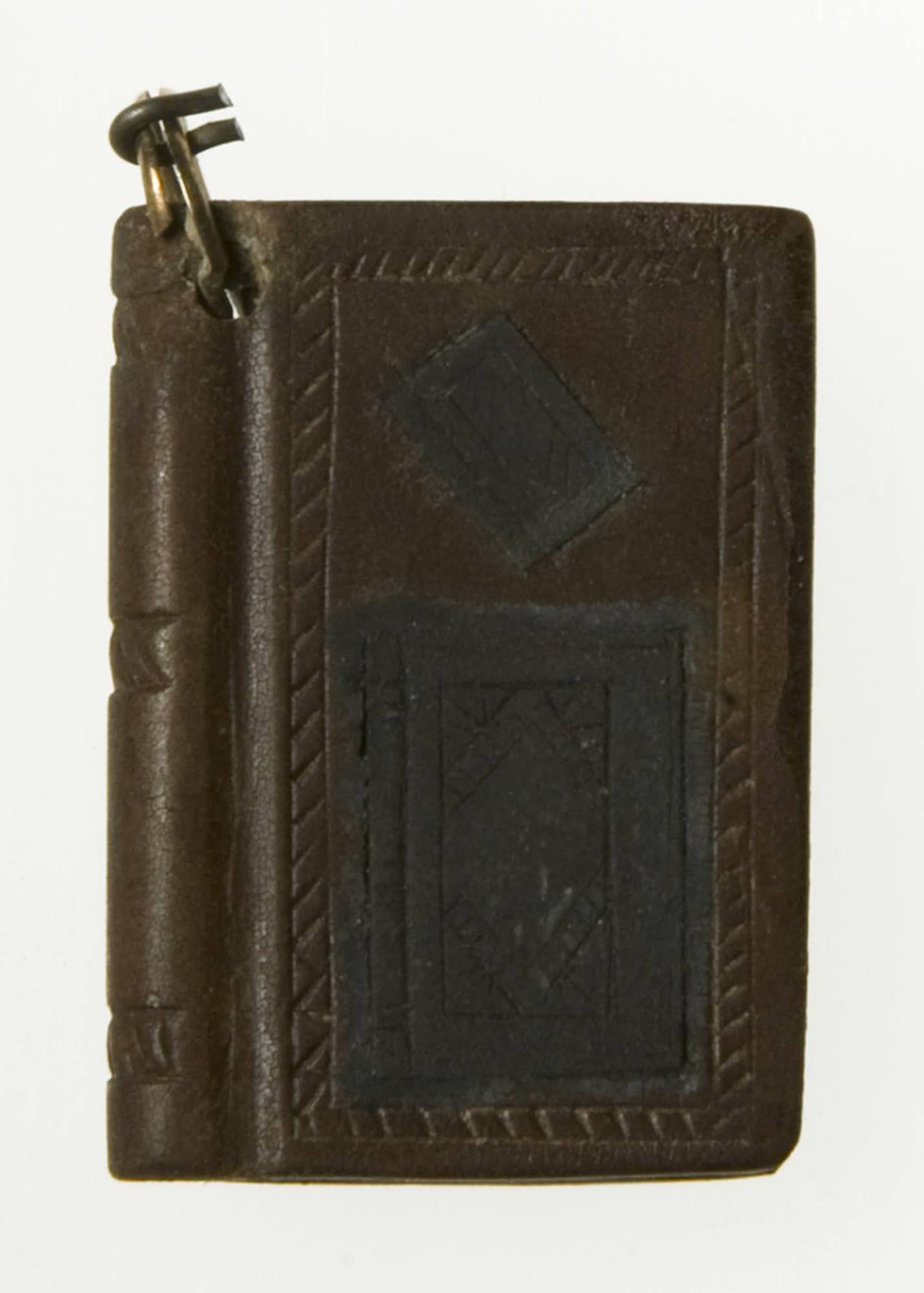
Most prisoners, however, did not try to escape and spent time on other pursuits, including making art out of found objects. Eventually, the war ended in victory for the Union, and the prisons closed. McDowell actually returned to St. Louis and found his medical school vandalized and useless. Plans for a rebirth ended with his death in 1868; the doctor is buried in Bellefontaine Cemetery. The area around both prisons is now completely changed— interstates, stadiums, and corporate campuses have replaced the vestiges of conflict from so long ago.