A bill moving through St. Louis City Hall would make it a lot harder to open a smoke shop in the city.
The bill’s sponsor, Alderman Tom Oldenburg, says that smoke shops currently face few hurdles to opening and, once in operation, have few restrictions on even basic things like hours and signage. That’s because they are classified as general retail, the same as a grocery store.
Get a fresh take on the day’s top news
Subscribe to the St. Louis Daily newsletter for a smart, succinct guide to local news from award-winning journalists Sarah Fenske and Ryan Krull.
Oldenburg’s bill would try to nip the problematic businesses on the front end by creating a new classification for smoke shops in the city building code as well as requiring smoke shops to obtain a conditional use permit before opening. As part of getting that permit, neighbors would be given an opportunity to weigh in and request additional conditions—such as limits on hours of operation. This would be not unlike the process that bar goes through now before obtaining a liquor license.
The Building Division’s John McLaughlin has been on the front lines of showing up to these smoke shops when they draw neighborhood complaints. He was reluctant to hazard a guess as to how many such shops are in the city, but he said it was easily over 100. He’s seen them operate under many different models, few of them good. “Some were a dispensary without a dispensary license, others were just a drug house.”
Alderwoman Alisha Sonnier sits on the committee that advanced the bill Tuesday. She said that the idea of community input is particularly welcome. Right now, she said, “You don’t even get to ask them what you plan on selling. What are your hours of operation? There’s no opportunity to do that.”
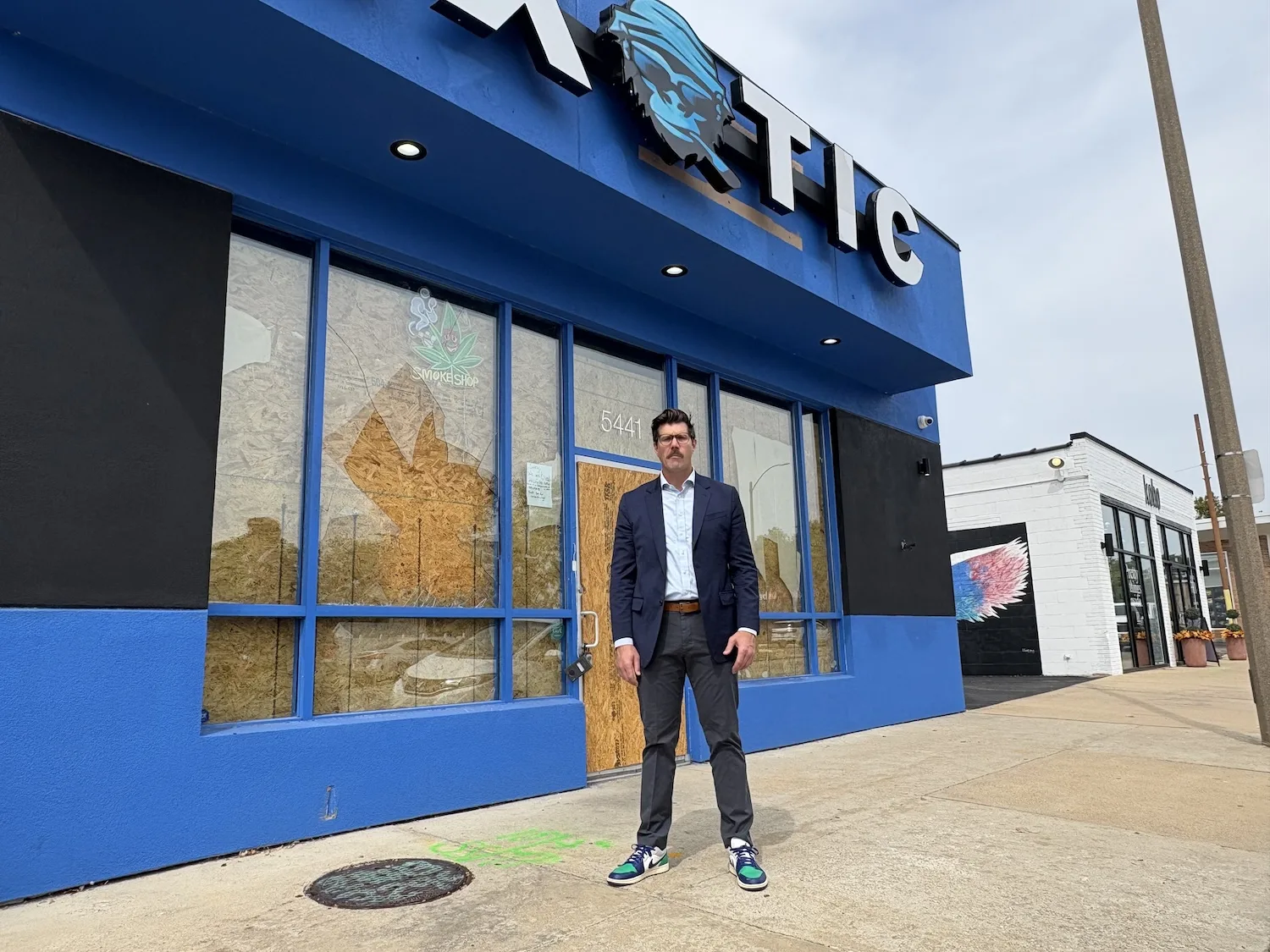
Oldenburg’s bill, which SLM first reported on a year ago, took on new urgency in April after two people were shot at the Furr smoke shop at Arsenal and Kingshighway. Sonnier herself heard the shots and went to the scene. She says that inside Furr, police found illegal gambling machines, drugs,”tons of pills and other substances—things located inside the building that I was able to see for myself.”
McLaughlin says he suspects the shooting was an attempted robbery by people who knew what the store was actually stocking.
The Furr incident “definitely increased the appetite” for the regulations, Sonnier says.
At yesterday’s hearing, every member of the Housing, Urban Development and Zoning Committee Meeting voted in favor of Oldenburg’s bill, which now moves to the full board. Language in the bill distinguishes between businesses that sell vapes and e-cigarettes (which would make a shop a smokeshop) and a business that sells “conventional” tobacco products as an ancillary part of their business (which would not be a smokeshop).
The bill also has the support of Mayor Cara Spencer, who said yesterday that the city has been triaging complaints related to smoke shops. The city has closed down six shops this way, but the process “is extremely long,” she says. “It’s extremely painful, and it really drags out the process and subjects communities to the ongoing behavior of bad actors during that time. What we want to do is prevent that from happening, from starting in the first place.”