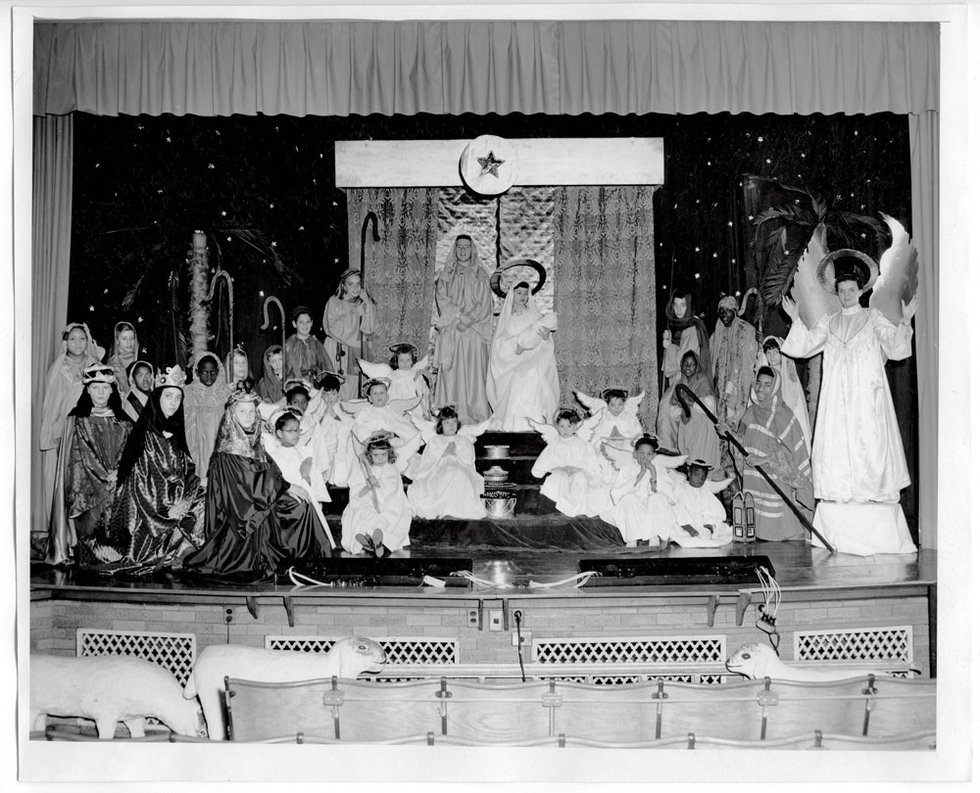
Here, students at Gallaudet School for the Deaf pose for a Christmas pageant photo in December 1955, a year after the Brown v. Board of Education decision. St. Louis integrated more calmly than cities in the Deep South—or even the Missouri Bootheel—but deaf students of color faced another layer of challenge during integration: working with teachers who used ASL rather than Black American Sign Language, a signing system that developed under segregation. It has a different syntax and involves the use of a bigger signing space, more body language, and both hands. It’s also still widely in use. (BASL signers say they use mainstream ASL in public settings, then revert to BASL at home and with friends.) In 2007, the National Science Foundation and Spencer Foundation filmed 96 BASL signers in six states, documenting what they called “The Hidden Treasure of Black ASL.” In a more equitable world, of course, it would never have been hidden at all.

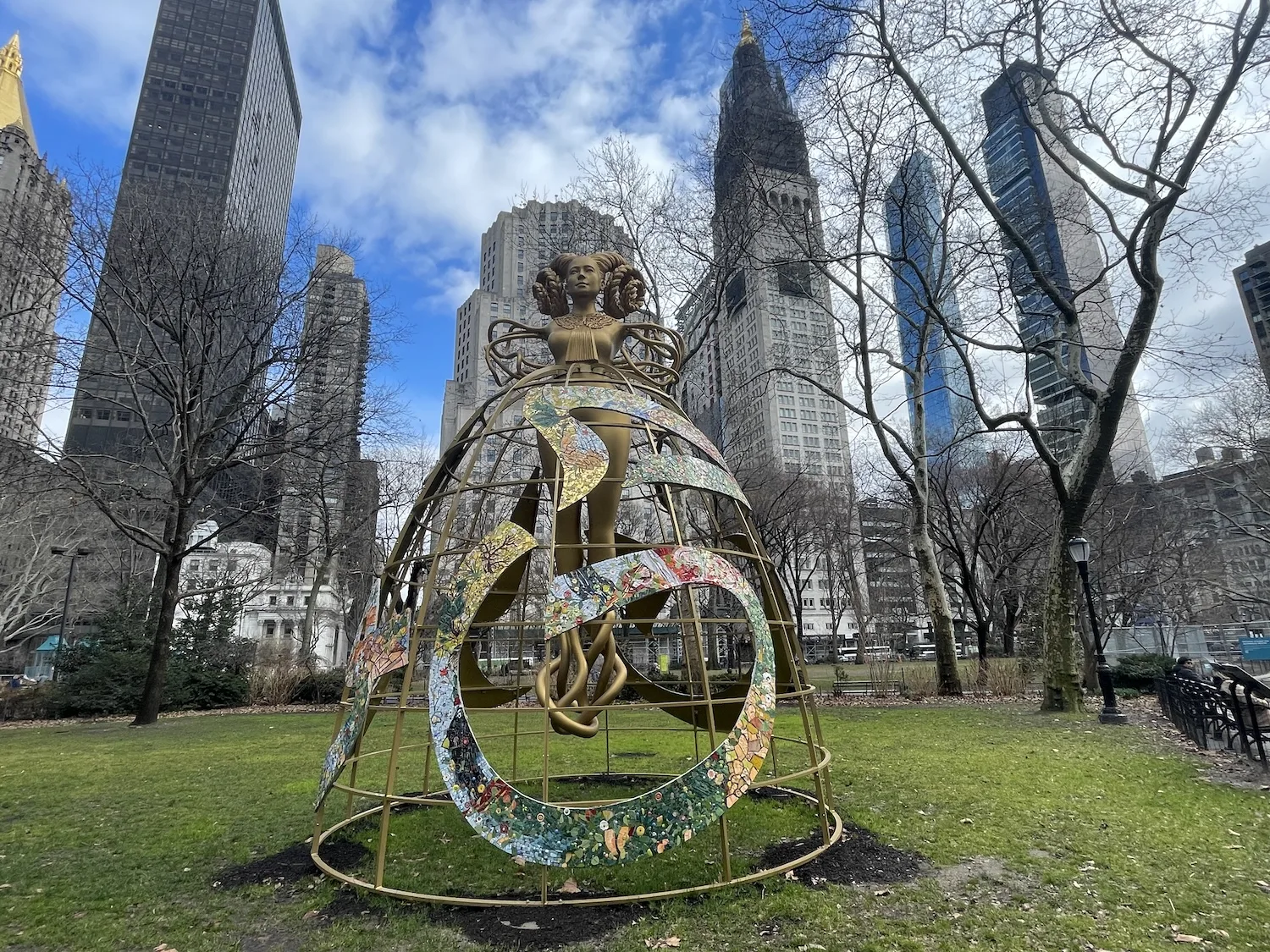
Statue being installed at Rung for Women triggers complaint from Missouri AG
Catherine Hanaway said Shahzia Sikander’s “Witness” honors the “spirit and grit” of women “fighting for abortion.”