
Transcending transplants
A condition that could formerly only be treated with a liver transplant can now be treated with medication. After 30 years of research, Dr. Jeffrey Teckman, a professor of pediatrics at Saint Louis University, succeeded in developing the first effective drug for Alpha-1 antitrypsin deficiency, a condition that affects 1 in every 3,500 Americans. “In the past, a liver transplant was the only treatment,” says Teckman, “but we hope that we can soon eliminate the damage from this disease altogether and allow patients to live normal lives.” In 2022, Teckman learned that the study—in partnership with his team at SLU, pharmaceutical companies Arrowhead and Takeda, and international collaborators—had succeeded. Two years later, he and his team delved into biomarkers in high-risk infants with alpha-1 disease. His findings have led to the early stages of clinical trials, which will allow their research to improve the lives of even more people with liver disease. “This new knowledge, combined with new discoveries in drug development, some of it linked to design of the mRNA COVID vaccines, have allowed us to begin testing cures for this disease,” Teckman says. “This knowledge can also be applied to other, more common diseases.”
Sharper vision
Dr. Jeremy Leidenfrost, a cardiothoracic surgeon at St. Luke’s Hospital, successfully completed treating a patient with cardiac angiosarcoma, a malignant tumor that starts in the heart’s blood vessels. Fifteen months after the procedure, the patient remains cancer-free. “Cardiac angiosarcoma is a rare, aggressive cancer arising from the heart’s blood vessels, often presenting with vague symptoms like chest pain or fatigue, which delays diagnosis,” Leidenfrost explains. “Its invasive nature makes treatment challenging, frequently requiring radical surgery with complex reconstructions.” Leidenfrost was able to use advanced imaging technologies to learn that the tumor was resectable. “Access to this type of imaging helped the team to plan her procedure and reconstruction before surgery,” he says, explaining that the team “reconstructed the resected heart area using her own pericardium as well as bovine pericardium.” Ultimately, the aggressive tumor was treated before it spread, and fully removing the tissue gave the patient much better odds.
Your guide to a healthier, happier you
Sign up for the St. Louis Wellness newsletter and get practical tips for a balanced, healthy life in St. Louis.
Fluid options
Mercy’s dedicated fluid management sites have kept patients healthier and out of the hospital—especially for those experiencing heart failure, for which fluid retention is a common symptom. Nine outpatient centers have been established across the region. Now, when patients notice they are retaining fluid in their feet, ankles, or lungs—which sometimes causes breathing difficulty—they can reach out to their physicians and be referred to the outpatient center. Once there, a heart failure specialist assesses each patient to determine next steps. “We know patients would rather be at home than in the hospital,” says Dr. John Mohart, Mercy’s chief operating officer and a practicing cardiologist. “By managing heart failure in an outpatient setting…we can improve the patient experience while helping reduce overall health care costs.”
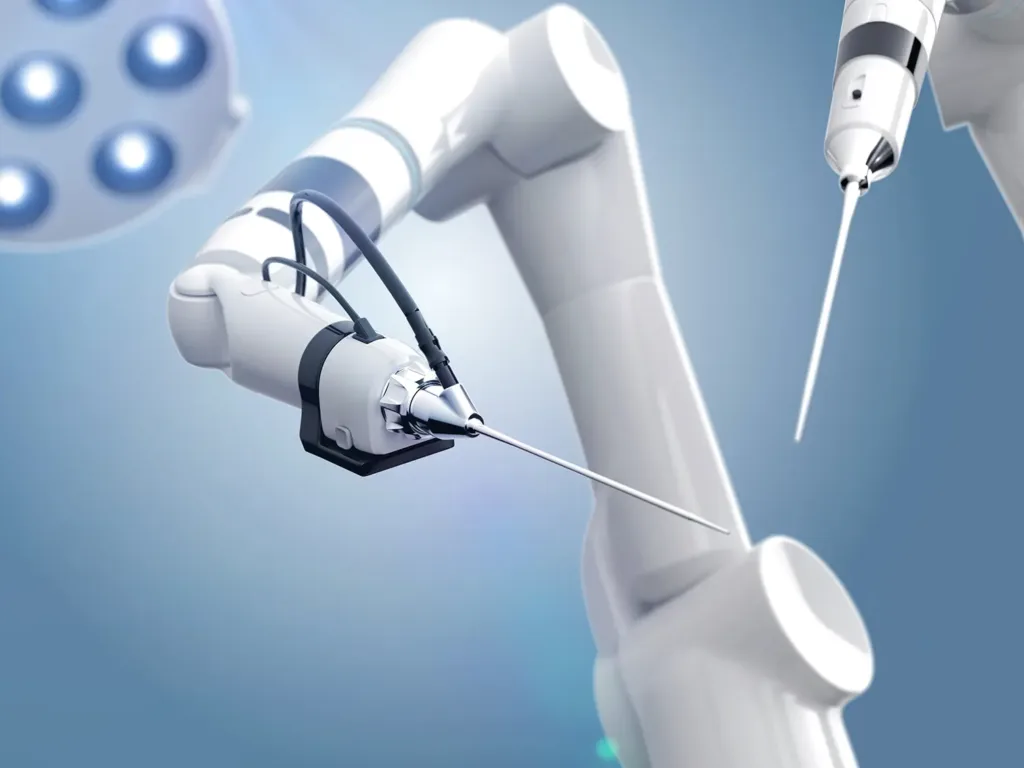
BJC Robotic Arm-Assisted Procedures
What It Is:
A robotic arm-assisted device that ensures more precise bone removal and implant placement, allowing patients to experience less pain and a faster recovery
What it means for area patients:
In March, BJC announced that Barnes-Jewish St. Peters Hospital is now utilizing robotic technology to aid knee and hip replacements. These are common procedures to address severe joint pain or stiffness, such as osteoarthritis, but they can be major hassles due to their long recovery. However, using this robotic arm requires only a single incision, which minimizes the risk of infection and reduces recovery time. Bone and soft tissue damage is also minimized, as are pain and physical therapy requirements.
What the experts say:
“Robotic-assisted joint replacement surgery allows for better joint alignment and stability. It allows surgeons to plan surgery with greater detail and perform the surgery with more precision, resulting in a more natural-feeling joint for patients. This also translates to faster and less painful early post-operative recovery.” —Dr. Kevin Quigley, BJC Medical Group orthopedic surgeon at Barnes-Jewish St. Peters Hospital
Nasal and Inhalable COVID-19 Vaccine
What It Is:
Nasal spray and inhalation alternatives to the COVID-19 vaccine, based on WashU technology
What it means for area patients:
If this alternative passes clinical trials, a new option may be on the market for preventing severe cases of COVID-19—and it may be even more effective than the shot. The research team not only aims to reduce symptoms but also to prevent transmission by stimulating immunity in the nose and upper airways. The nasal vaccine must pass U.S. clinical trials, but a version has been available in India since 2022, thanks to a licensing agreement between WashU and the Indian biotechnology company Bharat Biotech.
What the experts say:
“All effective vaccines reduce sickness and death, but COVID-19 vaccination through the nose and mouth also seems to reduce transmission. This capability is critical in slowing the spread of respiratory infections such as COVID-19 through a population, and the same vaccine technology can be designed to target other COVID-19 strains, as well as influenza and other respiratory viruses.” —Co-developer Dr. David T. Curiel
The da Vinci Surgical System
What It Is:
A robotic- and computer-assisted technology that replicates surgeons’ hand movements
What it means for area patients:
St. Luke’s announced in April that it was the first in the area to complete surgery using the new technology, making the hospital a destination for those seeking advanced surgical tools. The technology helps surgeons align their hand and eye movements, and the magnification allows them to better identify and avoid sensitive areas, such as nerves. Those who need certain minimally invasive procedures can benefit.
What the experts say:
“These systems are a game-changer for our surgeons and our patients. They enhance surgical precision and can contribute to shorter recovery times and strong clinical outcomes.” —Dr. John E. Mason, chief of surgery at St. Luke’s

On the Pulse
According to St. Luke’s, Dr. Jonas Cooper, an electrophysiologist at St. Luke’s, was the first in the region to use innovative Farapulse technology as an alternative treatment for atrial fibrillation, an irregular heart rhythm that can lead to strokes or heart attacks if left untreated. The condition affects roughly 1 in 22 Americans. Now, using pulse field ablation and Farapulse technology, physicians can treat the condition in a faster, more accessible way than radiofrequency alternatives. “The actual catheter—the physical tool we use to deliver the energy—expands once inside the heart to 31–35 millimeters in size,” Cooper says. “It ablates in seconds the areas that previously took us much longer to treat with a 4 millimeter RF ablation tool. This makes the procedure faster, [with] less time under anesthesia [and] less risk—time being inside the patient’s heart. Studies in patients show Farapulse is at least as effective as RF, with some studies even showing better outcomes.”