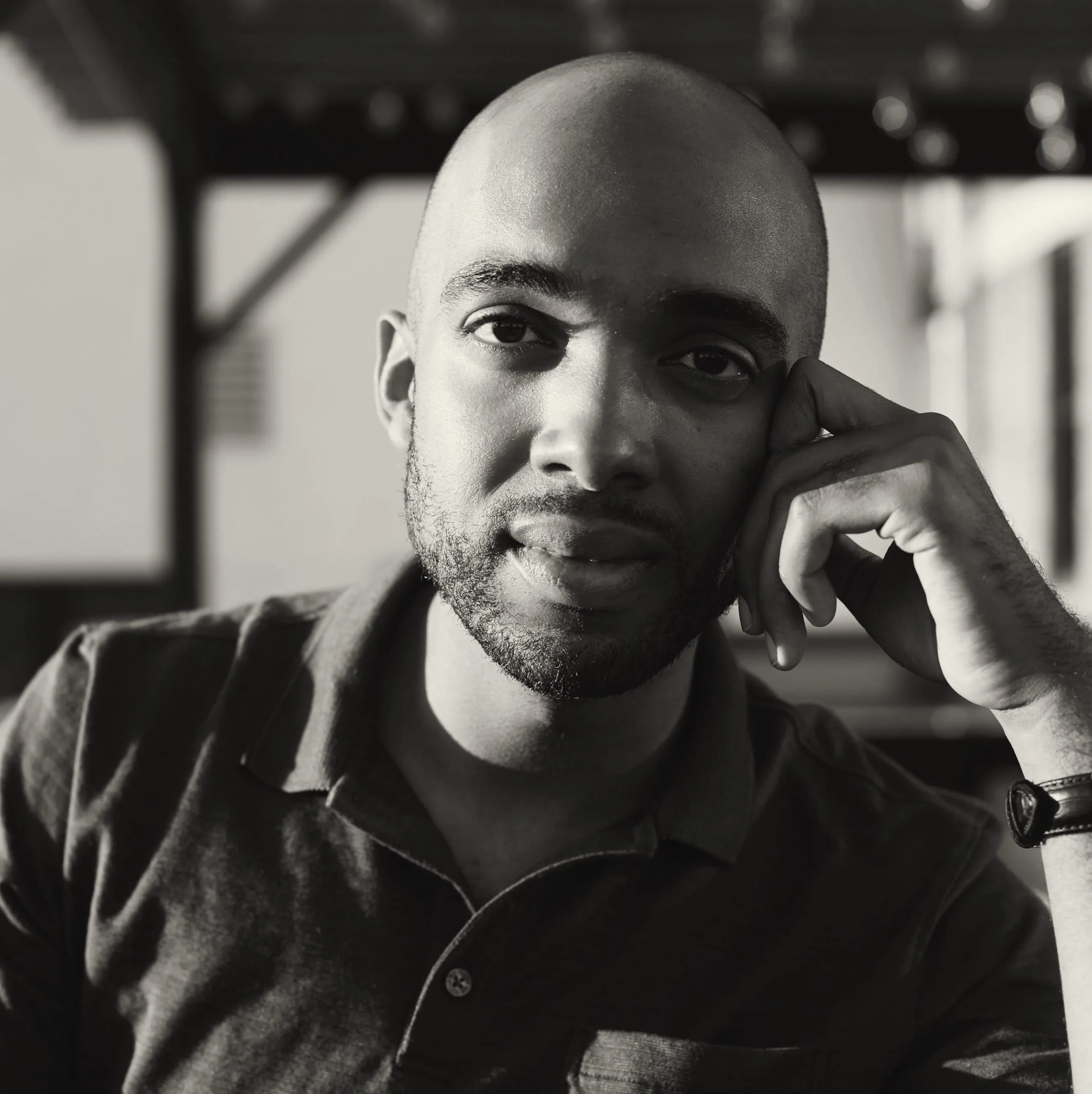
Public health education in St. Louis is on the brink of transformative growth.
The Washington University School of Public Health, slated to open in 2026, will mark the university’s first new school in a century and signal a major shift in how public health research and community engagement will be organized on campus.
Your guide to a healthier, happier you
Sign up for the St. Louis Wellness newsletter and get practical tips for a balanced, healthy life in St. Louis.
Following his appointment as the inaugural Margaret C. Ryan Dean of the School of Public Health and the Eugene S. and Constance Kahn Distinguished Professor in Public Health at WashU, Dr. Sandro Galea will deliver remarks on January 29 at 4 p.m. at Graham Chapel, as part of the university’s long-celebrated Assembly Series.
As the university sunsets its longtime Institute for Public Health to make way for this new venture, Galea will be tasked with forging partnerships that address Missouri’s deep-rooted challenges in access to care, rising chronic disease rates, and health inequities, especially in underserved communities.
Galea, who concluded his tenure last year as the dean at Boston University School of Public Health, is an internationally recognized expert on the social, environmental, and behavioral factors that affect health. He is also the author of more than 20 books—as well as his widely read Substack newsletter, The Healthiest Goldfish—and more than 1000 scientific journal articles.
We spoke with Galea about his excitement for working in St. Louis, his vision for the new School of Public Health, and why he believes this moment is pivotal for public health across the region.

You write extensively about how to inspire public conversations that cut across disciplines and society. How do you see the new School of Public Health forging deep connections with the St. Louis community to improve health outcomes and reduce disparities—both locally and globally?
Before I was ever brought on, the school had been envisioned as being one that crosses disciplines and that is deeply committed to and engaged with the local St. Louis community. In my writing and speaking about the position since taking it on, I’ve said very clearly that I see the direction we should be taking as one of four things—one of them being, centrally, to be deeply committed to local and global impact, the other ones being to make sure that we do things in an interdisciplinary way, to have distinction in education, and to have outstanding faculty and staff. I would like to build a commitment to local and global impact into the school’s DNA, right from the beginning, so that we are part of the WashU mission to be in St. Louis for St. Louis. I want to make sure that we end up with a real, engaged, and committed presence to St. Louis, and that’s where we’re headed.
There’s a growing sense of urgency among many students, faculty, and professionals who recognize the high stakes of their work in a time of climate crisis, political polarization, and public mistrust of science. You’ve focused much of your career on the social and political determinants of health. How will the new School of Public Health advance these concerns and help shape future leaders prepared to encounter these challenges?
What I’m trying to do is to align a vision of what public health is with a deep understanding that there is no healthy population without understanding social, political, economic determinants—which obviously is something I’ve written quite a bit about, something I care about very much. I want to build it into the DNA of the school, a school which recognizes that in order for us all to live longer, healthier lives, we need to create a world that generates longer, healthier lives, a world that where we are free from childhood infections, where we do not acquire unhealthy habits in adolescence, where we are not subject to random acts of violence in the early years, where we can have a livable wage, a world without structural racism to hold us back, or systemic misogyny, where everybody can have an opportunity to age in place in a healthy way, and where everybody has access to medicine when they are sick. That’s the world that we want to build. That is what public health should do.
Communication and storytelling have always been crucial in public health, yet often they’re overshadowed by data-heavy approaches. How do you envision the school communicating its value and impact to a broad audience in St. Louis and beyond—possibly in ways that weren’t previously emphasized at WashU?
Communicating the story of health really matters. The subtitle of my book Well is What We Need to Talk About When We Talk About Health. I published that book five years ago, and it was clear to me then—it’s even more clear to me now—that in order to create the kind of healthy world that allows people to live longer, healthier lives, we need to actually talk about health as central to our world and talk about the elements that create a healthy world. So I think figuring out how to communicate is critical.
Some observers have noted a lack of a robust, dedicated public-facing forum for discussing public health issues on campus and in the city. Where do you see opportunities to foster a more vibrant, far-reaching conversation on the topics that matter most to public health in St. Louis?
In part, by committing to build a School of Public Health, what I think the university is doing is making a commitment to encouraging that conversation. It’s hard to expect the Brown School, which is fundamentally a social work school, to commit to generating a conversation about health; it’s just not what it does. It is no small deal to create a School of Public Health to generate that kind of conversation, to encourage others to be part of it, and to have that conversation in a way that creates opportunities for outstanding scholarship, distinction in education, and true engagement with local and global impact.
That’s not going to happen tomorrow. It’s not going to happen two months from now. It’s not going to happen three months from now. But we are building for the future. We are building for years and years to come. That’s what I see us doing.
St. Louis appears poised to attract a wave of top research talent and investment in the field of public health. What impact do you predict this might have on the region’s health outcomes, economic opportunities, and broader societal well-being? And how do you plan to collaborate with entities like the St. Louis City and County Health Departments to strengthen those efforts?
I plan to collaborate as closely as possible. I was very intimately involved with these structures in Boston. I’d chaired the Board of Health in Boston. I’m happy to engage in any way I can actually add value. And though I don’t know the ecosystem well, I know enough to know that over time, I’ll figure it out and make myself available. It’ll take some time, but my hope is to engage as effectively as I can.
The COVID-19 pandemic brought longstanding inequities to the forefront and tested public health systems worldwide. You’ve spoken about epistemic humility, radical compassion, and reform through reason as core lessons. How do you see these principles shaping the curriculum, research priorities, and overall mission of the new School of Public Health?
What I’m hoping will emerge from the pandemic, ultimately, is a reimagination of what we think about when we think about health and an elevation, for example, of the values of dignity and the need for humility in recognizing our limitations and understanding health that should influence what we think about when we think about health.
This is a topic that’s deeply close to my heart. It’s actually what I will be talking about in the Assembly Series, this reimagining of what we think about when thinking about health. When we think about health traditionally, we think about, I have a broken bone, and my bone is fixed. And I would like us to think about health as the substrate for all of us to live long, healthy, fulfilling lives where we can all make a contribution. That’s what we should think about when we think about health and dignity should be at the center of that.
You’ve introduced a concept called a “Health New Deal,” suggesting a fundamental reimagining of how we invest in public health. Could you outline this vision and discuss what it might look like when addressing specific health challenges in St. Louis and other communities with similar needs?
A Health New Deal means that we recognize that health is one of the few (but certainly one of the most centrally important) shared aspirations that we have, and that we want to build a world where we and our children can all be as healthy as possible for as long as possible. Doing that requires a commitment to healthier neighborhoods, lives of opportunity, livable wages, safe jobs, affordable housing, a world where everybody has access and opportunity to achieve depending on how much they want to work and and what they want to achieve; that’s the kind of world that we want to build. And a Health New Deal means using health as a motivation for building such a world.
What excites you most about guiding the launch of this school and shaping its future?
What drew me to St. Louis was this opportunity to be involved in creating this conversation here. The project of building a School of Public Health is fundamentally about a conversation. I mean conversation at a higher level than the typical Person X and Person Y just exchanging pleasantries. It means centering health as a core purpose and mission of WashU and of St Louis. I was drawn to the ambition and the potential of that project, in a place which has historically not done well in health metrics, which can and should do better in health metrics. It is a place where I felt like I could actually have an impact—and that’s very appealing.
The Assembly Series event is free and open to the public. Registration is required by January 22, and space is limited. No large bags or backpacks will be allowed into the event. Parking is available in the Danforth University Garage located at Forsyth Boulevard and Wallace Avenue.