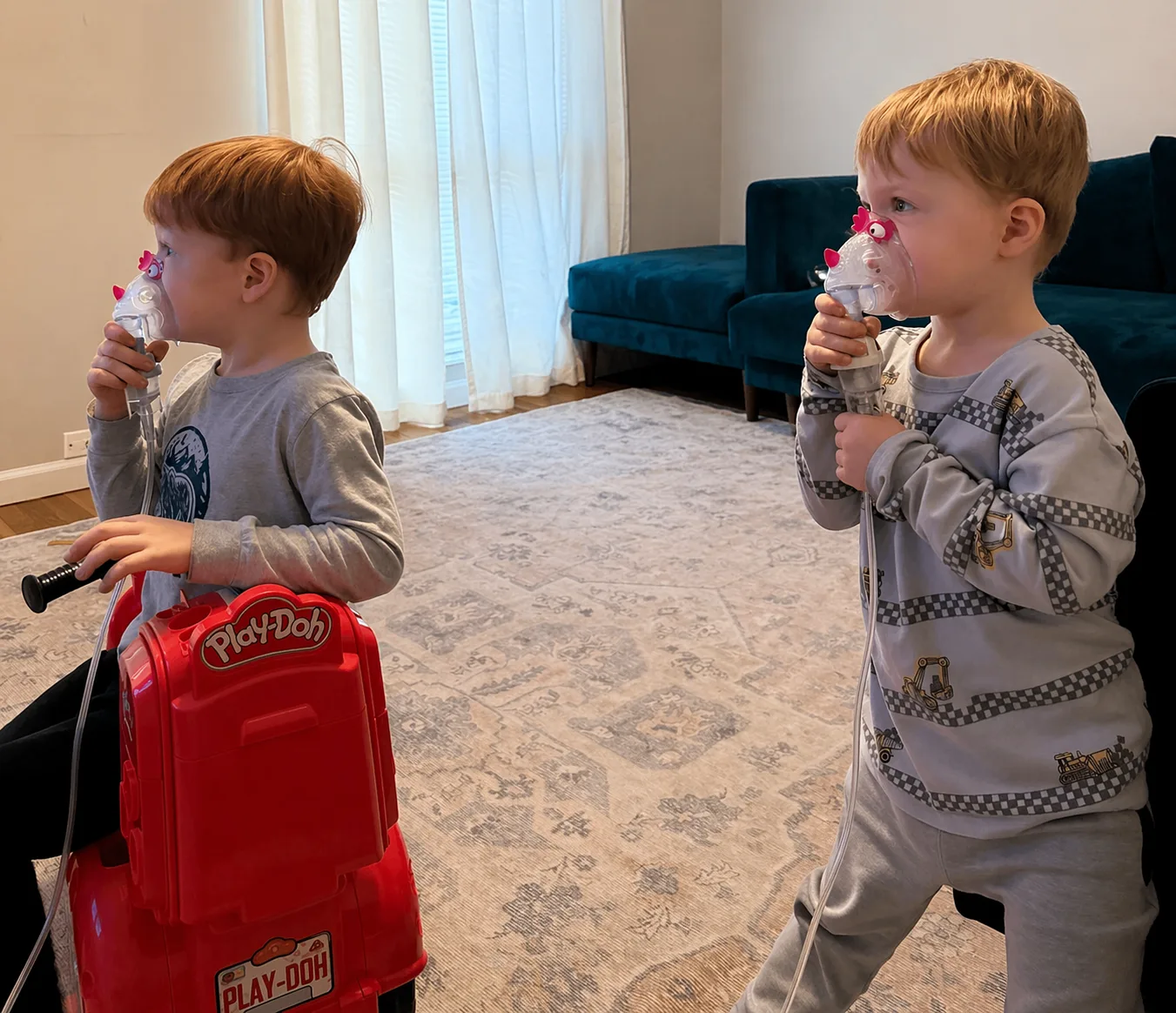
For years, Jennifer and Erin Spellazza’s life revolved around inhalers, emergency room visits, food allergy reactions, and middle-of-the-night treatments.
Their oldest son, who’s now 4 years old, was diagnosed with asthma before his first birthday after recurring viral illnesses led to wheezing and breathing struggles. Their youngest son, 3, later experienced anaphylaxis from an egg allergy at just 9 months old.
“We lived in the ER the first few years of his life,” Erin says of their oldest son. “We’ve spent birthdays there. Christmas Eve there.”
Your guide to a healthier, happier you
Sign up for the St. Louis Wellness newsletter and get practical tips for a balanced, healthy life in St. Louis.
Like many parents navigating chronic childhood conditions, the Chesterfield couple found themselves constantly tracking symptoms, medications, oxygen levels, and reactions—often while exhausted.
“At 1 a.m. on a Saturday, you’re trying to remember when the last treatment was, what symptoms started first, what medication you already gave,” Jennifer says. “Your brain just goes foggy.”
At first, they used phone notes to keep track of everything. But over time, those logs became overwhelming and difficult to organize during doctor visits.
So they built something for themselves.
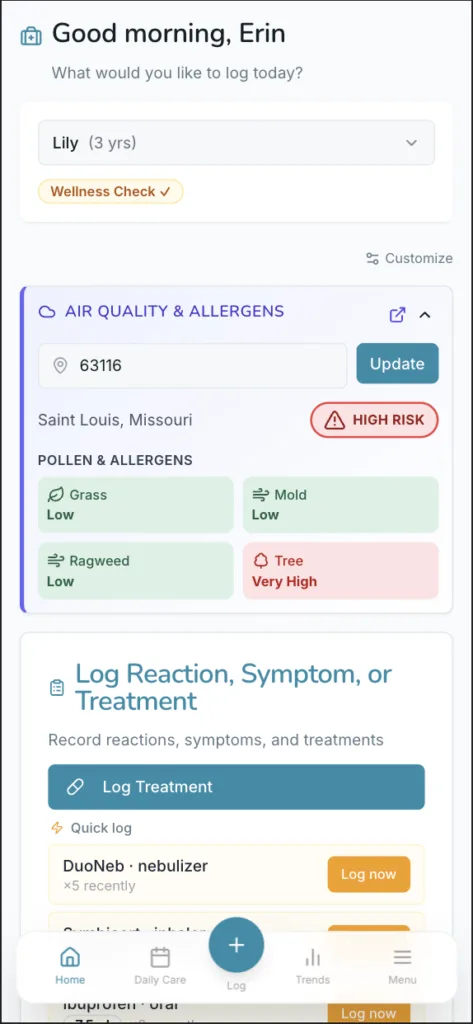
The result is Leor, a web-based app designed to help families manage childhood asthma, food allergies, and eczema through symptom tracking, medication reminders, and care summaries that families can bring to medical appointments.
The app allows caregivers to quickly log treatments, symptoms, food allergy reactions, oxygen readings, and notes. It also includes features such as pollen tracking, cough recording, medication reminders, and shared access for partners, grandparents, babysitters, or other caregivers.
“We wanted something that worked at 3 a.m. in the dark while giving a nebulizer treatment,” Erin says. “Something simple and fast.”
One of the app’s more prominent features is its ability to generate downloadable care summaries that organize months of data into a single PDF for doctors.
Recently, ahead of a specialist appointment, the couple used the app to prepare for their son’s visit. During the appointment, their provider referenced the data directly in both the assessment plan and visit summary.
For Jennifer, it felt like a turning point.“Years of frustration, and then a year and a half building this app—it was the aha moment,” she says.
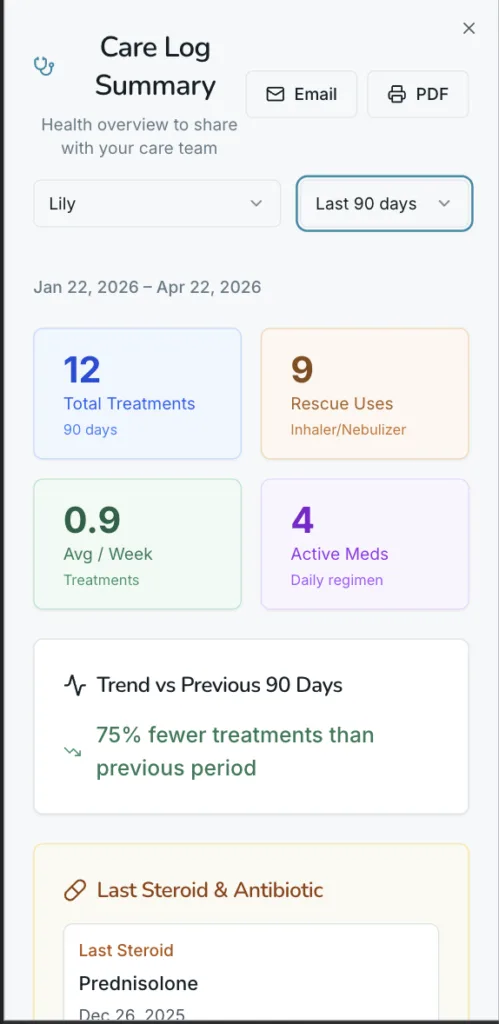
The experience also changed the pace of the appointment itself. “Instead of spending the whole visit trying to explain everything, we got through it quicker because we had the data and trends right there,” she says. “We were finally speaking their language.”
Although the app is still evolving, feedback from families—who can sign up for the free platform at leor.app—has already shaped new features and updates. The couple also says they’re currently exploring a future partnership with a major medical institution, which could help expand the app’s reach and strengthen how families share data with care teams.
Parents across the U.S. and abroad are currently using the platform, and the Spellazzas agree many respond with the same feeling: relief. “It takes some of the mental load off,” Erin says.
That emotional burden, Jennifer says, is part of what motivated them to build Leor in the first place.
“There’s so much frustration and exhaustion in caregiving,” she says. “If we can make even a small part of that easier for families, that’s the goal.”
Leor can now be downloaded directly on the Google Play store.