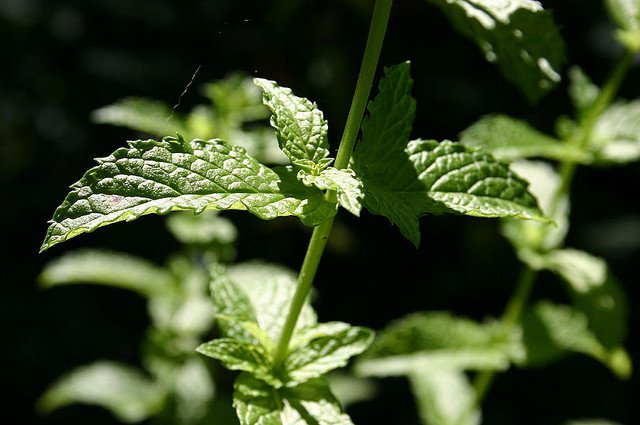
Peppermint smells like candy canes and breath mints. We don’t typically think of it in oil form. Yet peppermint essential oil is one of the top-selling essential oils out there.
Unlike tea tree or eucalyptus oil, both of which come from plants native to Australia, peppermint is indigenous to Europe and the Middle East, and it grows vigorously here in the Midwest. The plant (Mentha x piperita) is a natural hybrid, a cross between watermint and spearmint. And it’s cultivated in large part, not for those striped canes, but for its oil.
Your guide to a healthier, happier you
Sign up for the St. Louis Wellness newsletter and get practical tips for a balanced, healthy life in St. Louis.
Chances are, if you’ve recently tasted or smelled something minty, it may contain peppermint oil. The extract is used to flavor countless teas, drinks and food products, and to add fragrance to soaps, perfumes and cosmetics.
I love a good cup of peppermint tea, but its fragrant flavor doesn’t explain the oil’s health benefits. Once again I turn to Cathy Schram, certified natural health professional, herbalist, and owner of Herbs & More in Ellisville, to ask how her customers use peppermint oil.
“To get rid of mice!” she says, laughing. “They seem to hate the smell of peppermint oil, so you can put a few drops on a cotton ball and stick it where the mice may be coming in… I had a mouse in my pantry last winter. We put some cotton balls in there with peppermint oil and never saw it again.”
She says peppermint oil also works to repel ants. If you put the oil in a spot where ants are coming into your house, they will walk around it because they can’t stand the smell.
Warding off pests was hardly the first benefit I expected to hear, but science backs it up. Rutgers University recently studied a number of essential oil-based products for their ability to control bed bugs. With growing concerns about human exposure to toxins found in synthetic insecticides, researchers are looking for more natural alternatives. Of 11 products tested, Rutgers found two products effective in killing 99 percent of bed bugs. One was a mix of peppermint oil, sodium lauryl sulfate, and a trace of clove oil.
A life free of bed bugs and mice is probably pretty essential to our mental, physical and emotional health. But what else can a vial of peppermint oil do?
“It’s good for opening your head,” Schram says. “If you have a headache or feel nauseated, even just smelling peppermint can help. You can also rub it on your temples, but you might want to cut it with a carrier oil.”
Headaches and stomachaches are traditional uses for peppermint oil, but scientists have done only a handful of clinical trials. Evidence does indicate topical application of peppermint can help relieve tension headaches. Although the Natural Medicines Comprehensive Database lists peppermint as having, “insufficient evidence to rate effectiveness for” generalized nausea, there’s a lot of promise when it comes to peppermint and the stomach. Considered “likely effective for” treating Irritable Bowel Syndrome (IBS), peppermint oil seems to reduce symptoms like gas pain, stomach cramps and abdominal swelling.
One important caveat: If you suffer from acid reflux, peppermint will make it worse not better. It relaxes the sphincter between stomach and esophagus, allowing more acid to rise.
And in terms of cosmetic uses, peppermint oil may even promote hair growth.
Kathleen Berchelmann, a pediatrician on the faculty of the Washington University School of Medicine, recently wrote about essential oils’ medicinal use. She hopes further research will lead to quality control and approved use of essential oils in medical drugs for ideal efficacy in treating various health conditions.
Meanwhile, when it comes to emotional and mental health benefits of essential oil used for anxiety and aromatherapy, Berchelmann knows the reality is more individualized. Not to mention, it’s tough to test the placebo effect of a particular scent.
“It’s a person-to-person thing,” she says. “Who doesn’t like smelling lavender? If you feel better when you add that to your life; if it works for you; if you feel it’s effective and you don’t mind paying for it, then go for it. It’s probably cheaper than seeing a psychiatrist and taking medication—and probably better for you, too.”


