Star-crossed critters meet world-class puppetry in the most wildly fun, kid-friendly performance of the year.
Romeo & Zooliet, a collaborative cultural endeavor between St. Louis Shakespeare Festival and the Saint Louis Zoo, happens to be the first full-scale theatrical production in a zoo. The partnership was born out of a brainstorm from St. Louis Shakespeare Festival to expand and float among area venues beyond its Shakespeare Glen home in Forest Park to help enhance its reach and reimagine the program.
Discover fun things to do with the family
Subscribe to the St. Louis Family newsletter for family-friendly things to do and news for local parents, sent every Monday.
Tom Ridgely, producing artistic director of St. Louis Shakespeare Festival, says the zoo immediately jumped at the idea. “They thought it was so cool for St. Louis,” he says. “The Saint Louis Zoo has always been excited to pilot innovative ideas at zoos and see them get adopted across the country and the world. They’ve been a leader in that way, and I think they were really excited about this being another instance of that.”
After brainstorming concepts that combined Shakespeare and a zoo, Ridgely found an idea: A decade ago, writer Ian Lendler and illustrator Zack Giallongo wrote a graphic novel called the The Stratford Zoo Midnight Revue Presents Romeo and Juliet. “The idea is simply: What happens at night when the zookeepers go away?” says Ridgely. “Well, animals come out, and what else do they do but put on Shakespeare for each other?”
The delightfully clever ideas in the book were seamlessly worked into a funny, sweet, and all-ages adaptation that’s set to debut on the zoo’s Historic Hill on July 8 and run through August 17. With the addition of puppets created by Michael Curry Designs—the same team that crafted the iconic characters for The Lion King and Frozen on Broadway—St. Louis is abuzz with anticipation. Ridgely recently sat down with SLM to share what families need to know before they go.
What do you think makes this play accessible for kids who may not have the longest attention span? Everything that we’ve done is trying to make this really family-friendly: It’s starting earlier, at 7:30 p.m. It’s only 80 minutes, with no intermission, so it’s short. And [a major portion] of the show is written in very contemporary, modern language. It’s a totally new adaptation, and the characters are kids—even more than in the original Romeo and Juliet.
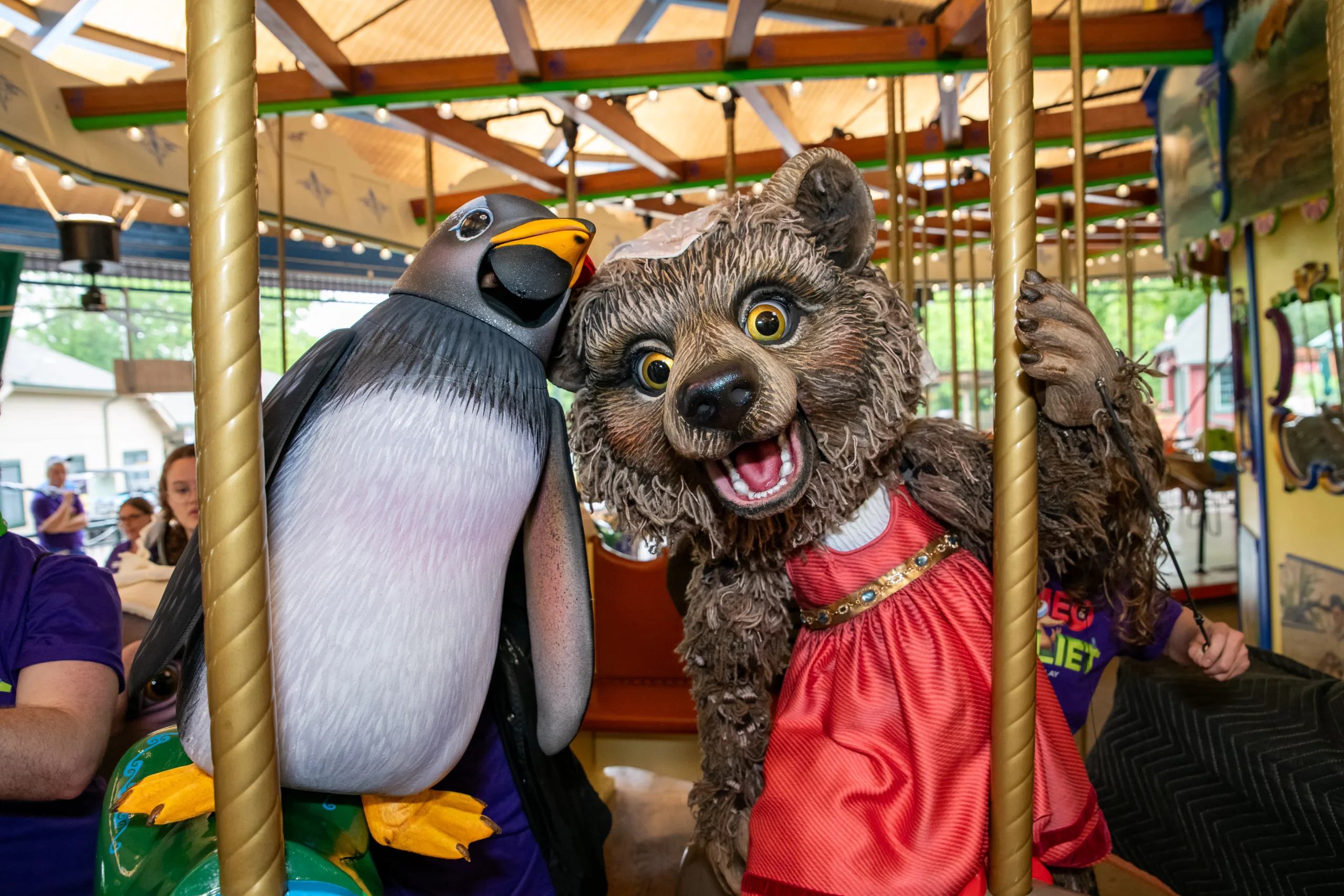
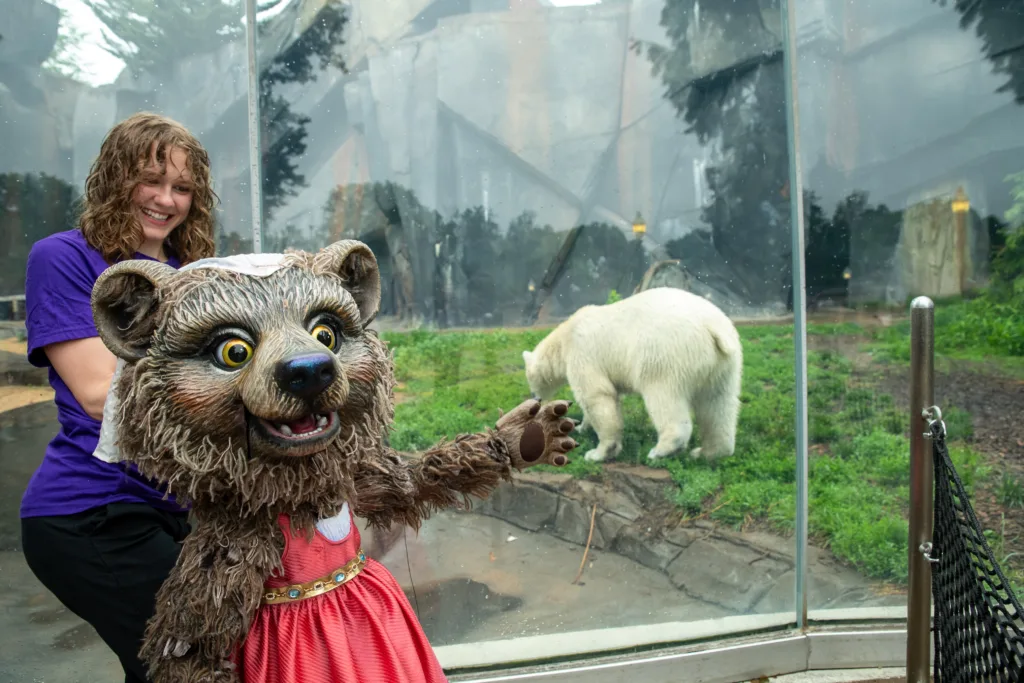
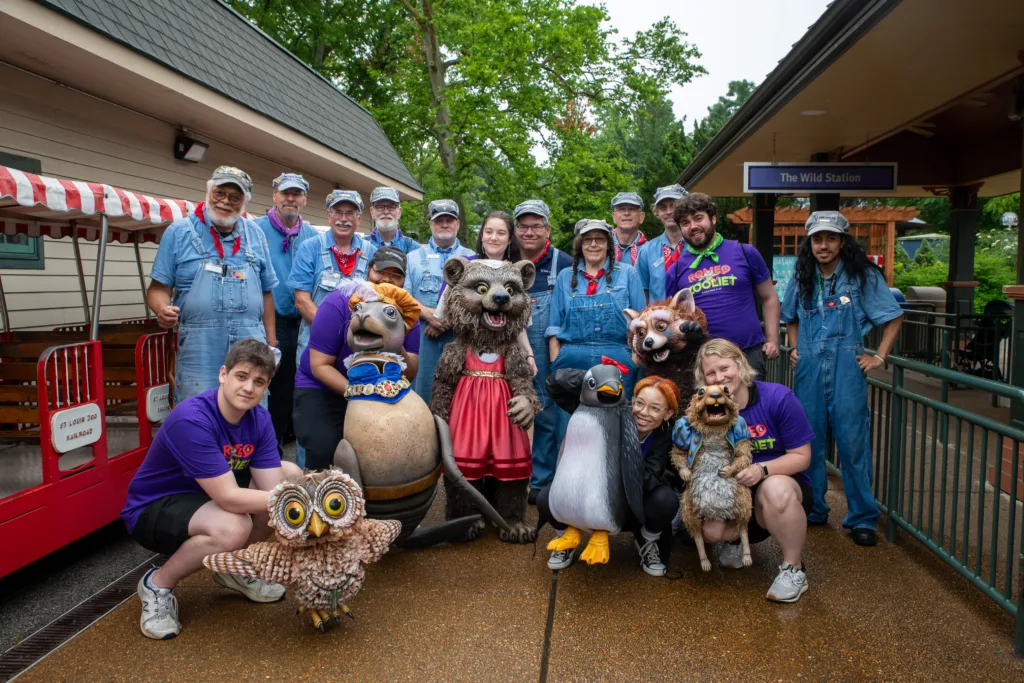
For families with young kids, Shakespeare can feel a bit intimidating. How is the story itself adapted to make it engaging, fun, and age-appropriate for kids? In this version, Juliet is a grizzly bear cub, Romeo’s a prairie dog, and Mercutio is a red panda. The nurse is a hippo. It’s also not the romantic love story of the original. It’s almost like early best friends—those intense, childhood relationships that we’ve all formed and had in our lives. So there’ll be lots for kids to relate to. There are also characters in the play that are the “animal audience” for the show—a father penguin and his daughter, who’s a little girl, and their cousin, who’s a little boy. And they respond to things the way kids would probably respond to it. So the dad kind of explains it to them, and you get to see it through the kids’ eyes, which I think will make it really easy to follow and fun to watch. And even if not every last word is understood, it doesn’t matter. People don’t realize—kids come to see Shakespeare in the Park, too, and do they understand every last word of it? No. But do they follow the story? Absolutely. Kids are smarter than we give them credit for.
Let’s talk logistics: What if kids can’t sit still the full show? [The show] takes place on Historic Hill, which is a beautiful, grassy, wooded valley in between the sea lions and Big Cat Country. It’s basically like a mini park in the zoo, so it’s not in an indoor theater or anything—it’s a lot like Shakespeare Glen. There are blankets and chairs, and kids can squirm or stand up or walk around if they really need to.
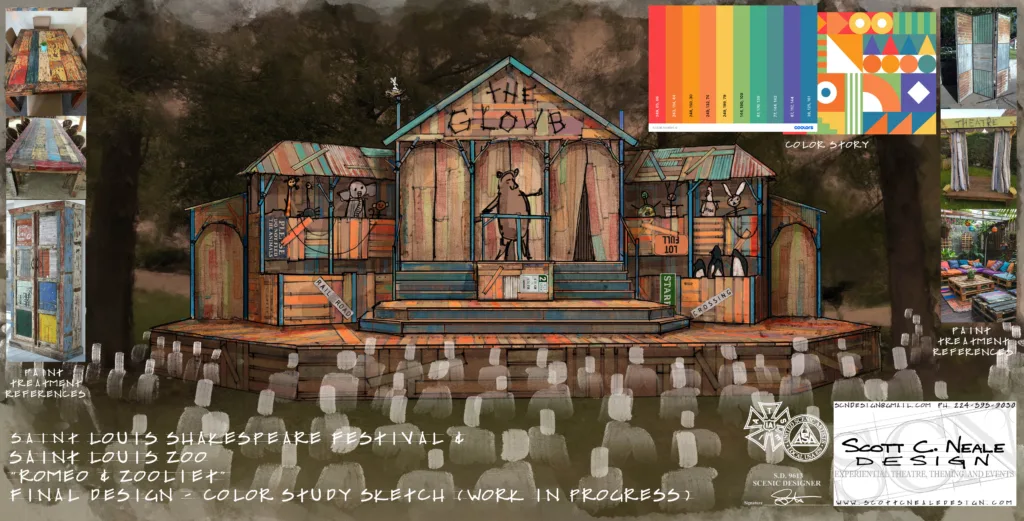
Is there a specific age range you think would most enjoy this show? I have a 3- and a 5-year-old, and I think they’re gonna love it. They were in my mind a lot as we’ve been making this, and I think they’re gonna have a blast. I also know that my dad and his girlfriend are gonna have a blast at it. I don’t think there’s really a limit. Will our 3-year-old sit still for 80 minutes? I’m not quite sure. But I think our 5-year-old is gonna be riveted. But just like at Shakespeare Glen, people can bring babies in wraps or toddlers in laps—whatever they want to do… I think all kids will enjoy being at the zoo on a beautiful summer night and watching this strange performance happening. So we say all ages, and we really mean it—but, you know, ages 5 to 100 is probably who will be able to sit through an 80-minute show and actually follow it.
Are strollers allowed, and how will stroller access work at this show? Totally. The area’s huge. There will be lots of air; there will lots of be places around. There’s lawn seating, so people are bringing blankets. They could, depending on the stroller, collapse it and just set it down next to them. But there are also areas around where strollers, walkers, or other kind of things could be deposited while you’re watching the show.
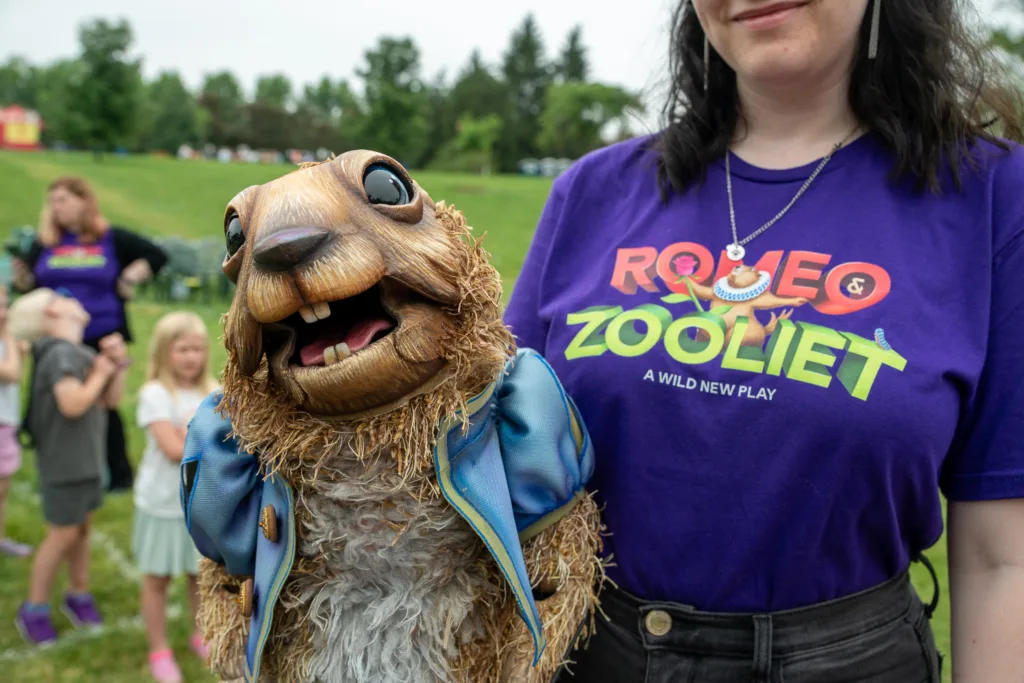
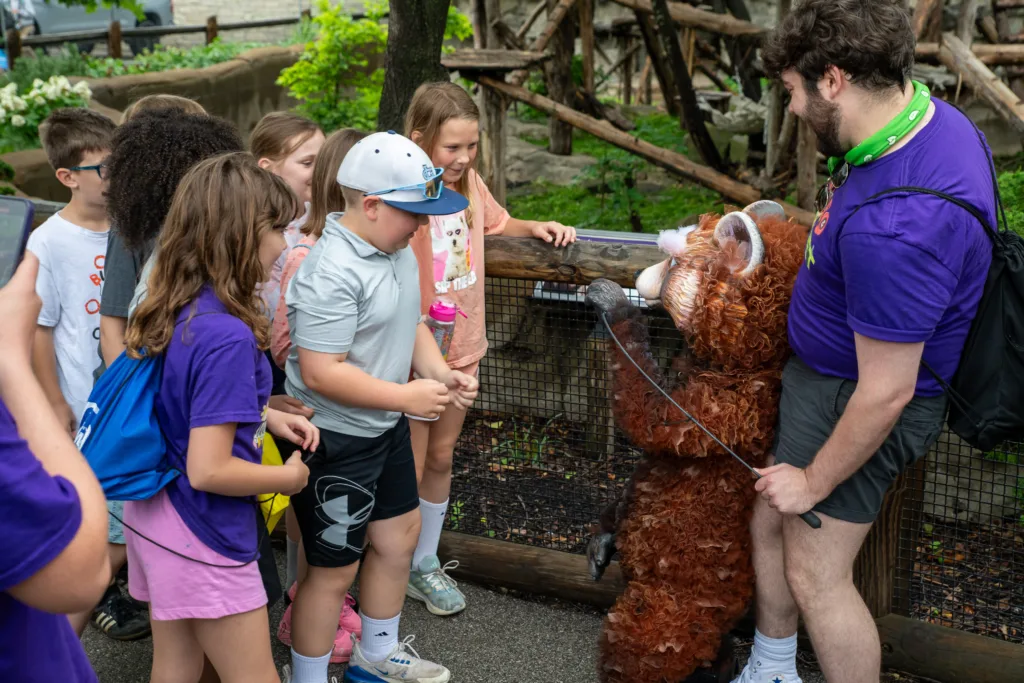
Can you share a bit of what families can expect visually and why puppetry in this instance is such a powerful storytelling tool? Puppetry is almost like the first theater that anyone gets exposed to. Every kid at some point pretty early on starts picking up objects or toys and puppeting them. Every doll or action figure you ever had, you played with as though it were a puppet… So much of what kids do to figure out the world is through that kind of imaginative play. But also, for a show like this, where the characters themselves are animals, we knew we just couldn’t put actors in floppy ears and a tail or something and have them act like zoo animals. We knew it had to be a little more magical than that. And so we’re incredibly lucky that these incredible artists at Michael Curry Design were as excited about the project as we are. They really are creating the most beautiful and sophisticated puppets in the world right now, and what they’ve made for our show is so lifelike, it’s hard to even describe.
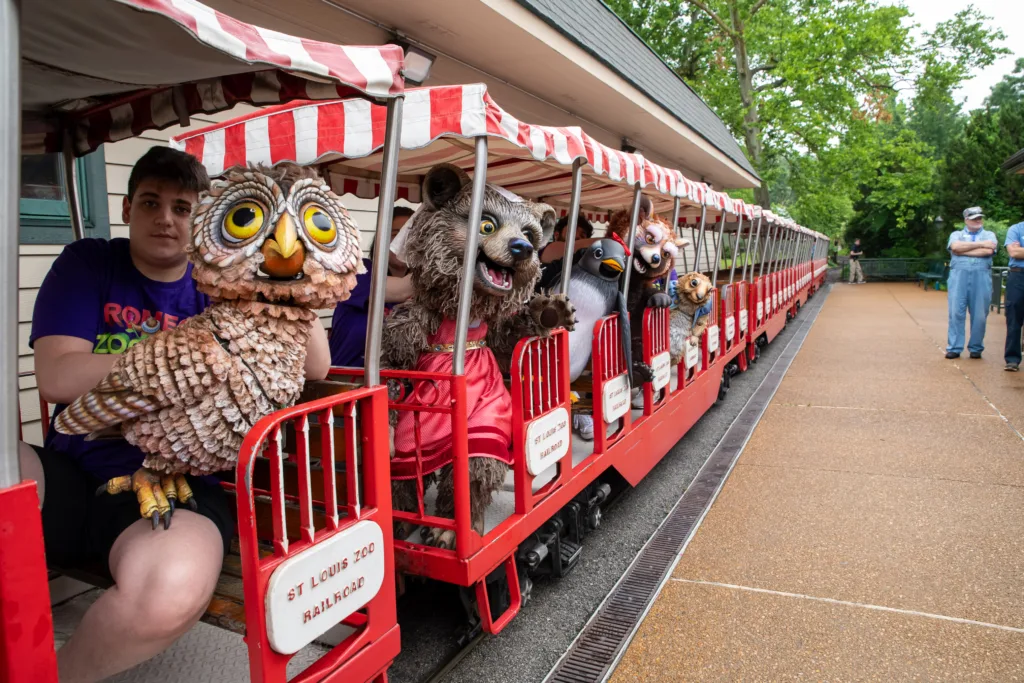
What can you tell us about seeing these puppets in action? Nothing fully captures the experience of seeing them live because your brain just does this strange thing and fills in the gaps, and you accept it as a living thing. There’s something about seeing a puppet in action, especially a really good one, where it takes you back to that childlike place, that sort of world of imagination, because your imagination is an engaged in a different way than it is if you’re watching a human being. Seeing these puppets immediately pulls you back into that time when you were a kid and that’s how you engaged with the world.
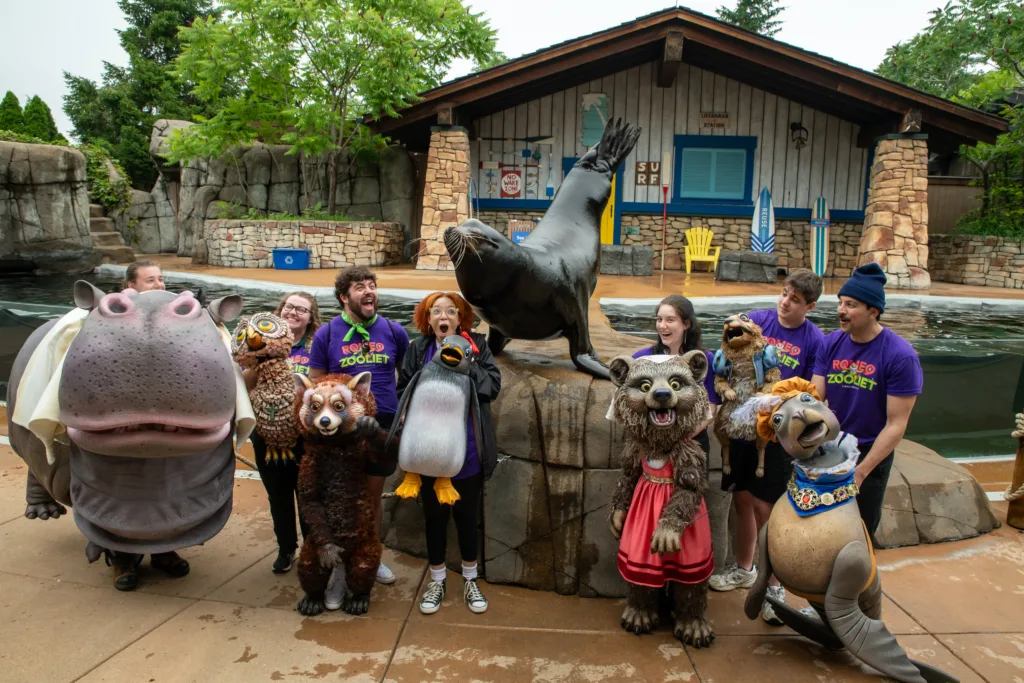
What makes this show so special and enriching for families this year? There’s lots of music. It’s very funny. It’s going to be a very entertaining experience. The zoo’s open; you’re going to be walking past the habitats of a lot of the animals that are in the show. You’re going to walk past a giant tortoise, and then 20 minutes later, you’re going to see this incredible giant puppet tortoise crawling across the stage. The people who come and see it will be the first people who’ve ever had an experience like that because this is so, so new. It’s so cool, and it’s such a fun way to reengage with Shakespeare in the Park and the zoo. It’s such a fun, new way, especially for kids who have been to the zoo a thousand times—this is a new way for that experience to be brought to life.
What lessons do you hope kids take away from the story? Well, obviously, the big one is what’s in the original play, in which you have [these feuding families, portrayed in this version by carnivores and herbivores], and no one knows why they are against each other. The play is about them realizing how silly that is and how much better it would be if they could work through that and find a way to be friends at the end of the day. So a lot of it is about that, but even more so in terms that kids can understand. And there’s a lot about how these characters relate to their parents, how they relate to other adult figures, how they relate to each other, and how they are able to look past whatever surface differences they might see to love and appreciate the beautiful humanity that surrounds them. [In our show,] it’s a predator and prey thing. They seem like they’re on opposite sides, but it’s about crossing over and bridging those gaps and realizing at the end of the day, we’re all just people. We’re animals.
What is so meaningful about exposing Shakespeare to a younger audience? It starts a lifelong appreciation of an engagement with and enjoyment of the arts. That’s such a nourishing, life-giving thing to have. Feeling comfortable going to see live theater, not feeling intimidated by Shakespeare, is such an important thing. So many people do feel intimidated by it, but they wouldn’t if they were able to experience it from an early age in a way that made it fun, entertaining, and accessible… We’re trying to make something that takes it off the pedestal and says, “At the end of the day, these are great stories, and you can enjoy these stories like you enjoy your favorite bedtime stories.”
Is there extra meaning to host the performances in Forest Park, which sustained significant damage from the tornadoes this spring? Absolutely. It’s devastating to see the damage there and around the city. But it’s such an important part of St. Louis, and the focus now has to be on recovery, rebuilding, and restoration. So what we hope this offers is a chance for people to come and enjoy the park and be with their fellow St. Louisans… I think giving people a positive reason to come—a way of showing them that the park is still there, that there’s still so much to enjoy, that there’s still so many ways to gather and take advantage of this beautiful jewel that we have—is a big part of what we hope people can take away from both Shakespeare in the Park and Romeo and Zooliet this summer.
Do you have plans for another show that partners with a family-friendly institution in St. Louis? Nothing specific right now. We love these kinds of collaborations because they lead to things that would never happen otherwise. The Shakespeare Festival on its own would never in a million years have produced an animal puppet adaptation of Romeo and Juliet. It only happened because we were working in partnership with the zoo, and they’re really shaping the show because obviously they’re experts on these animals. We’ve also done partnerships with Jazz St. Louis and lots of other organizations. It just leads to really wonderful and unique things. So we love doing it. We will certainly be doing more partnerships like this going forward, but honestly, there are no specific plans in the works other than what we hope will be another Shakespeare in the Zoo next summer. That’s what we’ve signed up for, and so if this goes well enough this year, then we would be back in 2026 with, I don’t know, A Midsummer Night’s Tiger or something.