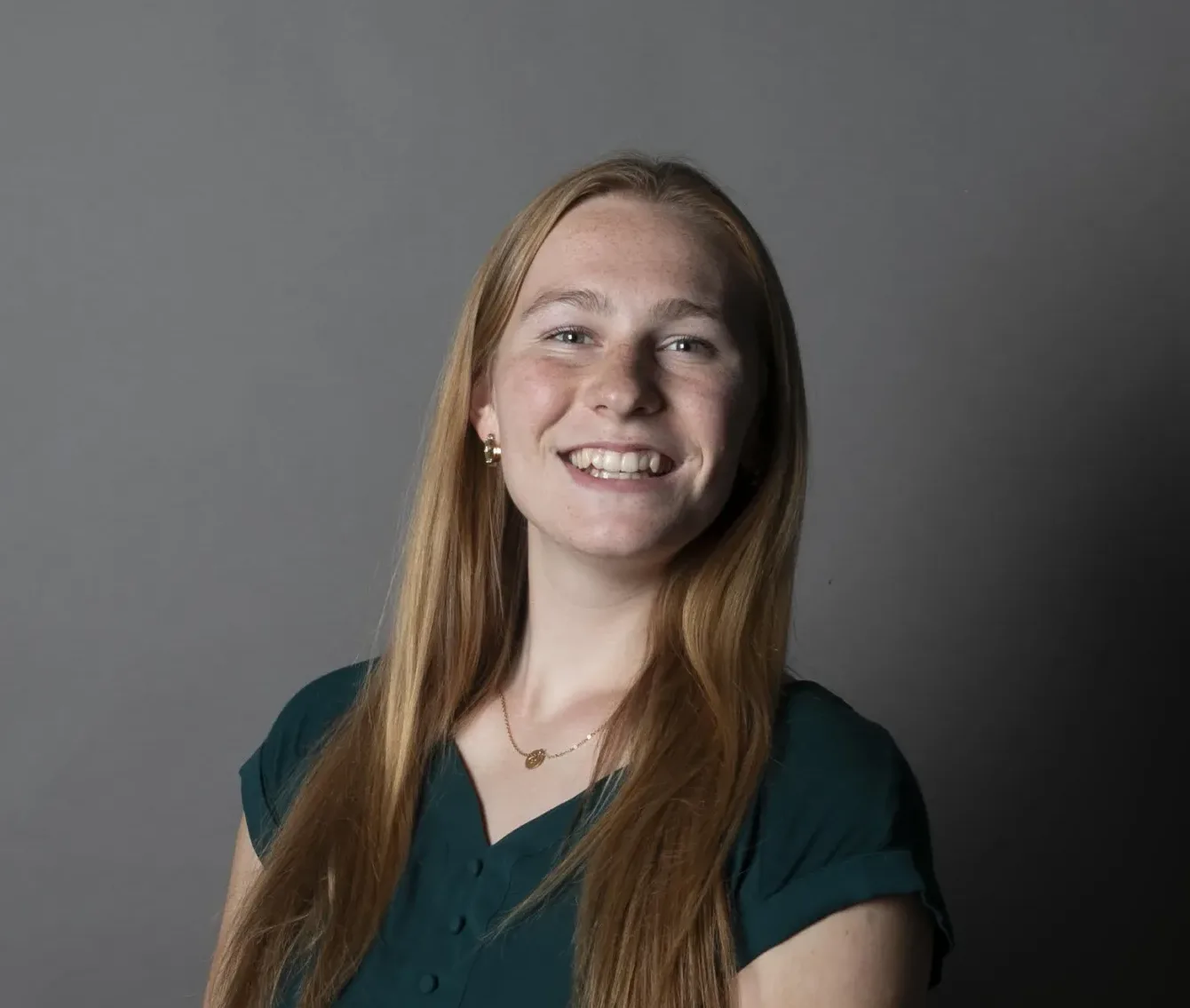
After moving eight times in her life, rising Westminster Christian Academy senior Lillian Shelton felt like her STEM education was inconsistent.
Shelton’s father is now retired, but served in the U.S. Navy and Air Force for more than 23 years. The family has lived in O’Fallon, Missouri, since 2019. But as a military child, Shelton, 17, grew accustomed to bouncing around from school to school, place to place—and that made it hard to get the education she craved.
Discover fun things to do with the family
Subscribe to the St. Louis Family newsletter for family-friendly things to do and news for local parents, sent every Monday.
“My whole entire life I have loved STEM,” Shelton says. “Ever since I was a little kid, I’ve always wanted to be an astronaut or work for NASA. It’s just been something I’ve been trying to chase after my entire life, but because I moved so much, it was very hard to get consistent education. I had several schools where I’d come in years ahead or years behind.”
Shelton knew she wasn’t alone in her struggles. Millions of other military kids faced the same battle.
So she decided to change things. In January, Shelton launched FreedomSTEM, a nonprofit organization designed to help military children and families boost their STEM education.
She started by designing kits for kids to put together to supplement their science classes. Her first, a circuit kit, helps students learn the basics of electricity, LEDs, buttons, and beginner coding. FreedomSTEM also just recently launched a second kit, called Newton’s Law, that teaches kids all about the science of motion.
Parents can request kits online on FreedomSTEM’s website.
Shelton personally came up with the ideas for the kits, drawing them out in her sketchbook, and sent the idea over to one of her team members, sophomore UMSL student Gus Benne, a mentor who she met through her robotics team. He works with the robotics team at UMSL to prototype and design the kits. She also has two additional volunteer team members helping her build her organization.
“She always has great ideas, but is also never afraid to tell me whenever something that I’m doing needs to change, or if I need to change up a design, or make something more cost-effective,” Benne says.
Benne also helps with FreedomSTEM’s website and connects the QR codes included with kits to the instructions online.
Shelton and her team also travel to military bases that request workshops. Her team can design a curriculum around the age group attending, using kits to teach kids about STEM in real time.
FreedomSTEM recently partnered with Deployed Love, an organization that connects deployed military members and their families. She hopes their partnership will expand into more workshops across the East Coast. FreedomSTEM also partnered with a robotics team in Southern California, and is sending 100 kits for it to host STEM workshops.
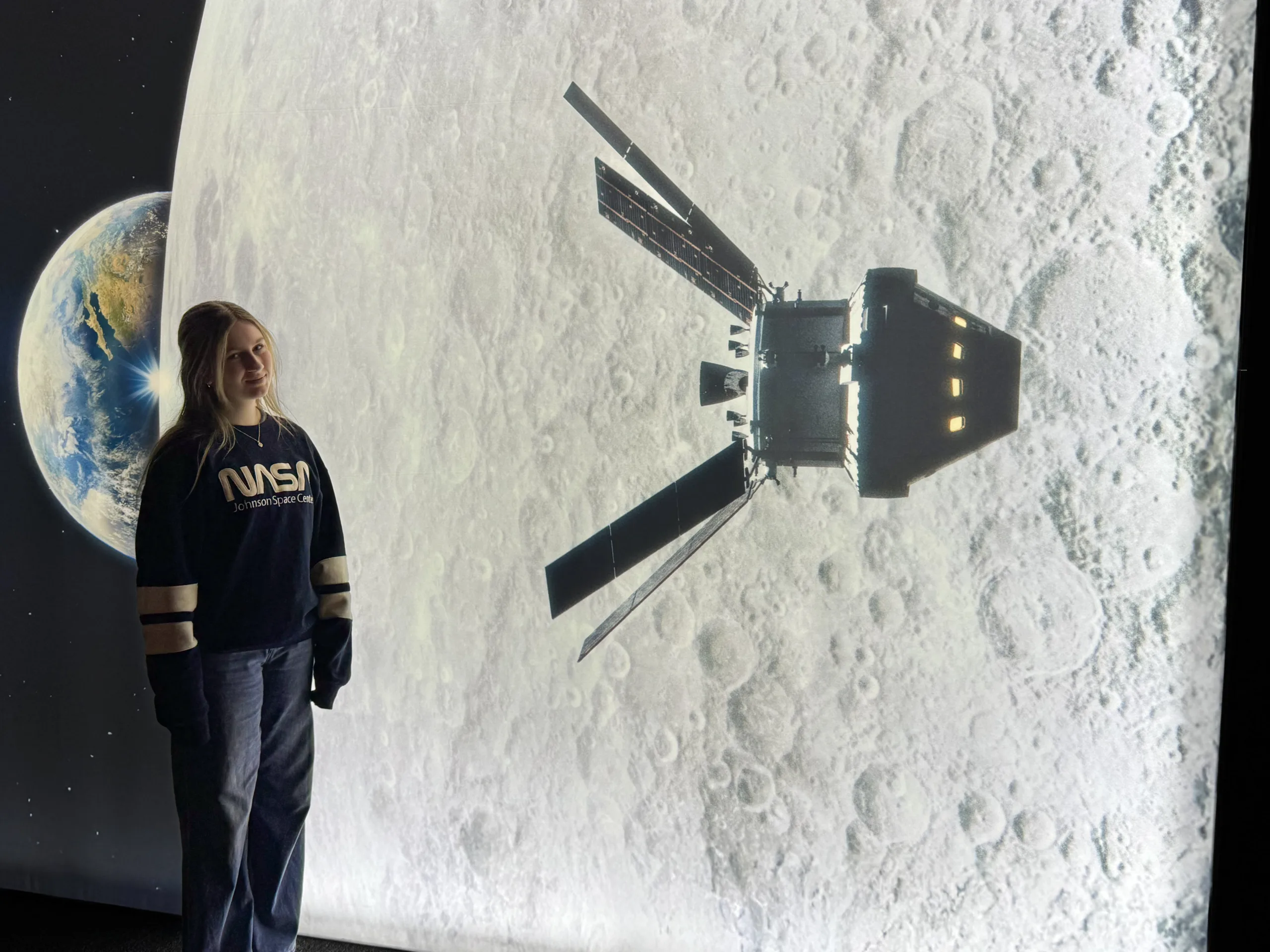
In addition to founding her nonprofit, Shelton continues to pursue her NASA dreams. She was recently selected for the NASA STEM Enhancement in Earth and Space Science (SEES) Summer Internship at The University of Texas at Austin Center for Space Research—chosen from more than 3,000 applicants for one of 118 on-site positions nationwide. She will be conducting research focused on human spaceflight.
She’s on the human health analog, psychological, and physiological deficit countermeasures in the human spaceflight team. “My team currently plans to study mechanotransduction, which, in short, the hair follicles of your ear determine what happens to your vestibular system,” she explains. “And so it’s really just about how the effects of outer space affect humans.”
While the internship is a dream come true for Shelton, she explains it will also help with FreedomSTEM.
“I think it will help me make a lot of connections with kids around the country who have the same passion that I do,” she says. “But one thing in particular that I’ve been thinking about for a while is that my next kit is going to be a space-themed kit. I want to make this one my most original kit yet. I’m already brainstorming so many ideas, and I’m hoping this NASA internship can really give me a behind-the-scenes look.”
FreedomSTEM is hosting its next workshop at Scott Air Force Base on July 27–30. While its kits are free for anyone who requests them, Shelton explains that donations are the way they can keep the organization growing and increase the number of kits they can send to kids worldwide.
She has big dreams for both her career and the organization she founded.
“My dream is to become a research scientist at NASA’s Human Research Program, and also an astronaut,” she says. “I absolutely plan to continue growing FreedomSTEM alongside my career, and I really hope to make it something sustainable, and that hopefully outlives me.”