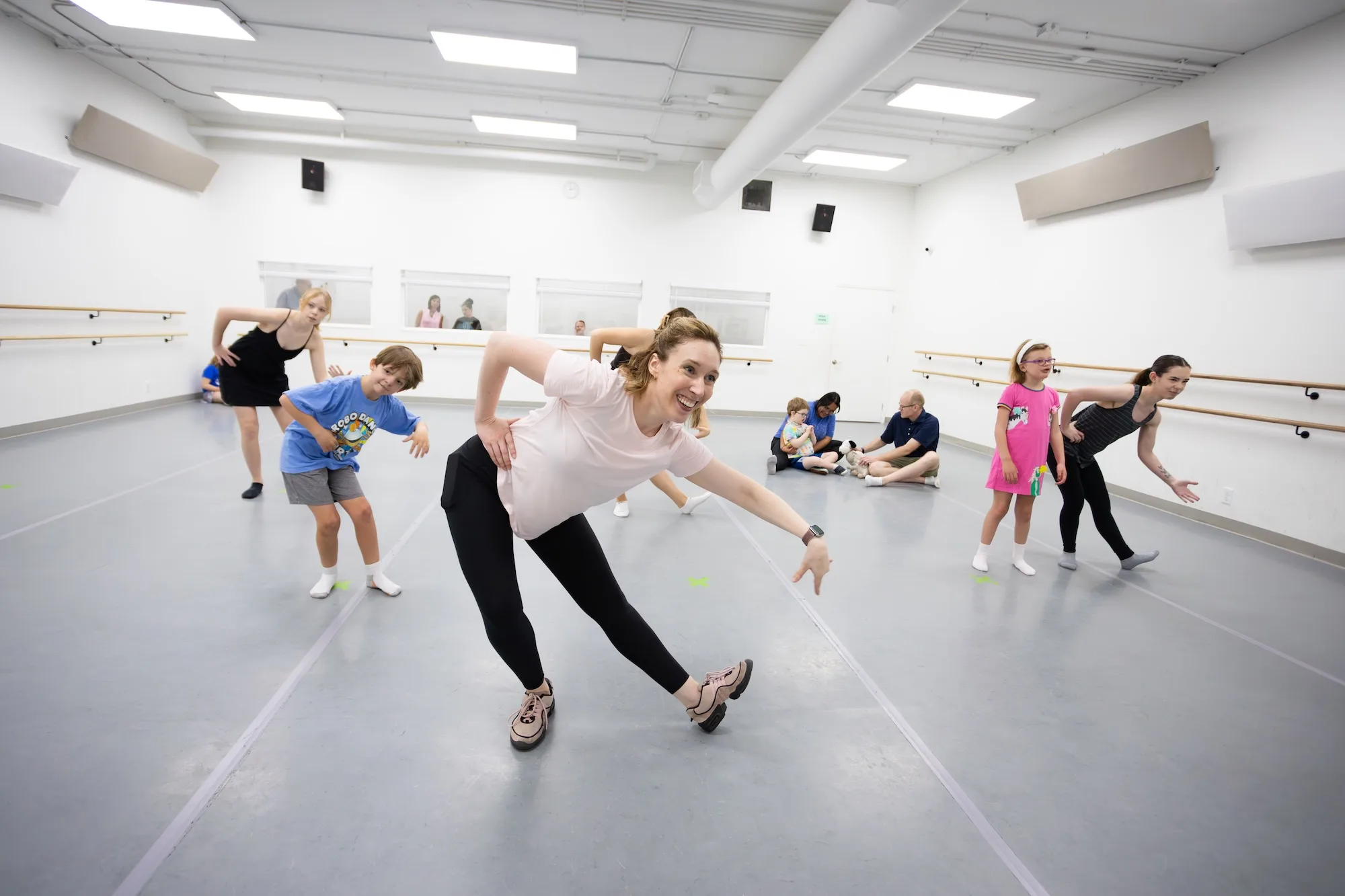
At Ms. Karly Dances, success might mean learning to gallop, balance on one foot, or bounce in a caregiver’s arms. As owner Karly Pierce Lystad tells her students, it all counts.
Pierce Lystad teaches movement classes that stretch from babies and toddlers to older children with disabilities. Her approach is built around a simple idea: Dance should meet kids where they are.
Discover fun things to do with the family
Subscribe to the St. Louis Family newsletter for family-friendly things to do and news for local parents, sent every Monday.
“I want them to feel joy,” Pierce Lystad says. “That is the main goal.”
There are plenty of developmental benefits along the way, she says, but she doesn’t expect young dancers to know that; she just wants them to leave with “a love and a joy for moving their bodies and for music.”
Finding her place in early-childhood dance
Pierce Lystad has taught dance for years, but the ages and abilities of her students have evolved over time. During the pandemic, she began working for a company that offered professional development for dance teachers of children with disabilities. Through that work, Lystad was introduced to another area of dance education: movement for infants through age 5.
“I had no interest to teach this age group,” she recalls. As Pierce Lystad learned more about ways that young children develop through music, rhythm, movement, and play, however, her perspective changed. “I have never felt so fulfilled,” she says. “I just explode with joy.” She loved watching children change from week to week, building confidence and self-expression while developing new skills and connecting with their caregivers.
Those experiences now form the foundation of Ms. Karly Dances. The classes are designed around what children are developmentally ready to do, rather than what adults might expect a dance class to look like.
Yes, even babies can “dance”
So what does dance class look like when the dancer is three months old? For starters, the grown-up does most of the moving.
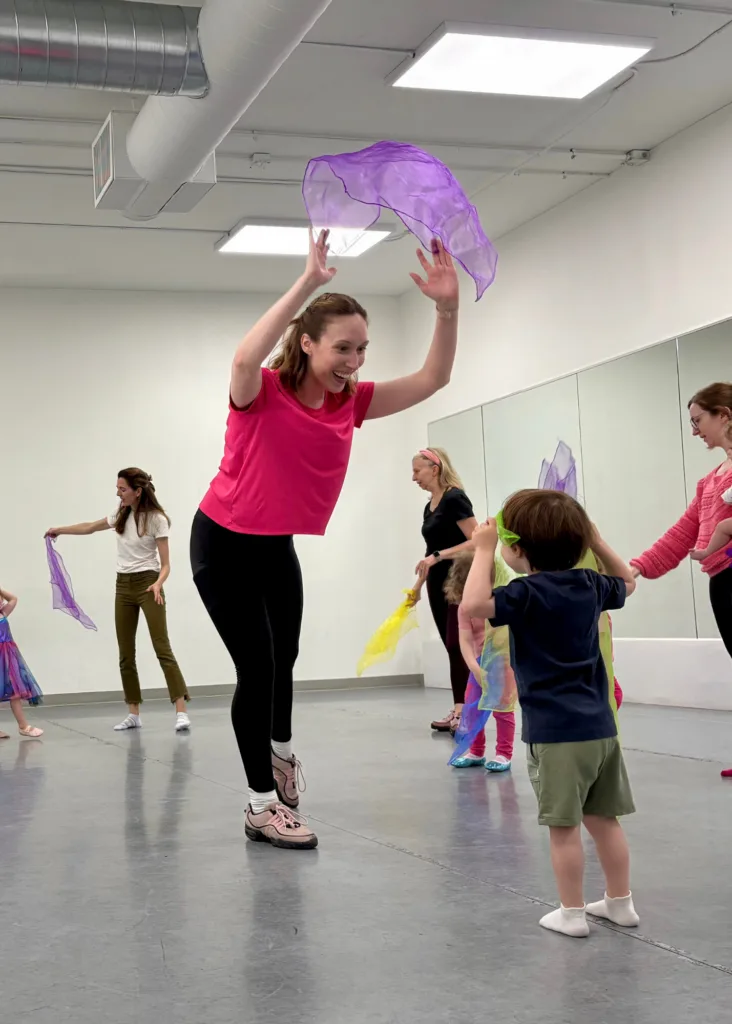
During Pierce Lystad’s infant classes, caregivers hold babies while swaying, bouncing, and moving around the room. They might face a mirror, so babies can see themselves and their expressions while experiencing concepts such as fast and slow or big and small.
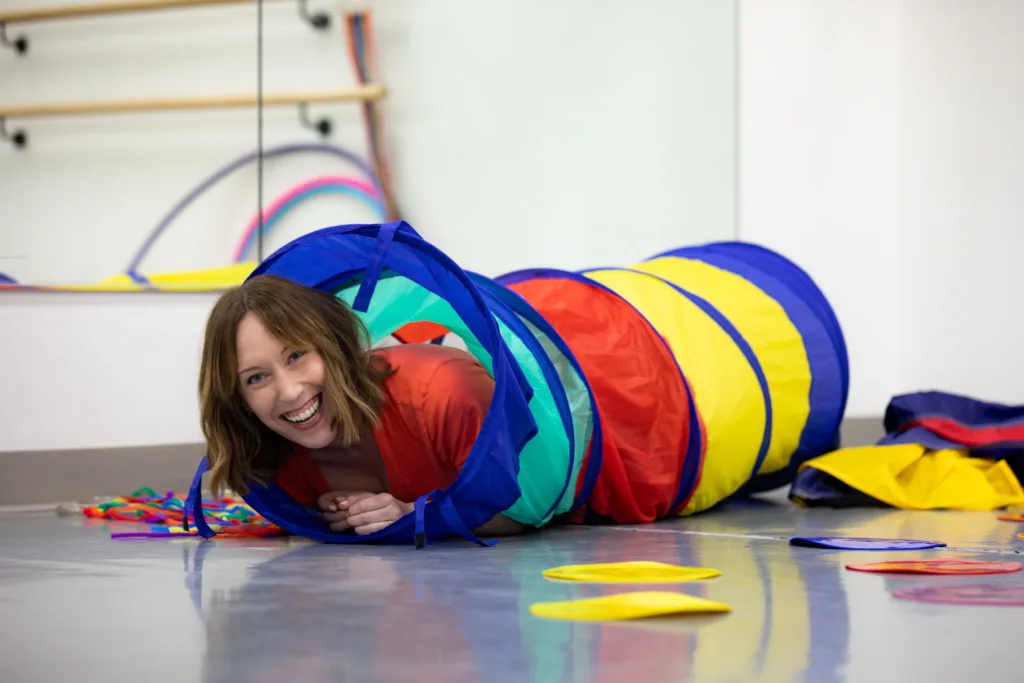
There are plenty of props, too. Scarves, ribbons, egg shakers, and other sensory materials give babies opportunities to experience music and movement through sights, sounds, and touch. As children become more mobile, the classes grow with them.
For 1-year-olds, that might mean marching, stomping, shifting their weight from side to side, balancing, or beginning to jump with two feet. Two-year-olds get more storytelling and imaginative play, including obstacle courses where they might gallop like a horse, jump like a lion, or make themselves tiny like a mouse.
The goal isn’t to rush toddlers toward perfect dance steps. Instead, Pierce Lystad works on foundational movements. Before children can jump on one foot, for example, they need to be able to balance on one foot. Before that comes learning to shift their weight. Even a toddler favorite like “freeze dance” serves a purpose: stopping when the music stops asks children to control their bodies even when they want to keep moving.
“Children learn through play, and that’s something we embrace,” Pierce Lystad says.
The grown-ups have a role, too
In classes for the youngest dancers, caregivers aren’t relegated to the sidelines. Pierce Lystad says young children look to their trusted grown-ups to understand how to respond in an unfamiliar environment. Rather than expecting a baby or toddler to immediately follow a teacher they’ve just met, she guides the caregivers through the activities, so they can model them for their children.
She thinks of herself as a sort of tour guide. The setup also gives grown-ups a chance to be present with their children without having to come up with the entertainment themselves.
“They get to access their inner child and be silly and have this half hour where they don’t need to plan the activity,” Pierce Lystad says.
And many of the songs, finger plays, movement games, and obstacle-course ideas can be recreated at home after class ends.
When the class adapts to the dancer
Meeting children where they are takes on another dimension in Pierce Lystad’s adaptive dance classes.
“Oftentimes, in a traditional dance setting, it is expected that the child adapts to the class,” Lystad says. “Where in an adaptive or an inclusive class, it’s my responsibility to adapt a class to the student.”
That philosophy can change everything from the volume of the music to what success looks like for an individual dancer. If a child is sensitive to sound, Pierce Lystad can lower the music or offer headphones. Fidgets and other sensory tools are available. She uses pictures and other visual cues to help children understand what’s coming next or where their bodies should be. Sometimes a pool noodle becomes a target showing a child where to kick.
She also makes room for the ways individual children regulate their bodies. A dancer who needs to pace, sit, move their hands, sing, or make sounds isn’t automatically treated as disruptive. “There’s no judgment in how a child participates and learns,” Pierce Lystad says. “I’m just happy they’re there.”
For a child who’s anxious about entering a new environment, adapting can begin before the first class. Pierce Lystad sends new students a social story that explains what to expect, including photos of her and the volunteers they’ll meet and a preview of the class routine.
And if they aren’t ready to dance right away, that’s OK. A child can watch through the window or sit beside a caregiver until they’re comfortable. To Pierce Lystad, watching is still a form of participation.
Different dancers, different goals
A row of children crossing a dance floor might all be doing the same activity in Pierce Lystad’s adaptive class. What they’re working toward, however, can be completely different.
Pierce Lystad gives the example of a student who uses an assistive device to walk. For that dancer, making it across the floor might itself be the goal. With a caregiver’s permission, the child might work on scooting across the floor independently.
Another dancer might cross that same floor while practicing a more traditional dance step. “We’re doing the same activity, but the goals are different,” Pierce Lystad says.
Some dancers might need a volunteer beside them to help with balance. Others might benefit from a visual cue. The point isn’t for every child to perform the movement identically. “The end goal is all the same,” she says. “It’s just a different way of getting there.”
Pierce Lystad also credits volunteers with helping make that individualized support possible. Students from Saint Louis University and WashU volunteer in her adaptive classes while pursuing degrees in education or doctorates in physical therapy and occupational therapy.
Building community through movement
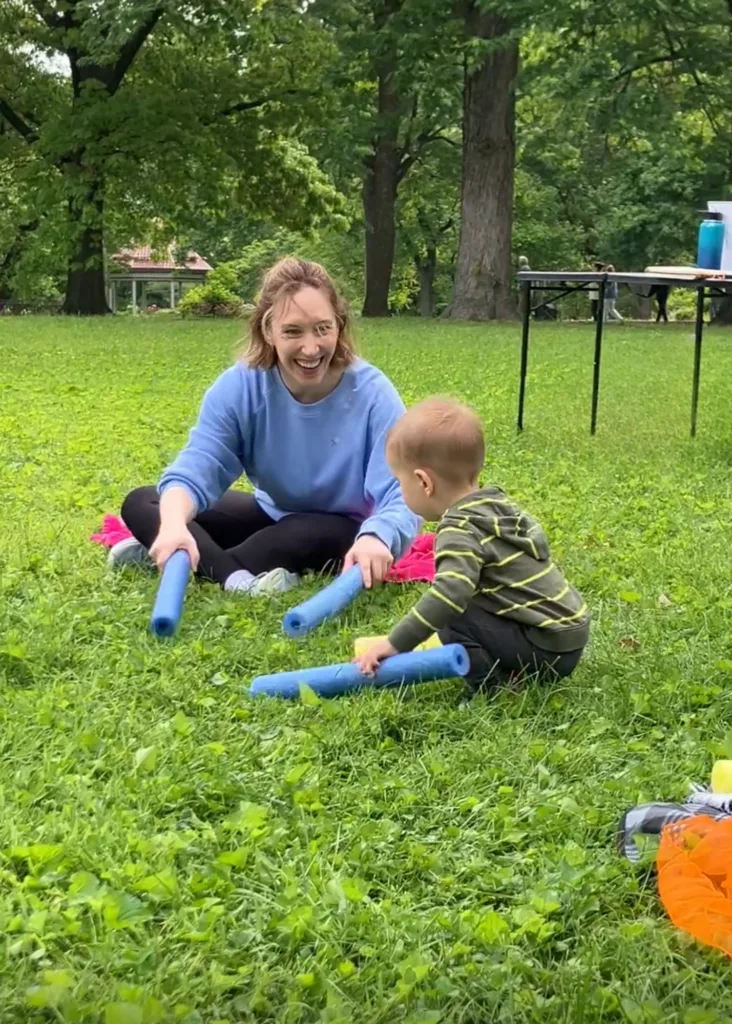
Not all of Pierce Lystad’s teaching happens inside a dance studio. Her Dancing in the Park classes bring families with children from infancy through about age 5 together in Lafayette Park, where the environment is naturally a little less structured.
A child might wander over to investigate a tree or decide they’d rather run through the grass for a moment. That’s OK with Pierce Lystad. The classes still have a general structure and plenty of movement and props, but children can participate at their own level.
The experience has also created connections that last after the music stops. “I’ve seen families become close friends that met at these classes,” Pierce Lystad says.
She has seen families grab coffee before class, stay to explore the playground afterward, and come from outside the city to spend time in the neighborhood. She’s also expanding her community-based offerings, including a new class at Urban Fort Play with a similarly playful approach for a broader range of young children.
What’s next for Ms. Karly Dances
Pierce Lystad is still relatively new to St. Louis herself. She and her husband moved here from Fargo, North Dakota, about three years ago.
In North Dakota, Pierce Lystad had grown up dancing and spent years building relationships in the dance community. In St. Louis, she had to start building those connections again.
Ms. Karly Dances grew partly from that effort. While sidelined by an injury, Pierce Lystad started an Instagram account to connect with local families and help spread the word about her classes. It soon became something more.
The account helped lead to community collaborations and opportunities to bring movement programming to local families. She was even contacted to audition for a major children’s television show.
Now, she’d like to take what she’s building beyond St. Louis. That could mean a children’s show, a book, printable activities, partnerships with larger brands, or more resources for dance educators. Pierce Lystad has already begun consulting with studio owners and teachers interested in starting adaptive classes or making their existing programs more inclusive.
“I feel like my brain is so packed full of passion and excitement and knowledge for working with these age groups and abilities,” she says. “I just want to share that with as many people and families as I can.”
The details
Families can find Ms. Karly Dances classes for children as young as 3 months, along with adaptive programming for children, teens, and adults. Fall offerings include:
St. Louis Academy of Dance
- Babies (3–11 months): Tuesdays, 9:45–10:15 a.m.
- Tykes (12–23 months): Tuesdays, 9–9:30 a.m.; Sundays, 9:30–10 a.m.
- Tots (ages 2–3): Tuesdays, 10:30–11 a.m.; Thursdays, 10:30–11 a.m.; Sundays, 10:15–10:45 a.m.
- Creative Ballet (ages 3–4): Sundays, 11–11:30 a.m.
- Adaptive Beginner (ages 5+): Sundays, 11:45 a.m.–12:15 p.m.
- Adaptive Teen/Adult (ages 13+): Sundays, 12:30–1 p.m.
Classes are offered in eight-week sessions. The fall session begins the week of September 9, but families can join after the session has started, with tuition prorated for the remaining weeks.
Urban Fort
Pierce Lystad will also lead a six-week early-childhood movement session at Urban Fort beginning September 11. Classes are held Fridays from 10:15–10:55 a.m.
Dancing in the Park
Families can join Pierce Lystad outdoors for Dancing in the Park on Saturdays from 10–10:30 a.m., followed by open play. The program welcomes young children across a range of ages and emphasizes playful movement in a relaxed outdoor setting.
For registration, locations, upcoming sessions, and additional class information, visit mskarlydances.com.