Between holiday wish lists, gift shopping, and packed family calendars, it’s easy for the season of giving thanks to become a season of wanting more. But the holidays also offer parents an opportunity to help children appreciate what they already have and find meaningful ways to show gratitude.
According to Jamie Heimos of Balance and Bloom Counseling and Play Therapy, teaching gratitude starts with empathy. Helping children recognize the needs and feelings of others can encourage them to look beyond themselves and find ways to contribute to their families and communities.
Discover fun things to do with the family
Subscribe to the St. Louis Family newsletter for family-friendly things to do and news for local parents, sent every Monday.
Heimos encourages families to become what she calls “true villagers,” looking for opportunities to support others, even through small gestures. After all, gratitude goes beyond simply saying thank you. It’s something children can practice through their actions.
Here are five ways to make gratitude part of your family’s routine this holiday season in St. Louis, along with local children’s book recommendations to help start the conversation.
Be your child’s role model
One of the most effective ways to teach children gratitude is to demonstrate it yourself, Heimos says. When parents regularly express appreciation, offer help, and show kindness, children have an example to follow.
Alyssa Bennett of Betty’s Books in Webster Groves recommends Thank You, Omu! by Oge Mora. The beautifully illustrated story follows a woman who shares her homemade stew with neighbors until none is left for herself. In the end, her community comes together to return the kindness.
The story offers an opportunity to talk with kids about caring for others. Perhaps an elderly neighbor could use help with a small task, or a friend who has been sick would appreciate a thoughtful note. Children can learn that showing gratitude doesn’t require a grand gesture.
Send a thank you
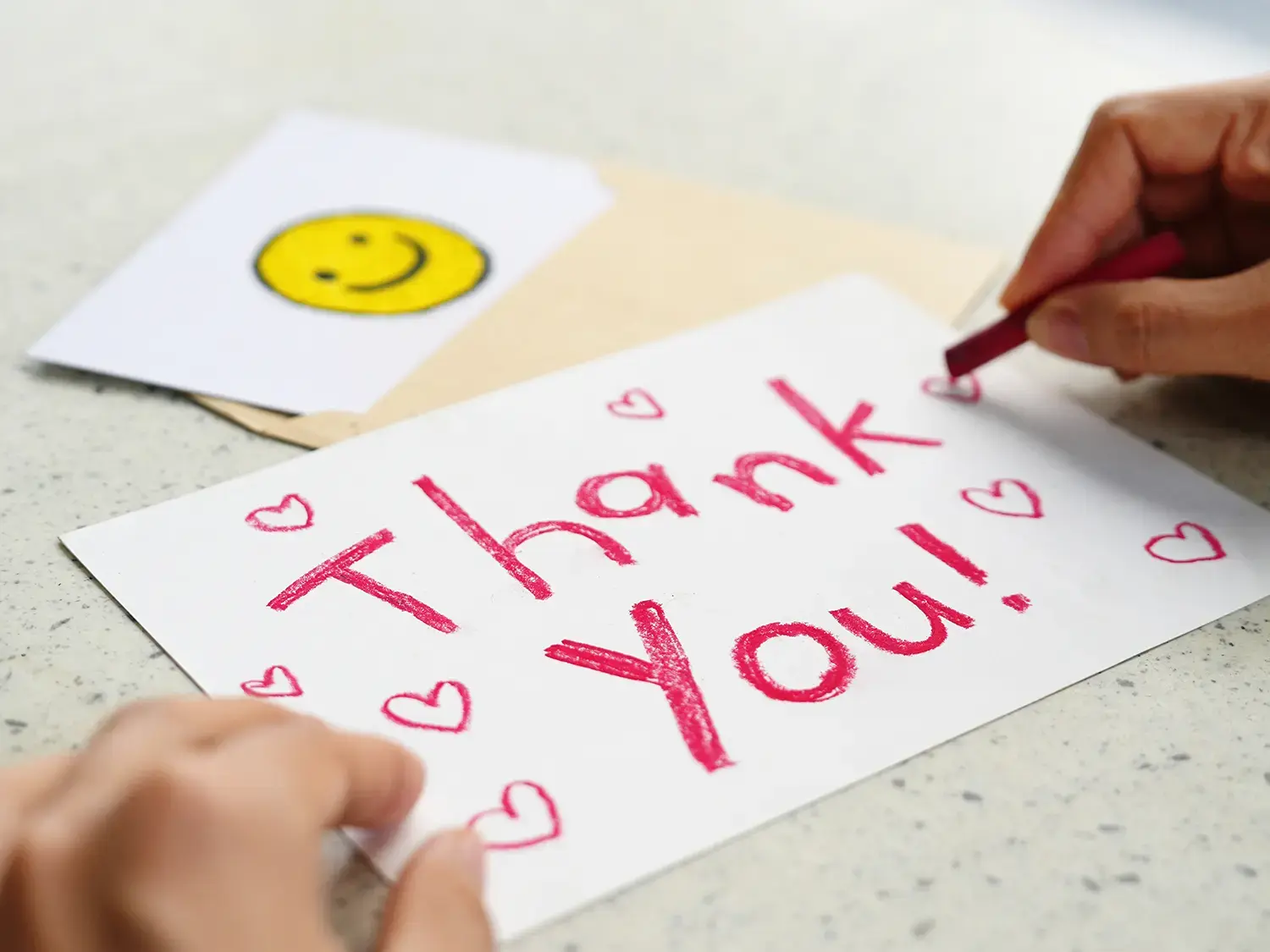
A handwritten thank-you note might seem old-fashioned, but it’s a simple way to help children recognize and express appreciation for others.
In Ten Thank You Letters by Daniel Kirk and The Thank You Letter by Jane Cabrera, Bennett explains, young readers discover how a small expression of thanks can brighten someone’s day and inspire more kindness.
Younger children can draw pictures, while older kids can write a note or send a letter in the mail. During the holidays, encourage children to think beyond thanking someone for a gift. They might write to a teacher, grandparent, coach, or neighbor who has made a difference in their lives.
The exercise also gives children an opportunity to consider why they’re thankful, rather than simply going through the motions of saying thank you.
Notice the small things
Gratitude doesn’t have to be reserved for special occasions. Helping children appreciate everyday moments can make the practice feel more natural, Heimos explains.
Thanku: Poems of Gratitude, a collection of poems celebrating everything from the sky above to a favorite sweatshirt, puppies, and hot chocolate, offers inspiration for noticing the little things, Bennett says.
Families can try taking a daily “gratitude break,” pausing to recognize something that made them smile. Maybe it’s a butterfly visiting the garden, a passing train, a friendly greeting from the school crossing guard, or a favorite family memory.
For a creative twist, Heimos recommends inviting children to write their own gratitude poems or draw pictures of the things they appreciate.
Start a family gratitude tradition
The holidays are a natural time to reflect on the people and experiences that make life meaningful. But gratitude doesn’t have to end when the decorations come down, Heimos says.
The Thankful Book by Todd Parr celebrates the everyday things children can appreciate and offers a starting point for family conversations, Bennett adds.
Consider creating a gratitude jar or family journal, Heimos says. Set aside a few minutes each day or week for everyone to share something they’re thankful for. Younger children can dictate their thoughts to a parent, while older kids can write their own entries.
At Thanksgiving or another holiday gathering, read a few entries together. Revisiting those moments throughout the year can also offer a welcome reminder of positive experiences during difficult days.
Find gratitude in nature
For a more hands-on approach, pair Kate Messner’s Up in the Garden and Down in the Dirt with a family visit to the Missouri Botanical Garden.
The book explores the activity happening above and below the soil, encouraging children to pay closer attention to the natural world.
At the garden, take time to notice the changing seasons, explore the variety of plants, or enjoy a quiet stroll through the Japanese Garden. Ask children what they notice, what surprises them, and what they appreciate about being outdoors together.
Afterward, invite them to draw a picture or write a short poem about their favorite part of the visit. It’s a simple way to turn a family outing into an opportunity for reflection, Heimos says.
Making gratitude a year-round habit
Practicing gratitude has been associated with benefits for emotional well-being, and research suggests it may help support mental health and reduce stress. But for families, the goal doesn’t need to be another task on an already crowded holiday checklist.
Instead, Heimos encourages parents to focus on everyday acts of kindness and connection. “It’s important to be kind to one another and show our family we love them, not just say it.”
Whether it’s writing a thank-you note, helping a neighbor, or sharing something good about the day, Heimos says, small moments can help children build the habit of recognizing and expressing appreciation for the people and experiences around them.