Green(house) is the new black(board), thanks to Overland, Missouri-based technology company MARSfarm.
Officially launched three years ago by Peter Webb and Drew Thomas, MARSfarm produces countertop greenhouses that are increasing access to hands-on agriculture education across St. Louis and the world. Its units been enveloped into the curriculum of about 600 schools across 12 countries, including Mary Institute and Saint Louis Country Day School, St. Joseph’s Academy, St. Charles Community College, Ranken Technical College, Harris-Stowe State University, and Freeburg Community High School.
Discover fun things to do with the family
Subscribe to the St. Louis Family newsletter for family-friendly things to do and news for local parents, sent every Monday.
Today, the units are primarily used by STEM-oriented research institutions, rural high schools preparing students to run the farms of the future, and horticulture classes in urban and county high schools. The fact that they are much more most cost-effective, compact, easy to assemble, and accessible than a traditional greenhouse makes them an ideal learning tool for educators. However, the venture began as a more simple, personal endeavor involving Webb’s passion for sourcing food sustainably.
“MARSfarm really began in about 2016 as a collaboration between makers at a makerspace in the Central West End called TechShop,” co-founder and CEO Webb recalls. “It was initially based on my desire to be able to grow anything in my apartment in the Central West End.”
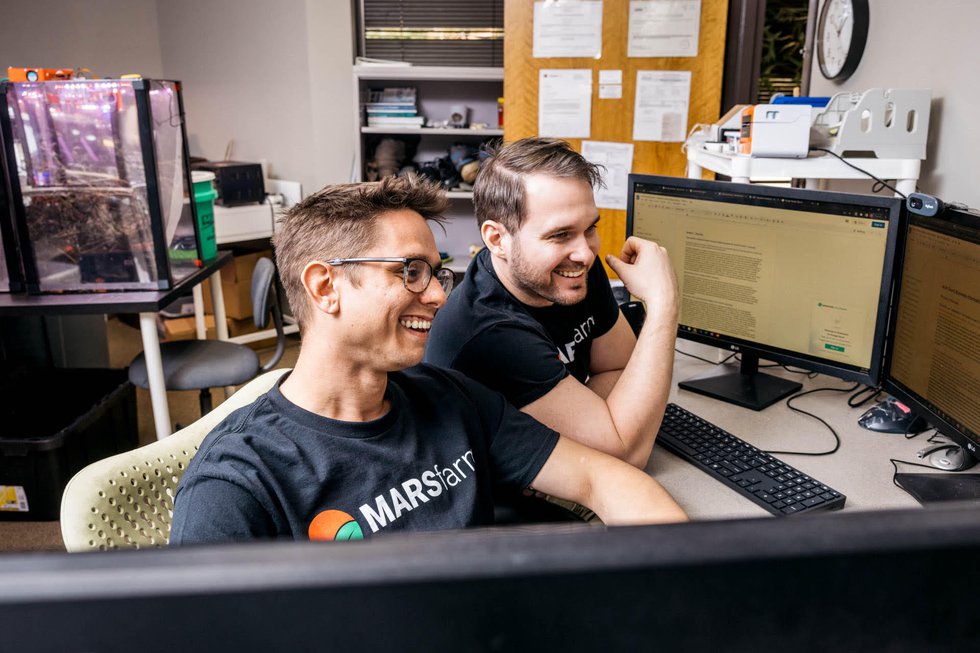
While attempting to fill that need, Webb met co-founder Thomas, and the two drew up design plans for something bigger: small-scale, affordable greenhouses that could be used in a variety of ways. “The whole idea was that for $300, you could go into Amazon or a hardware store and buy about 25 parts,” Webb explains of the first phase of the business model. “Then, we made about five PowerPoint decks that were the instructions for how to use all those materials to build yourself your own countertop-sized greenhouse. We called it a smart greenhouse because we put a little computer in it that could collect the temperature and the humidity data, as well as a photo every hour and also control the lighting.”
Initially, the unit designs were experimented with by makers interested in hydroponics and other plant sciences. Webb and Thomas put the designs out onto community forums, and Webb says from there, about 500 people around the world started building on and adding to their designs. It didn’t take long for educators to take notice. “School districts [started reaching out that] wanted to get several kits at once and buy software that was preloaded to take some of the complexity and DIY-ness out of it. So that was really what led to the creation of the business in 2020.”
The company, which does much of its assembly, design, and distribution out of its local office, received support from Arch Grants in 2022. Each roughly 1-square-foot cube contains a small computer that allows students to configure individual settings for their greenhouses. Because of the small size and low price point for districts, more students can have a one-to-one experience with the equipment, allowing for more intensive learning, rather than one large greenhouse experience shared among a full class.
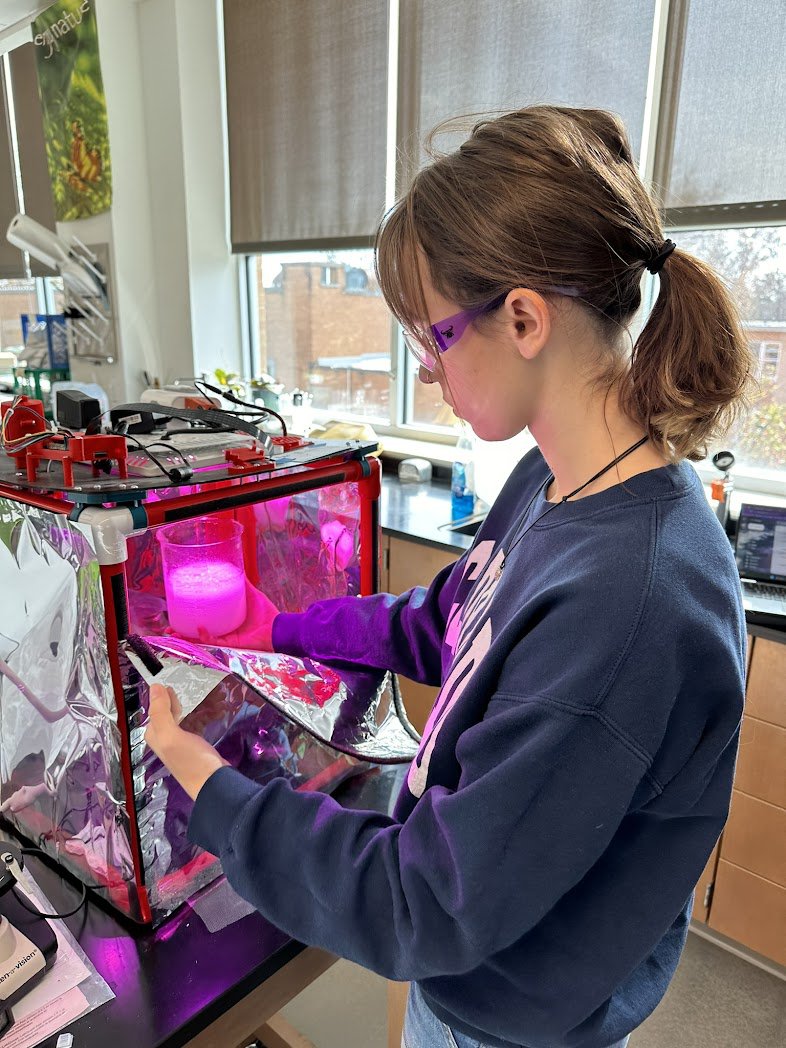
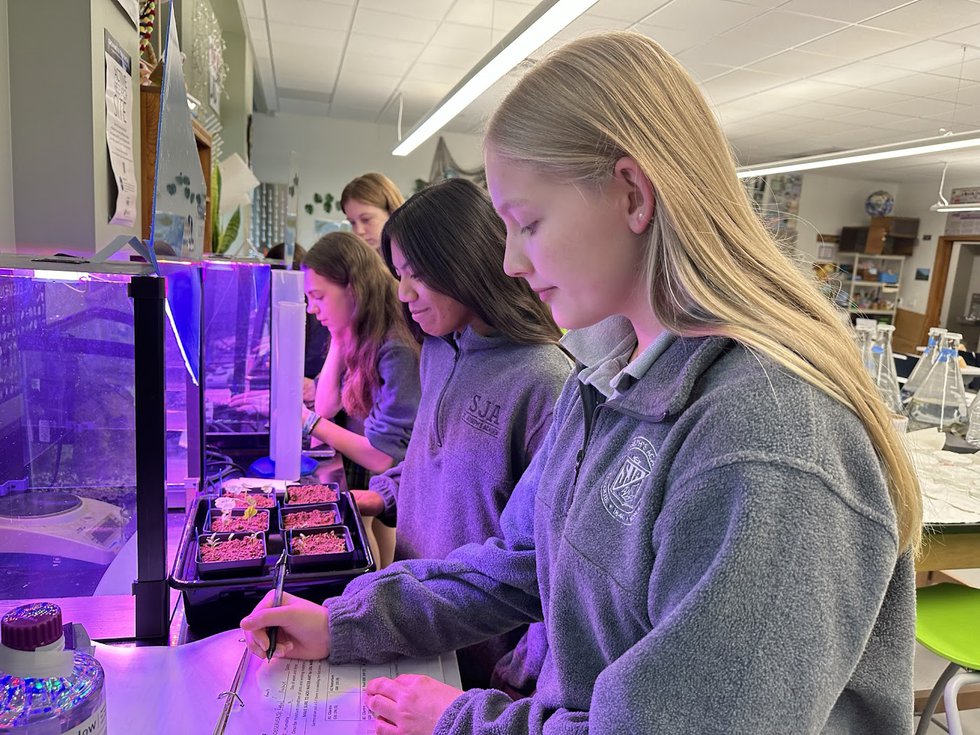
“The MARSfarm chambers have allowed students to move far beyond just learning from a textbook,” St. Joseph’s Academy educator Katie Lodes says. “[The projects allow] our students to apply not only the knowledge they have learned, but also the science skills that prepare them to pursue science degrees in college and to understand how science works when making decisions in their own lives.”
Lodes explains that her students have been able to utilize the units to pursue both independent and classroom research projects for which they would otherwise not have the tools, such as looking at the effects of higher CO2 levels on plants and cyanobacteria or looking at the most efficient use of resources to grow food in space.
These projects are what fuels Webb and Thomas’ passion to keep moving the business forward.
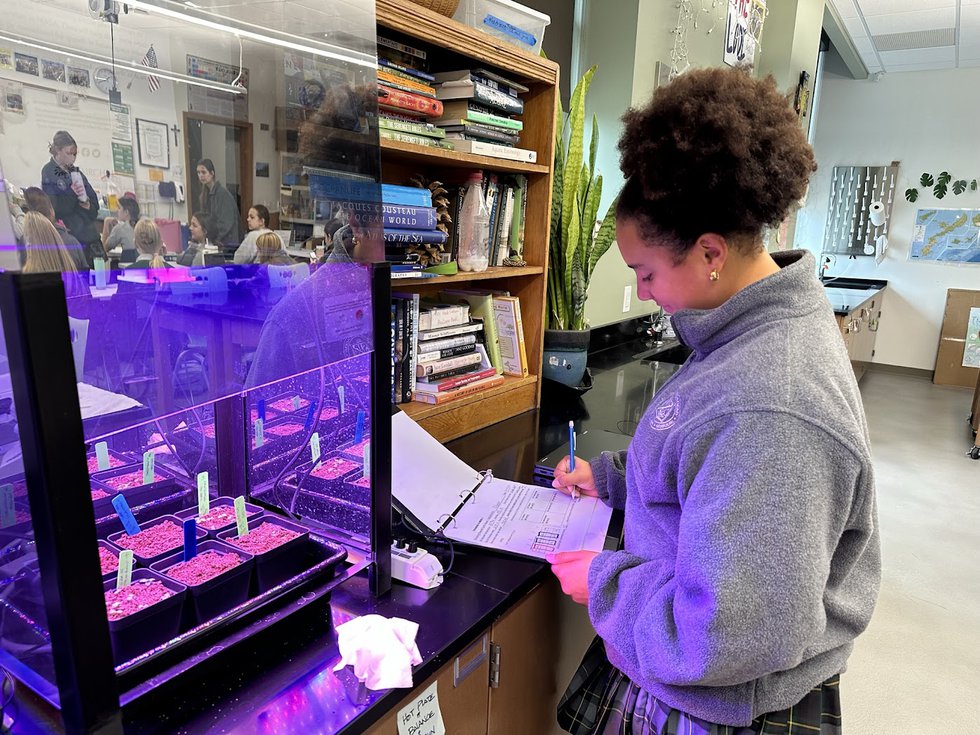
“We are most excited when we hear stories about students that are high-achieving, like a STEM student, [for whom] our products have opened their minds to careers in agriculture or life sciences or other applications where they can have an impact on adapting agriculture to the impeding or looming changes in climate,” Webb says. “For instance, how would we design seeds that are more drought tolerant? How would we simulate ahead of time what a 2-degree increase of temperature would mean for all these different crops? We love seeing students that get really excited by thinking about how they can use technology to do science in an industry that really matters and has an impact on climate.”
Freeburg Community High School is another area institution where Webb hopes their products can make a big difference. “I sat in on a freshman class at Freeburg where I think of the like 12 kids there, six or seven of them were inheriting farms from their parents or grandparents,” Webb says. “That’s roughly 3,500 acres of land that is being determined by the kids in this classroom in 10 years, you know? That’s a lot of impact potentially in how those decisions are made.”
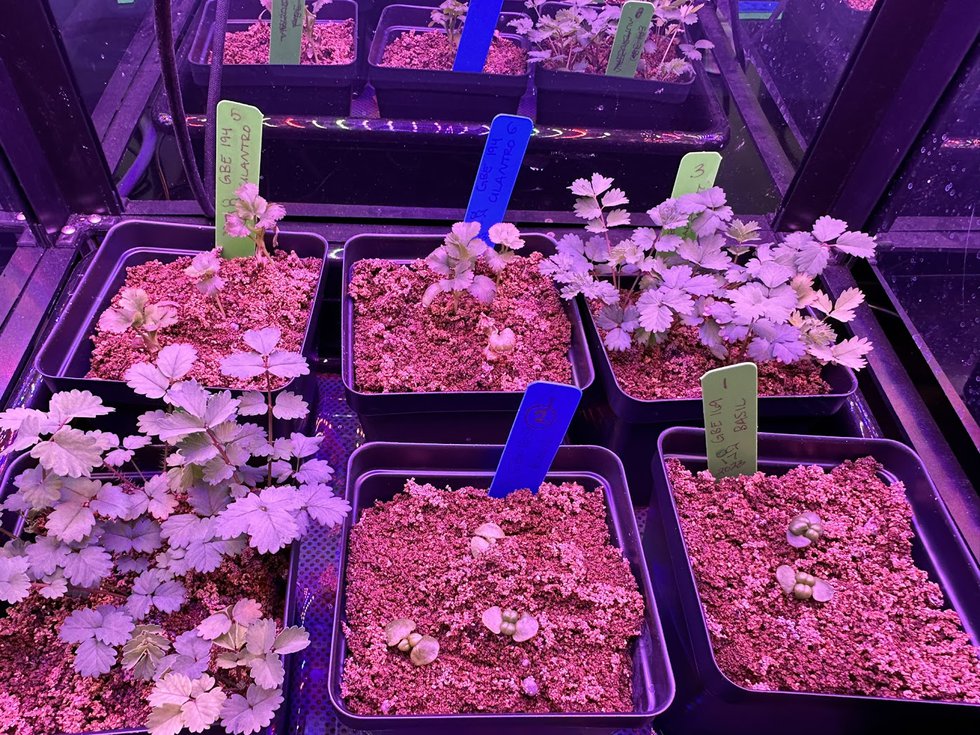
One of the most poignant takeaways for all students has been witnessing the cycle of plant life in real time. “Seeing that cycle of growth leads to all sorts of questions as you watch a plant develop,” Webb says.
Pursuing answers to these questions is the future of MARSfarm, Webb says, from plant growth-optimization strategies to controlled-environment technology tinkering to data collection on a large scale.
Webb expresses that this generation of metro area and Missouri students is perhaps the most poised to take on the challenges that could be aided by MARSfarm’s products and that the company’s mission is to reach a range of future workers. “[Our hope is that these products are] going to inspire different students that may not have otherwise been interested in agriculture, [from] the ones who are inheriting the farms to the ones who are going go work at Bayer, DuPont, or Bunge … to the ones who are going to work at Danforth Plant Science Center. I find technology to be a uniting point of interest among all youth, regardless of whether they’re rural or in county or urban context. As long as we can then tie that technology back to real-world skills and industry, we think it adds value to their education and the community overall.”