This spring, Academy of the Sacred Heart in St. Charles hosted a dozen students from its sister school, Sapporo Sacred Heart School in Sapporo, Japan, for a weeklong visit. On the night before the guests’ final day on campus, head of school Tim Horner received an email from an eighth-grade student: We’re not certain what the day is going to allow us, but is there a way we can stay in touch with our guests?
Horner recalls, “In such a short period of time, there was a very strong connection built with our students, who wanted to continue those relationships after our guests went home.”
Discover fun things to do with the family
Subscribe to the St. Louis Family newsletter for family-friendly things to do and news for local parents, sent every Monday.
Sacred Heart Education, a private Catholic institution, encompasses more than 150 schools in 41 countries. In the past, the network allowed for a robust exchange program, which is now getting back on its feet.
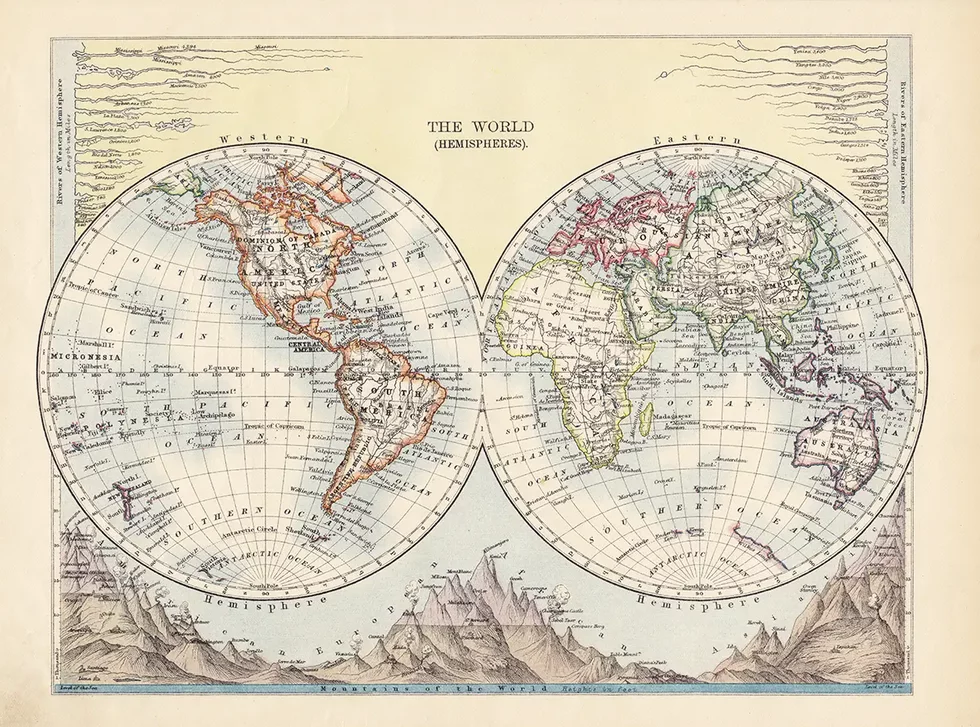
At Forsyth School, students are developing a strong sense of world geography and learning about the power structure that has shaped what maps look like today. By the time students graduate sixth grade, they use “memory mapping” to create and label a full map of the world. The curriculum provides students with a strong critical-thinking foundation, says upper division director Stephanie Teachout. The aim is to prepare them to understand geopolitical interactions in the future.
Place-based learning is also built into the curriculum at Principia School. Starting in sixth grade, students develop Spanish language skills and take local field trips in preparation for a trip to Costa Rica in eighth grade. During that eight-day stay, they visit with families and are immersed in the language. Integrated studies teacher Lindsay Bryan recalls a particularly meaningful day during one trip: “We had a cooking class and learned how to prepare some traditional Costa Rican meals. Then, our host got the whole neighborhood together, and we had a soccer game. All the kids, all different ages from the community showed up, and we all played soccer—it was a universal language.”
Samantha Dry, principal of Principia’s middle and upper schools, who was born in South Africa and has taught in five countries, says a global perspective is a critical part of the school’s curriculum. “In terms of best practices today, if you are not a school that has a global perspective, then you are doing your children a disservice,” Dry says. “With future-ready education, if you’re preparing kids for the world that they are going to be in, then it’s going to be global.”
LEARNING TO LISTEN
How students are hearing “untold stories of St. Louis”
Students in Gerald Williams’ fifth-grade class at The College School are learning how to be better listeners—and they’re sharing their knowledge with adults in the community. This year, alongside his colleague Scott Phelps, Williams developed the “Untold Stories of St. Louis” theme. Inspired by the nonprofit StoryCorps, the interview-based project was designed to help students listen actively, assume good intentions in others, and consider a stranger’s story. “Everyone has experiences that influence what they do or who they are,” Williams says. “So giving the students a vast, diverse background of individuals to talk to, to interview, to learn their stories, and to hear them was our main goal.” Featured voices included community leaders, staff, graduates of The College School, and other St. Louisans from various walks of life. Students learned about interviewing best practices before being matched with interviewees in groups of three. Each team then condensed a 35-minute conversation into a 5-minute video. “One individual talked about how his mother had walked in Selma with Martin Luther King Jr.,” Williams says. The project’s capstone included a gallery walk, where students presented their videos to the community. The feedback was overwhelmingly positive, Williams says, with some interviewees suggesting the conversations “made them feel as though they were the only ones in the world at that moment.”