

When Ford Hotel Supply owners Christy Ford Schlafly and Charlie Schlafly founded STL Foodworks, in 2019, the term “ghost kitchen” was all but unheard of in St. Louis; delivery and carryout were, at best, tolerated by restaurants; and if you would have uttered the phrase COVID-19, even an epidemiologist may have greeted you with a blank stare.
Though much has changed in the two years since STL Foodworks came on the scene, it is just as relevant—perhaps even more so—as when it began.
Find the best food in St. Louis
Subscribe to the St. Louis Dining In and Dining Out newsletters to stay up-to-date on the local restaurant and culinary scene.
The Schlaflys originally envisioned it as a culinary incubator to support up-and-coming businesses and aspiring food entrepreneurs. They used their deep connections in the hotel and restaurant industries to create a facility that would allow for creatives to bounce ideas off one another and to help the city’s food scene grow. Part commissary and part culinary incubator, STL Foodworks was designed to help culinary entrepreneurs get up and running—something they didn’t realize would be needed more than ever the following year.
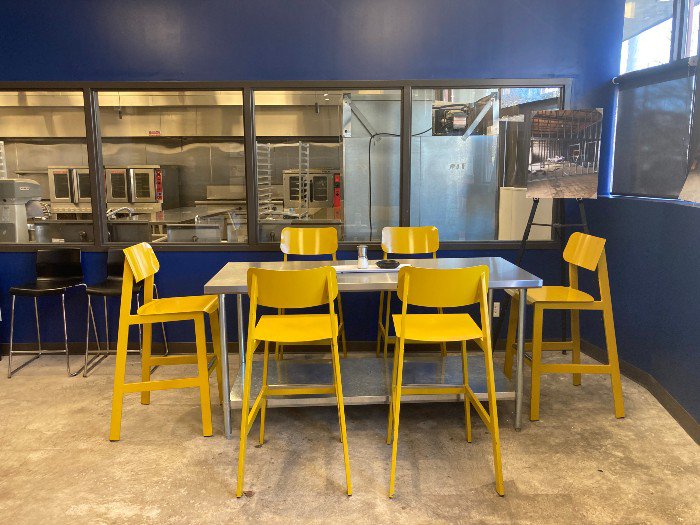
“At the beginning, the space was created for one intention, and now we are seeing a different kind of food market come to light,” says Daniel Movitz, general manager of operations for STL Foodworks. “We’re getting so many requests from people who are home cooks and want to start their own businesses because they can’t go to work. People call and tell us that they are cooking in their homes but want to do things the right way—they need a business license, but they can’t get one without a commissary. They need a commissary but can’t find one. We have this philosophy of getting creative and providing all the information and assistance for people looking to start their own businesses.”

Comprised of seven different commercial kitchen spaces, STL Foodworks is filling an important need in the city’s food community as restaurants and food professionals struggle to succeed under the weight of the pandemic. Not only does the facility provide commercial kitchen space to those who need it, but the organization also guides aspiring entrepreneurs through the sometimes arduous process of starting a food business, helping with things such as ServSafe certification and appropriate licenses.


In the past year, STL Foodworks has helped 10 businesses get up and running and provided a stable and easily accessible food preparation space to already established companies. Some of the businesses the incubator has been working with over the past few months include Sando Shack, a food truck that specializes in Japanese sandwiches; Shorty Mix Gourmet Cookies; an ice cream company, Bold Spoon Creamery; and a hot sauce brand, Anderson and Son Pepper Co. The space also serves as the culinary hub for the food-focused arm of the immigrant and refugee organization Welcome Neighbor STL.
Movitz believes the sky is the limit with STL Foodworks, even beyond the business incubator side of its operations. During his eight years on the city’s food scene, he watched as restaurants struggled to meet the demands of growing takeout and delivery business; during the pandemic, that growth has turned into an all-out explosion, and he feels that restaurants might be able to navigate this change better with such a facility.

“In certain restaurants, I saw too much demand for deliveries and to-go orders,” Movitz says. “Instead of them turning off Doordash, Postmates, and the Uber Eats systems, I want to help them facilitate a way for them to handle it. If they can do a completely separate to-go operation from here in the Central West End, they aren’t losing business but are actually making more money in the sense that the servers and kitchen staff in the restaurants can focus on the brick-and-mortar establishment and someone can be here focusing on the to-go orders. In the future, I believe that STL Foodworks can be that ultimate ghost kitchen concept.”
Like many in the hospitality industry, Movitz does not see demand for delivery and to-go food lessening in a post-pandemic world. He also thinks the industry will continue to see demand for private catering, with independent food businesses rising up to meet it. The fact that STL Foodworks is poised to help food entrepreneurs, no matter what the future holds, is what motivates him and the Schlaflys to continue adapting the facility to help grow the city’s scene.
“During these times, I find that whatever business plan you had pre-COVID is changing,” Movitz says. “St. Louis is a very entrepreneurial community, is very creative, and is always thinking two steps ahead about what is going to be next. Here at STL Foodworks, we love that creativity and are doing our best to think about how we can make this space ideal for those who need it.”


