When Josh Smith describes his new restaurant, Neon Greens (4176 Manchester), to those who haven’t yet seen it, he uses a vivid analogy from film that gets across the point of the beautiful spectacle: “It’s what it would look like if Willy Wonka had a salad factory,” says Smith.
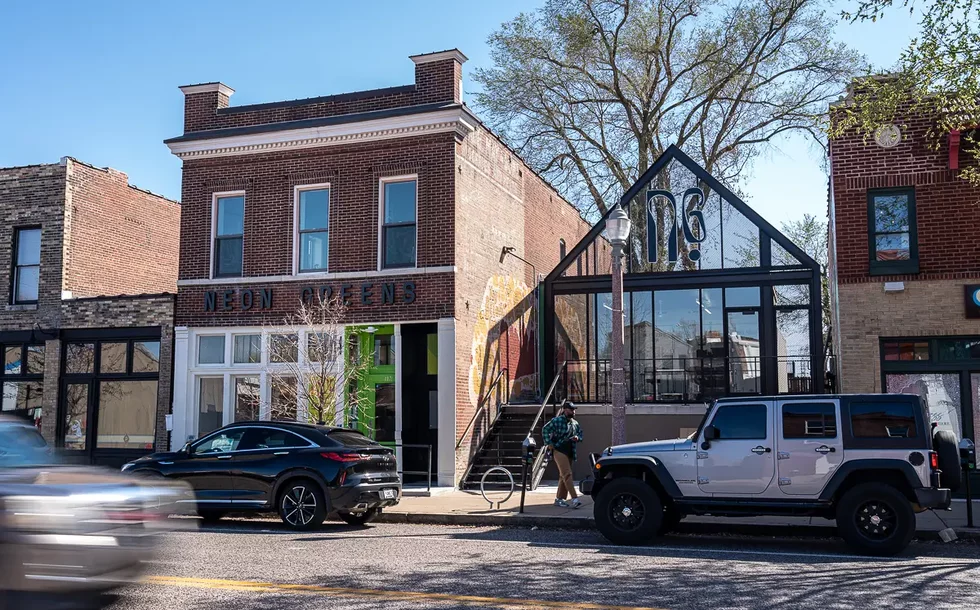
Smith’s assessment is spot-on, considering the space involves a glass-enclosed harvest capsule and conveyor belt system, wherein freshly plucked lettuce dangle over guests heads as it makes its way to the open kitchen. It’s also apt: A film and television designer and art director by trade, Smith was working in the entertainment industry in New York City when the pandemic upended life as everyone knew it. He uprooted his life in the city and made his way to a family cottage in Connecticut for what he thought would be a temporary retreat, only to fall in love with gardening and develop a passion for fresh foods. It might seem like a major life change—and in many ways, he acknowledges, it is—but Smith can see the similarities in his former career with what he’s hoping to achieve at Neon Greens, which opens March 19 in The Grove.
Find the best food in St. Louis
Subscribe to the St. Louis Dining In and Dining Out newsletters to stay up-to-date on the local restaurant and culinary scene.
“It’s very similar to what we are doing here,” says Smith. “Both involve the execution of a creative concept using different variables to communicate in different ways. It’s all storytelling, but we have the added bonus of taste as a component, which is something you don’t really get in other forms of communication.”
Here’s what to know before you go.
The Atmosphere
Neon Greens occupies the former Rise Coffee space, a beloved Grove neighborhood gathering place that closed in June 2022. For Smith, taking over such a community-focused spot in that particular part of the metro area was important because it dovetails with Neon Greens’ mission and his own story.
“I was looking around forever—about a year—and there were a few reasons why I chose to open here in The Grove,” says Smith. “It’s a fun, funky inventive area, and it’s also a historically queer part of town, which is important to me because I am queer, so building a business in this community is a great opportunity. It’s also super close to a lot of large institutions that I’d love to get exposure to.”
Smith was also intentional about opening Neon Greens in an urban environment that lacks a multitude of fresh food offerings. “It’s a food desert, and a lot of our programming and ideas come from wanting to make fresh food accessible. Being able to have a living farm in a food desert with fresh meals available for an average price point of $13–$15 is important. It’s not cheap, but we want people to understand how we come up with costs and where their food comes from. We are trying to build community through farming and radical food transparency and become an anchor in the community.”
When Smith talks about radical transparency, he is speaking both figuratively and literally. The Neon Greens space actually comprises two connected storefronts: the restaurant part (home to the open kitchen, order counter, food line, and dining room) and the farm part (an elevated, glass-fronted building that houses the agriculture operation).
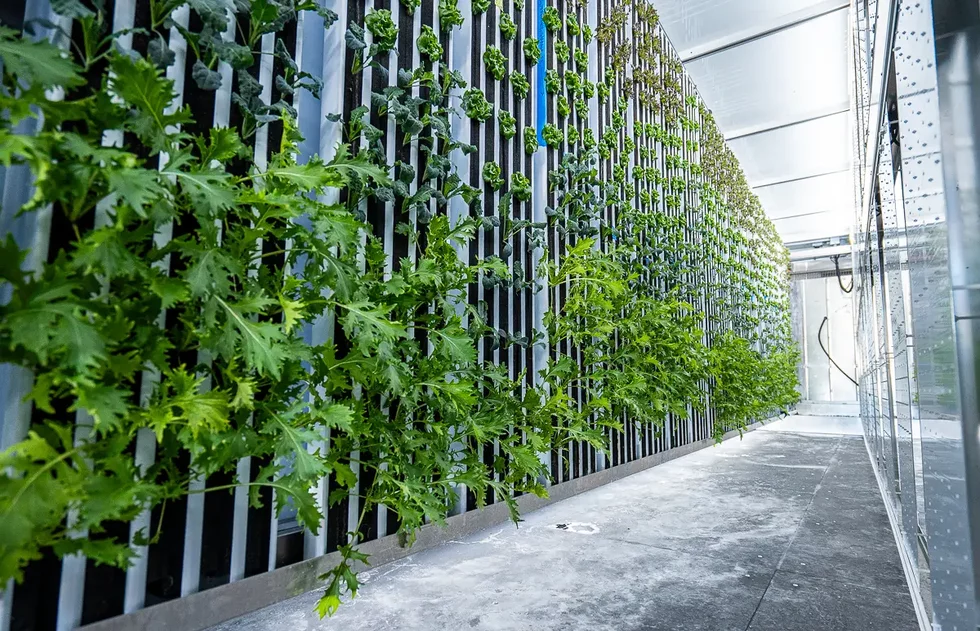
The latter portion of the operation is where the four kinds of brassica and lettuce used as the base of Neon Greens’ food are grown. These include mizuna and baby Tuscan kale (brassicas), as well as sweet crisp and oak leaf lettuces. Neon Greens utilizes controlled-environment agriculture by way of shipping containers that have been converted into refrigerated hydroponic farms. The brassicas and lettuces go through their entire life cycle onsite, guaranteeing they are at peak freshness when they reach the plate.
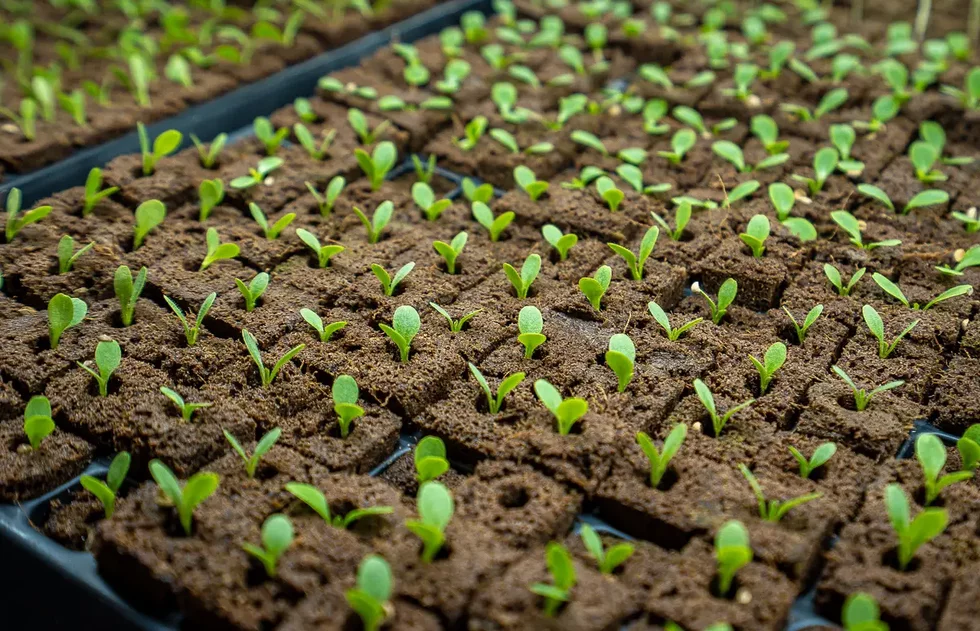
“The idea is to have complete control over the life cycle of the plant,” says Smith. “We are able to simulate sun, water, and source nutrients that would all come to the soil naturally, so we can create the perfect day every day. This means that everything grows at the same rate; it’s super productive, and you have very little waste with that kind of control.”
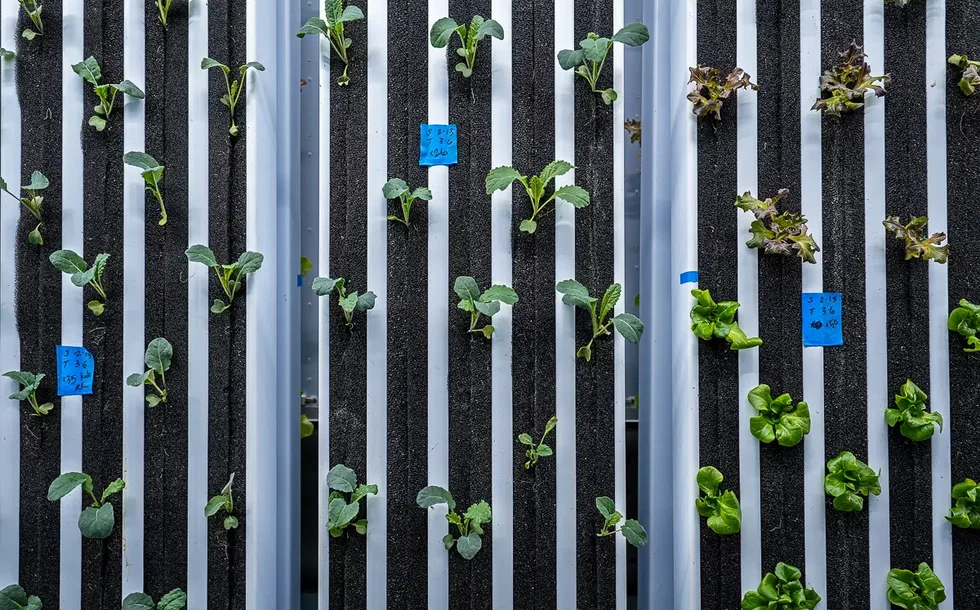
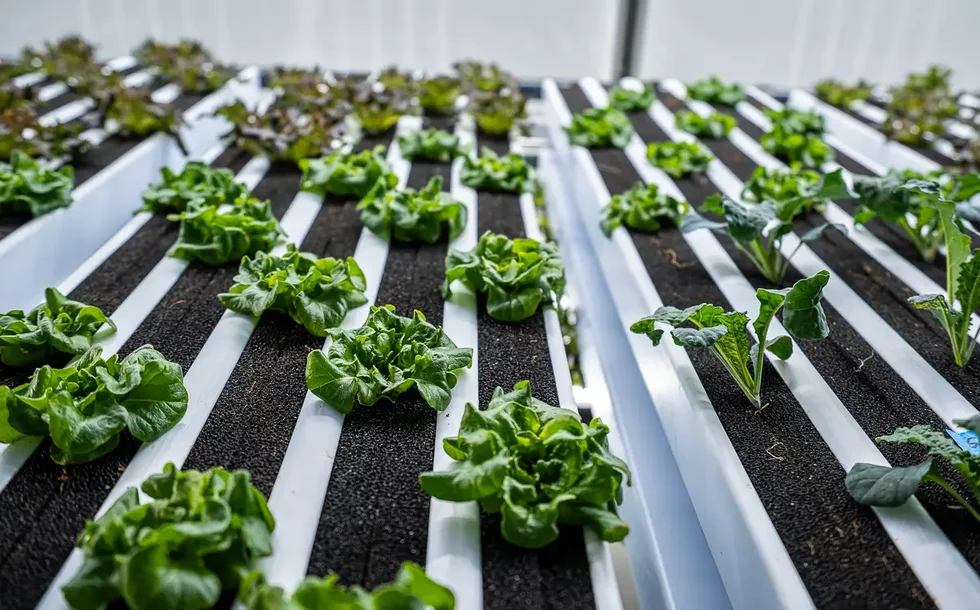
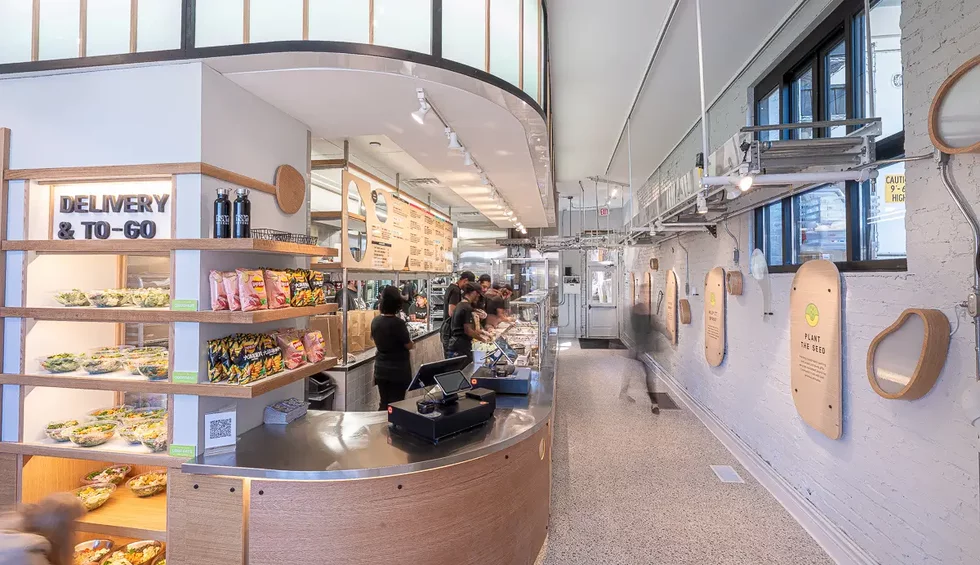
Once the greens reach maturity, they are harvested in a glass-enclosed room that faces Manchester Avenue (Smith and his team call this ‘the harvest capsule’) and placed into small containers attached to a conveyor belt, which make their way through a window into the adjacent restaurant space, where they move over the heads of patrons in line at the order counter before making their way into the prep kitchen. Because they have their roots attached until they are prepped for use, they remain alive until as close to the time of service. “You can taste the difference,” says Smith.
Also notable is that Neon Greens is the first restaurant in the metro area to grow and use its entire supply of leafy greens on site. Using hydroponic farming methods means that six acres of grow space can be placed in a 1,200-square-foot building.
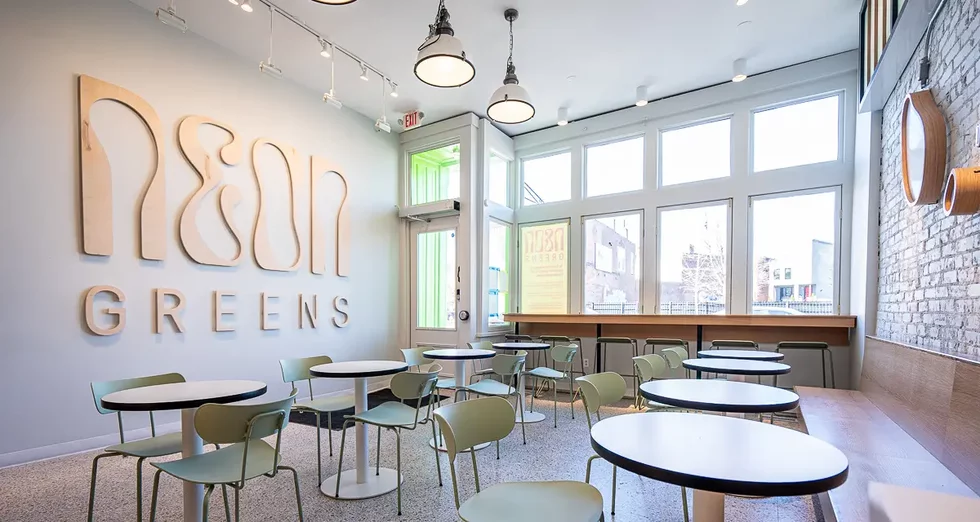
Outside of the overhead conveyor belt, the restaurant side of Neon Greens looks and operates like a traditional customizable-format fast-casual restaurant. Guests enter into a small dining room, filled with eight tables of two, as well as a row of high-top window seats that face Manchester Avenue. The color palette is breezy with white-painted brick, white tables, matcha (think mint green) colored chairs, and blonde wood. A light installation, which Smith refers to as a ‘light box soffit,’ casts a warm glow over the light-filled room.
Guests walk through the dining room to the order counter, where a mural displays the brand’s core values, depicted in terms of a plant’s life cycle. Employees stand behind the counter, ready to customize salad bowls to individual preferences.
The Menu
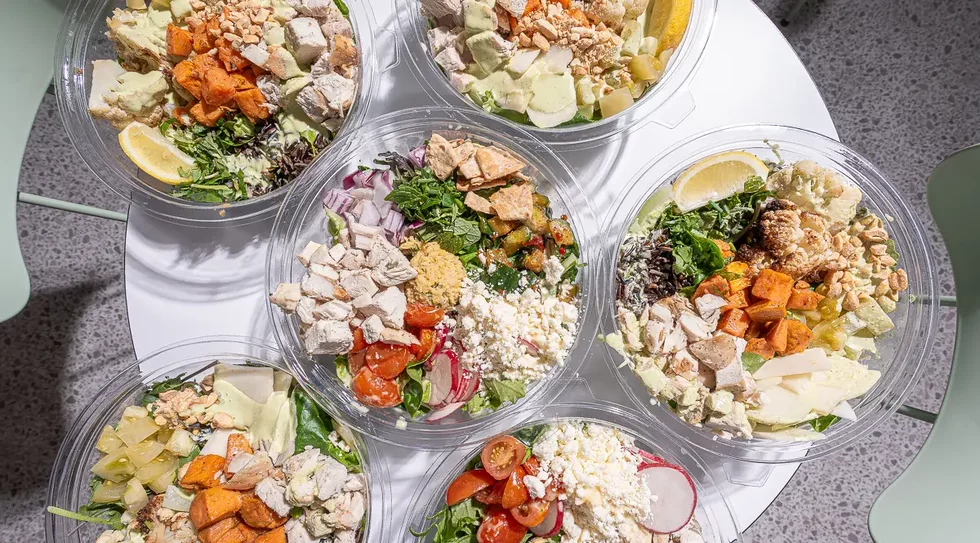
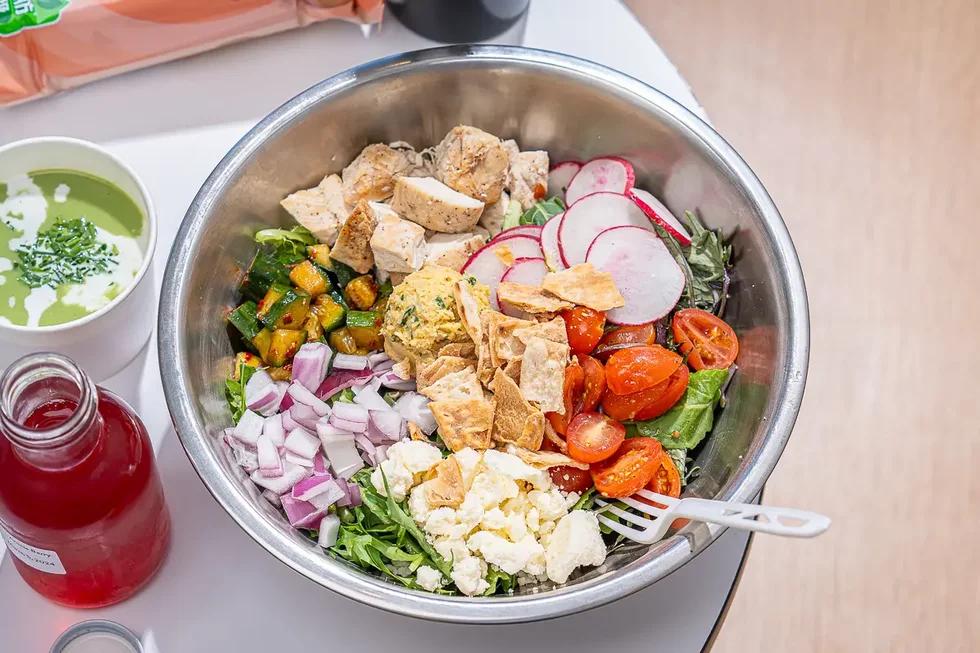
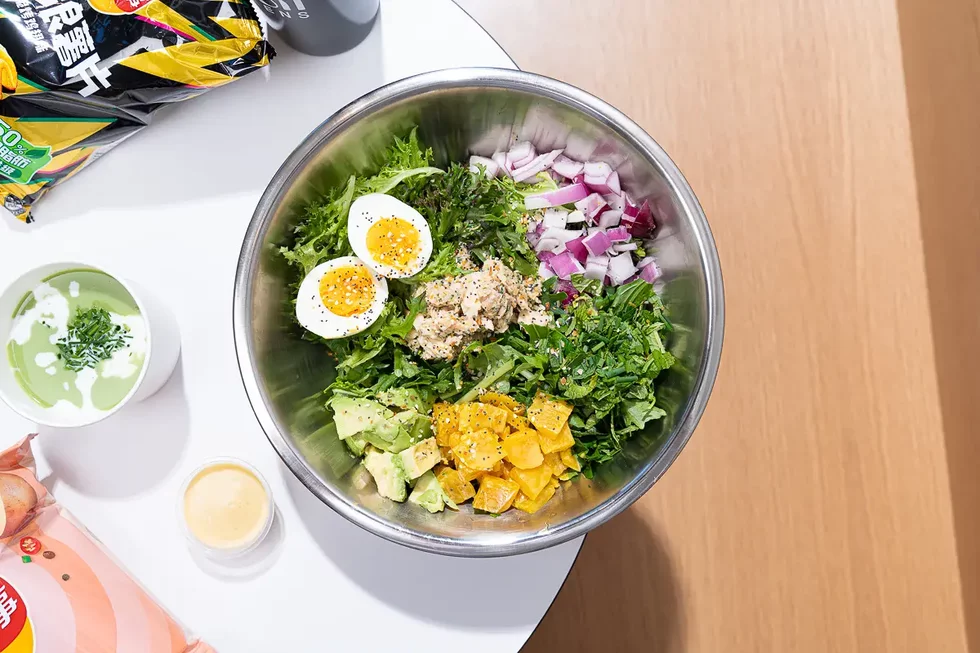
Salads, of course, make up the bulk of the menu and consist of both build-your-own or already composed options. These include the Everything Beet (made with a blend of both sweet crisp lettuce and mizuna and topped with marinated beets, avocado, red onion, fresh herbs, whole egg, marinated tuna, and horseradish vinaigrette). The Chilled Curry has a Southeast Asian inflection (thanks to peanuts and curry ranch dressing), while the Fattoush nods to the eastern Mediterranean (with chickpea hummus, marinated tomatoes, shaved radishes, garlic cucumber, and feta cheese).
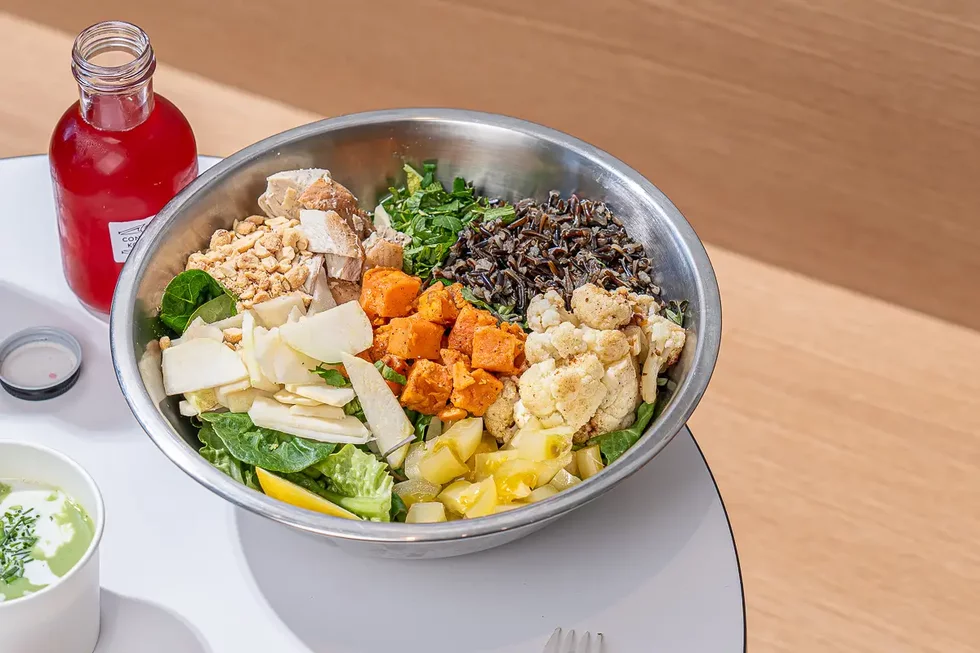
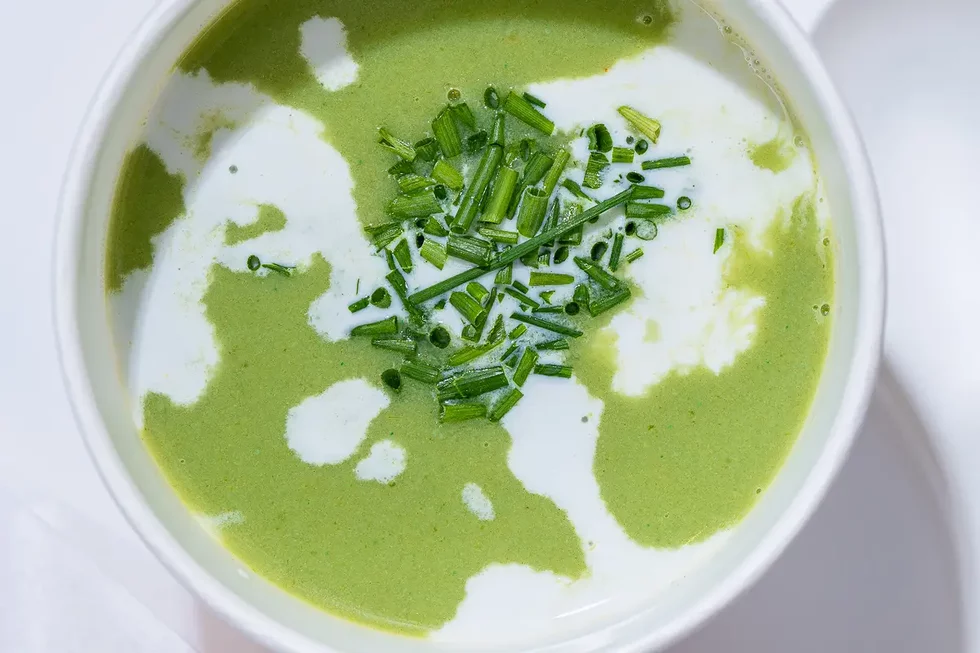
Neon Greens also offers two types of soup: a seasonal selection and the signature Green Soup (a tom kha gai–inspired dish that Smith describes as the perfect all-season soup, which has a gentle heat accented with lemongrass and creamy coconut milk).
Smith acknowledges that a salad restaurant might not be the first place that one envisions as a dessert spot, but he hopes to change this perception with his soft-serve ice cream. Although he plans to rotate selections, the opening flavor is a matcha-infused Thai basil, available on its own or as the base of what Smith calls “an insane sundae.”
“It’s the most insane version of a sundae you’ve seen,” says Smith. “I was thinking of green foods when I came up with it, which is how we decided upon matcha and Thai basil. It comes topped with miso caramel, brown rice crunchies, sesame nougatine, and candied smoked almonds. I really want to think of us as a place where you can get a complete meal, which is why I really wanted soups, bread, and dessert to be a part of what we do.”
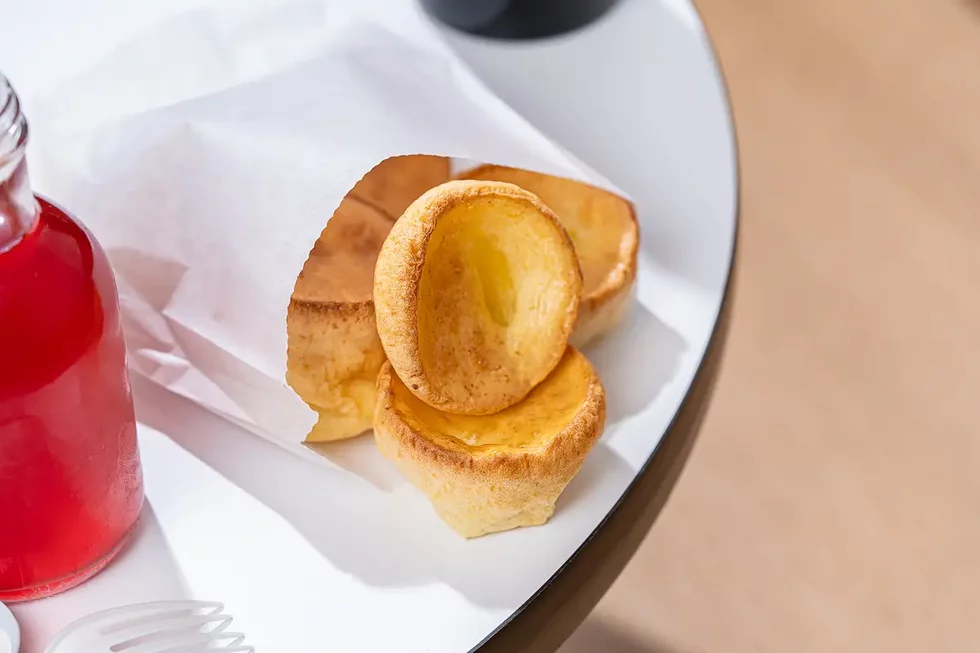
As for that bread, Neon Greens offers homemade pao de queijo, a gluten-free Brazilian cheese bread made with rice flour. Customers can also round out their meals with international potato chips in creative flavors (currently, a Cajun crawfish boil and chicken wing are on offer), Sump coffee, and kombucha from Confluence Kombucha.
The Backstory
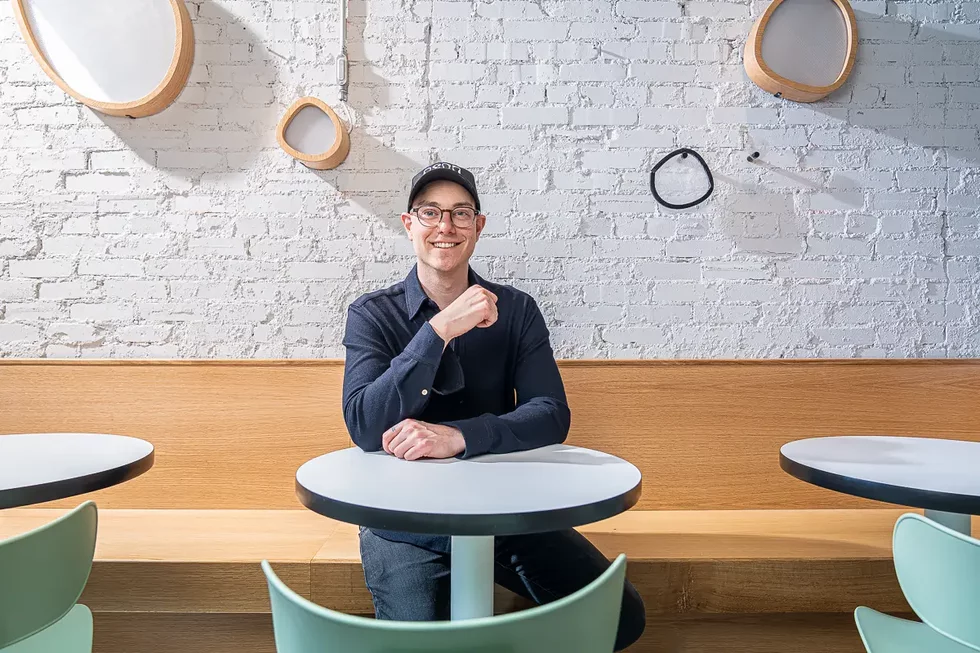
After leaving New York City for Connecticut in the early days of the pandemic, Smith fell in love with gardening and went on a journey that he describes as “going down the rabbit hole.” He converted as much space as he could in his small cottage into a hydroponic garden and set up a test facility in his basement, where he grew everything that he could get his hands on and experimented with different techniques. It became clear to him how rewarding growing one’s own food could be, and he realized that the best way to share that concept with others would be through a restaurant of his own, where he could showcase the beauty of fresh food. A St. Louis native, he returned to his hometown with the goal of not only creating a garden and restaurant but also building a brand that he hopes will change the way that people access fresh food.
“Sometimes, when you’re in the thick of it, it’s hard to see, but there are moments when it feels like we are on the cusp of something,” Smith says. “It’s been a leap of faith, but what gives me hope is how excited people get when they see the space and learn about what we are doing. From the construction workers to the mayor’s chief of staff, everyone has a story they want to tell when they come here. Being in this environment is very inspiring.”