(Editor’s Note: This month, Dave Lowry favorably reviewed BaiKu Sushi Lounge in Midtown. His review is here; more praise–and criticism—follows.)
Dear BaiKu Sushi Lounge,
Find the best food in St. Louis
Subscribe to the St. Louis Dining In and Dining Out newsletters to stay up-to-date on the local restaurant and culinary scene.
You have—you probably know this—among the best selections of sake to be found in any St. Louis restaurant. There isn’t a sake on your list that doesn’t tempt. And impress. And sure, we understand a menu doesn’t offer the chance to really explain much about these remarkable potables—and we assume you recognize the average diner there at BaiKu isn’t going to have the experience or knowledge to make good calls on ordering.
If they did, they would instantly be intrigued by a sake on your list from Shimane Prefecture. Your mention of the “silky finish” and the flavor, “laced with bananas” is true. But that’s like describing a Mouton Rothschild as a “nice sip.” This is is Rihaku’s “Wandering Poet.” Shimane breweries are famous for their water, that has just a faint saline taste, and for brewing their sake at lower temperatures that produce solid flavors. The Wandering Poet is crisp and dry, with a beautiful finish. Perfect with your teriyaki beef. A spectacular sake by any standard.
The Tozai “Snow Maiden,” on the other hand, is the weakest batter in your line-up, as you know. It’s hard enough to get people to drink unfiltered nigori-zake; one look at that creamy color and they figure someone’s dumped milk in their sake. The Tozai is so light, though, that the rice particles separate out within a few minutes of pouring, looking like someone’s dropped kosher salt into their drink.
Your “Dreamy Clouds” is a far better first exposure to unfiltered nigori-zake. There aren’t that many unfiltered sake varieties that qualify as junnmai ginjo, made the old way mostly, light and with more refinement and complexity, two words you don’t expect when talking about unfiltered sake. That marinated hangar steak you serve on Korean ssam? The Dreamy Clouds would be an excellent match with it.
Tentaka comes from Tochigi, way up in the mountains, back-country Japan, from a brewery that exports only about 20% of its product; you can get it locally at Randall’s here in St. Louis sometimes. Otherwise, Tentaka is tough to find and it’s great you’ve got it. Sake enthusiasts use the Japanese term koku ga aru to describe Tentaka. Tough to translate. Something like having “solid earthiness.” You’ve got a swank place there at BaiKu. But your diners can close their eyes, take a sip of your Tentaka, and imagine sitting around the firepit in a rural Japanese farmhouse.
The Tottori brewery’s “Tears of Dawn” is your only Daiginjo level sake. Your customers ought to know that means it’s been brewed with rice that’s been reduced to its flavor essence, with more than half of the kernels ground away to intensify taste. They ought to know only about 6% of Japan’s sake are this grade. Person comes into BaiKu and orders Tears of Dawn along with your sea salt edamame and asks you to bring him some of your sushi toppings served sashimi style, accommodate him. And leave him alone while he eats. He’s tasting Kyoto.
We don’t know much about sake, but enough to see that a lot of thought went into this list. There’s more connoisseurship here than on a great many of the better wine menus in St. Louis. One suggestion: sponsor some sake tasting evenings. Pair your sake with a special menu; explain to diners the nuances of each. They learn; you make some educated converts to sake—who are the kinds who will spend big bucks on it in the future.
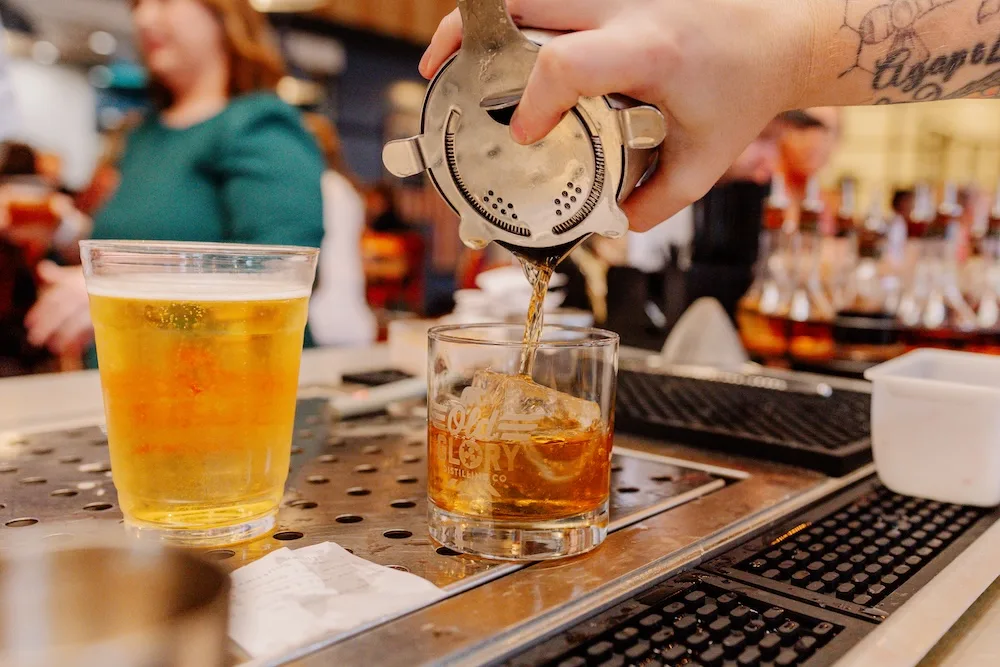
Before you do that, though, here’s another suggestion. A question, really. What the hell are you doing serving these premium sake varieties in stemless wine glasses?
Does Tony’s serve their Burgundies in beer mugs? Do they pour their wonderful Chardonnays at Robust in jelly glasses?
There are few drinks that benefit more from the proper vessel than sake. Sake cups evolved to exploit the different tastes of different sake. They are ceramic, rough, hand-thrown, and they aren’t all that expensive and you need a variety of them.
That Tentaka, for instance, is going to really benefit from a shallow, saucer-like cup, where its uwadachi-ka, its “initial fragrance” is going to blossom. The unfiltered “Dreamy Clouds” is syrupy thick and sweet and a thick-lipped cup will let it spill all over your tongue. A thin-lipped cup funnels a lighter sake more directly down the length of your tongue and gets it to the back of your throat so you can appreciate the fukumi-ka, the secondary aromas of sake as it comes up from your palate into your nose.
Sure, not everybody’s going to care that much, or appreciate these nuances. But not everybody’s going to care or appreciate the time and effort you’ve spent on your sake list. You’ve done it though. So why not serve your sake in the cups it deserves?
Your Friend,
Dave