St. Louis breweries with long-established beer credentials are now adding distilling to their repertoire. Even as beer sales decline nationwide, many breweries are seeing a growing demand for artisanal products, and they’re leveraging their brewing experience to enter the spirits market and broaden their reach.
Some local brewers are distilling their own spirits, while others are opting to source and blend, opening the door to innovative offerings. Distilling involves fermenting and distilling a mash to create spirits from scratch. It requires specialized equipment, expertise, and significant time investment, particularly for spirits such as whiskey, which requires aging. Sourcing, on the other hand, involves purchasing distilled spirits (often unaged) from other producers and then blending, finishing, or branding them for sale. This approach allows for faster market entry and unique flavor profiles through creative blending and barrel finishing.
Find the best food in St. Louis
Subscribe to the St. Louis Dining In and Dining Out newsletters to stay up-to-date on the local restaurant and culinary scene.
Square One Brewery & Distillery began as a brewery and restaurant in 2006, then two years later became Missouri’s first micro-distillery since Prohibition. “After obtaining the necessary licenses in 2008 and receiving our first still, we started producing a variety of spirits, including vodkas, liqueurs, aquavits, whiskeys, and gins,” recalls owner Steve Neukomm. “This move allowed us to diversify without creating competition between our beer and spirits offerings.” To meet growing demand, Neukomm expanded the operation in 2012 and developed the popular Spirits of St. Louis brand. “We saw the distillery as a natural extension of our brewery operations,” he says.
Likewise, 4 Hands founder Kevin Lemp expanded his portfolio by launching 1220 Artisan Spirits in 2018. Drawing on his experience at E. & J. Gallo Winery in Modesto, California, Lemp introduced a house tonic along with Origin, a New American gin. His strategy was to create complementary offerings that wouldn’t compete with the brewery’s lineup. “I grew up in this industry through Gallo wines,” he says. “They created brands that didn’t compete with each other. They had everything from Bartles & Jaymes wine coolers to $8 wine to $300 wine. Then they got into vodka, gin, and so on.” Today, 1220 Artisan Spirits produces barrel-aged gin, apple brandy, and seasonal gins, along with a range of canned cocktails.
“Trying to do something new with spirits, whether it’s distilling your own or blending whiskeys, is a fun challenge for those who have been making beer for a long time,” says Jeremy Danner, digital marketing manager and brand ambassador at 4 Hands. “We know that people who drink craft beer enjoy other things, too. When they have the opportunity to try a distilled spirit, canned cocktail, or hard seltzer, we’d love for it to be something we’ve made.”
For Perennial Artisan Ales, the transition to spirits came through a sourcing approach. Its new venture, Common Ritual, exemplifies how breweries can produce exceptional whiskeys without distilling them in-house. “I love whiskey and enjoy drinking it, but making it seemed challenging,” says Perennial co-founder Phil Wymore, who also serves as “prime minister” at Common Ritual. Instead of distilling, Common Ritual sources barrels from independent craft distilleries and blends and finishes the spirits in-house. “This allows us to guarantee great products by using our best skill: tasting,” Wymore explains. The mission of Common Ritual includes supporting underrepresented distilleries and emphasizing sustainability through farm-to-bottle production. “We can provide financial support and a platform for trailblazing distilleries led by minorities, marginalized groups, and their allies,” says Rawi Nanakul, Common Ritual’s minister of product and marketing.
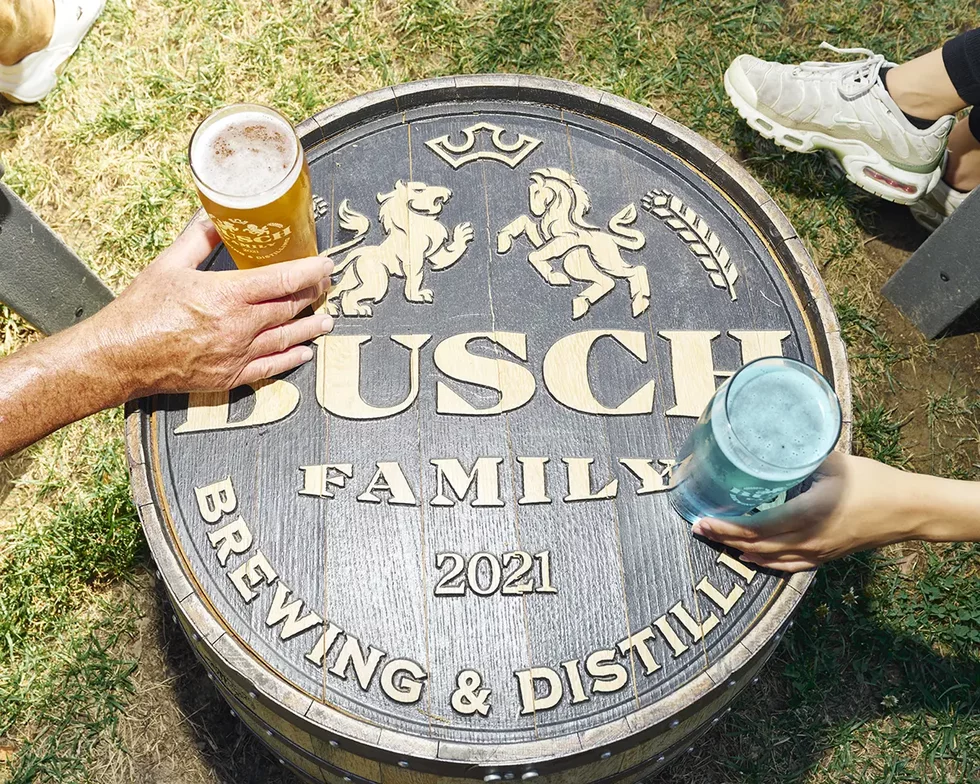
For Busch Family Brewing & Distilling, diversification into whiskey production is as much about heritage as it is about innovation. Situated on a sprawling 700-acre farm in Defiance, the operation is currently sourcing whiskey from Kentucky while laying the groundwork for a future distillery. “We’re doing barrel selection with whiskey and spirits that will carry the Busch name,” says brewmaster Matt Deatherage. These whiskeys are bottled and sold at the farm, providing an early glimpse of their ambitions. The long-term plan is to distill on-site. “We already own a still, and the full intention is to distill here on the farm,” Deatherage explains. Construction of a dedicated distillery building, located just across the parking lot from the brewery, is expected to begin soon.
Alpha Brewing Company has expanded into spirits with its new brewstillery in the Delmar Maker District. The facility features a 2,300-square-foot tasting room, a 1,200-square-foot distilling space, and a kitchen serving St. Louis–style pizza and snacks, creating a destination for both beer and spirits enthusiasts. Alpha Brewing Company Distillery (ABCD) is producing bourbons, ryes, and flavored vodkas under the brand Squoosh, inspired by the brewery’s popular fruited sour beers. Flavors such as cranberry, peach, and blood orange showcase Alpha’s creative approach to spirits. Founder Derrick Langeneckert sees this as a natural evolution. “Every distillery starts with what we call ‘distiller’s beer,’” he explains. “Every distillery needs a brewery.” The new venture builds on Alpha’s experience with barrel-aged beers, integrating brewing and distilling into a seamless operation.
And Friendship Brewing Company is the new kid on the brewing/distilling block. In August, the brewery launched Friendship Distilling Company at its Flint Hill location, combining its expertise in crafting exceptional beer with a passion for distilling. Friendship Distilling offers a classic small-batch bourbon and a port-finished bourbon. “We’re thrilled to bring this new venture to life,” says marketing director Sanjna Tailor, “Our spirits are handcrafted with the same love and attention as our brews. Stay tuned for more updates as we continue this exciting journey.”