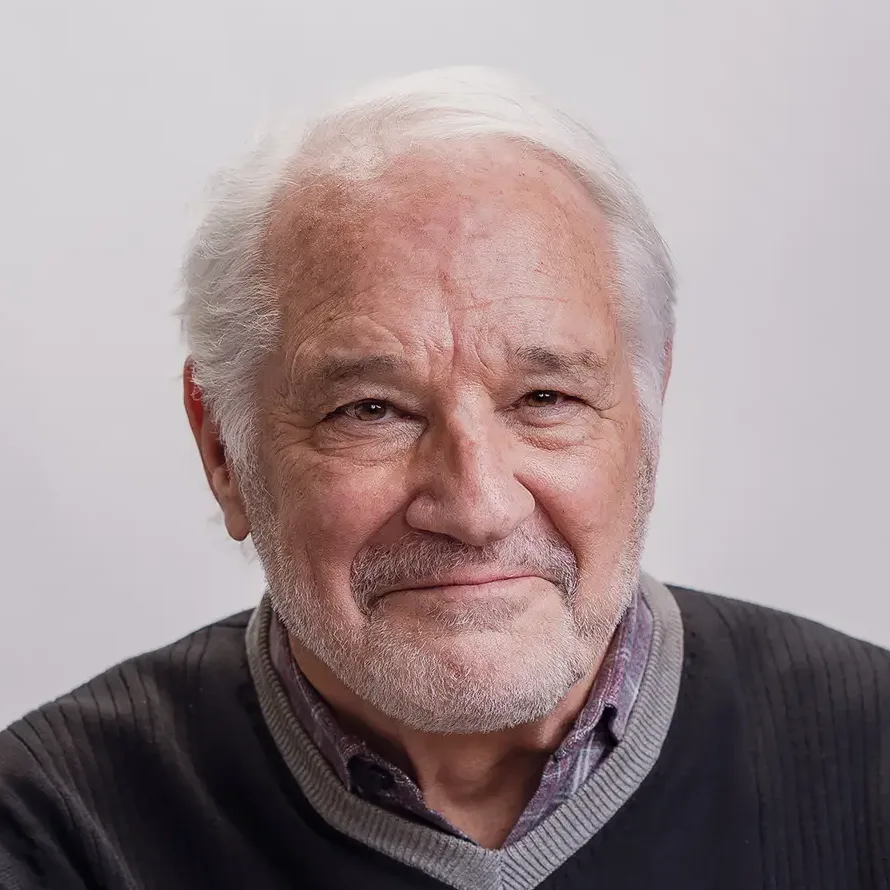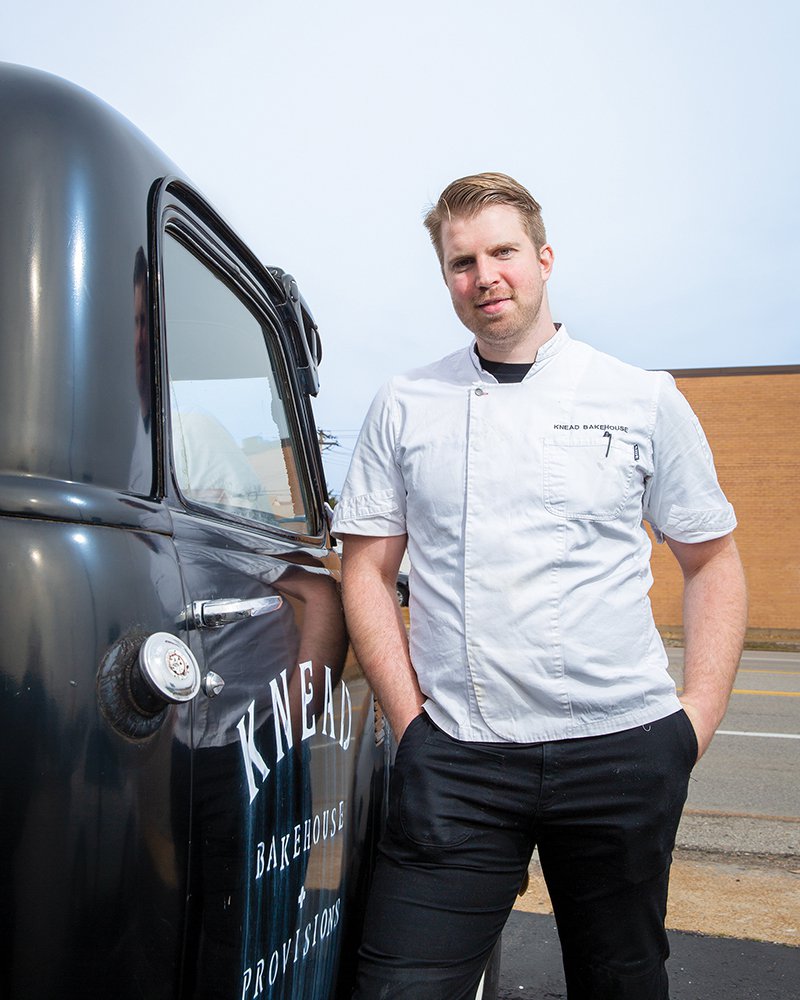
Determined to learn a craft that challenges even elite French chefs, AJ Brown put his food science degree to work and mastered the art of bread baking. Having experienced repeated success at farmers’ markets, in 2017 he opened Knead Bakehouse + Provisions, where all products are sourdough based and made from a single starter.
What jobs prepared you for the baking side of the foodservice business? In 2012, just out of culinary school, I staged at the original Niche before they moved to Clayton, working in pastry and as a garde-manger. Obviously, the standards there were very high.
Find the best food in St. Louis
Subscribe to the St. Louis Dining In and Dining Out newsletters to stay up-to-date on the local restaurant and culinary scene.
Which culinary school did you attend? The Institut Paul Bocuse in France, which trained chefs to feed into certain Michelin-starred restaurants. It was an intense, rigorous program, so I was ready for a place like Niche.
Were the classes taught in English? Broken English. I was one of two Americans in a class of 10. My fellow classmates were from Germany Brazil, Italy, Singapore… The school was very regimented, almost militaristic, but they were still very French… We’d have intense exams every Friday, but the instructors would stop in the middle of it all, and we’d all have an espresso. Then you’d go right back at it, chopping, making sauces… But you had to time the breaks, too, or you might start preparing an item that would be ruined when you got back.
Did you stay in France after graduating? I had a short-term visa, so no. Graduating chefs would generally work for a three-star chef for two years. You could only leave that kitchen when that chef recommended you to someone else in a different city. In the old days, chefs would literally walk from city to city to work and to study the different regional cuisines.
How has your business model changed during the pandemic? Knead is in a unique position, one I take very seriously. Baking bread for the community is important, now more than ever, and we plan to continue to do what we’ve been doing and then some. In addition to menu items that can be ordered online and picked up curbside, we’ve added basic staples, such as eggs and milk, and we hope to include local produce.
How did you get your start? I was interested in the fermentation aspect of beverages. I worked at O’Fallon Brewery, then Noboleis Vineyards, but I had more of a passion for food, so I left Noboleis for the Institut Paul Bocuse.
How did bread baking become a full-time project? My dad owned a retirement center, so I was able to use their industrial kitchen to bake bread during off-hours, which I would sell at farmers’ markets. I started selling out—100 loaves and 400 pastries in just over two hours. That’s when I set up a Kickstarter, which raised more than $30,000 in 30 days. That at least got us going. Three years later, I had cobbled enough money, mainly from private dining gigs, to open Knead.
Private dining? How did you get into that? From the farmers’ markets. The more dinners I did, the more I’d do—mainly high-end sit-downs in people’s home or business, but I also traveled some just to do that. Sometimes I’d have some service help, but I’d do a six-course dinner for 30 people, all by myself, and then do the dishes. That’s how I found some of my investors, people who believed what I wanted to do and saw what I was capable of doing. That’s when I decided to take the plunge and start Knead.
So you’re a bona fide savory chef as well. Bread and baking was always my passion, which dovetailed into what I knew about fermentation. Bread is what I went to France to learn about. But every chef I met spoke with reverence about bread bakers. It was something they admitted they could not do. So I thought if I wanted to become a great chef, I would learn bread baking first. At the Institut, there was one bread baker who basically taught us all.
Chefs used to lean toward either savory or pastry. Is that still the case? Even though each skill uses a different part of the brain, today’s chefs try to marry the two and become more well-versed. Savory chefs in the higher-end kitchens are not as freewheeling as you might think; they’re still weighing each ingredient.
At Knead, you started with two types of bread. And that’s all we have now, two traditional European-style sourdough breads: a rustic and a brioche. We bake pretzel buns, but that’s about as far as the diversification goes. The doughnuts and the pastries are all sourdough based, too.
Do you have different starters for the two breads? No, same starter, the one I began in 2012 when I knew I wanted to become a baker. We now use a wild yeast from a Missouri cave and then a long fermentation process, so it’s evolved. Bread is one of those things you can spend a lifetime trying to perfect. So even though the recipe for our two breads remains basically the same, we are constantly making small changes. We’ve gone through so many different variations—how we mix the dough, fermentation times, holding times, proofing times, the water temperature going into the starter, how many turns the dough gets after the mix. Sourdough is not as consistent as a bread made with a commercial yeast. There are boundaries you must stay within to make something that’s replicable every single day.
“There are boundaries you must stay within to make something that’s replicable every single day.”
What put Knead on the map: the bread or the pastries? Since we started at the farmers’ markets and still today, the sourdough rustic loaf is the big seller, followed by the brioche, whole loaf, or sliced. People just want to have good, solid, affordable bread available on a day-to-day basis, so that’s the draw. The rustic is $7, and the brioche is $8, because of the butter and eggs required.
Why does sourdough in San Francisco taste different than anywhere else? You can buy a sourdough kit that has sour flavors in it but uses conventional yeast, so that’s not really a sourdough. You need a starter for that, and they’re all different, depending on the strain of yeast and the water used, so it becomes very regional. In San Francisco, the strain of yeast ferments a certain way, and the warmer temperatures there create harsher, more sour profiles.
So you can’t make San Francisco–style sourdough here? Not really. Even if you had a starter from there and mimicked all the other conditions, like the flour, the starter would change over time, so the taste of the bread would, too.
So how different is Knead’s bread today than it was when you opened almost three years ago? It’s more moist, for one. We’re still using the same ratios of flour, all of them organic and grown in the Midwest, but we’re continually experimenting with the amount of water that can be introduced, so the loaf lasts longer and has better crumb. When you change small things like that, it changes the structure of the dough.
Talk about the “+ Provisions” part of the name. We just started to sell jams, preserves, pickles, the flour blends and butters, and a salt blend that we use here for people who want to bake bread or pancakes or waffles at home. We make our own vanilla extract, which we’ll eventually sell. Eventually, I hope it’ll feel like a Jewish deli, with meats and sides to go.
Why do you use a salt blend? We use three different salts: a Pacific sea salt, an Atlantic salt, and a Himalayan. Different minerals give them slightly different structures and flavors. The Himalayan is maybe the least processed, which is why it’s so popular…and then there’s that pink color.
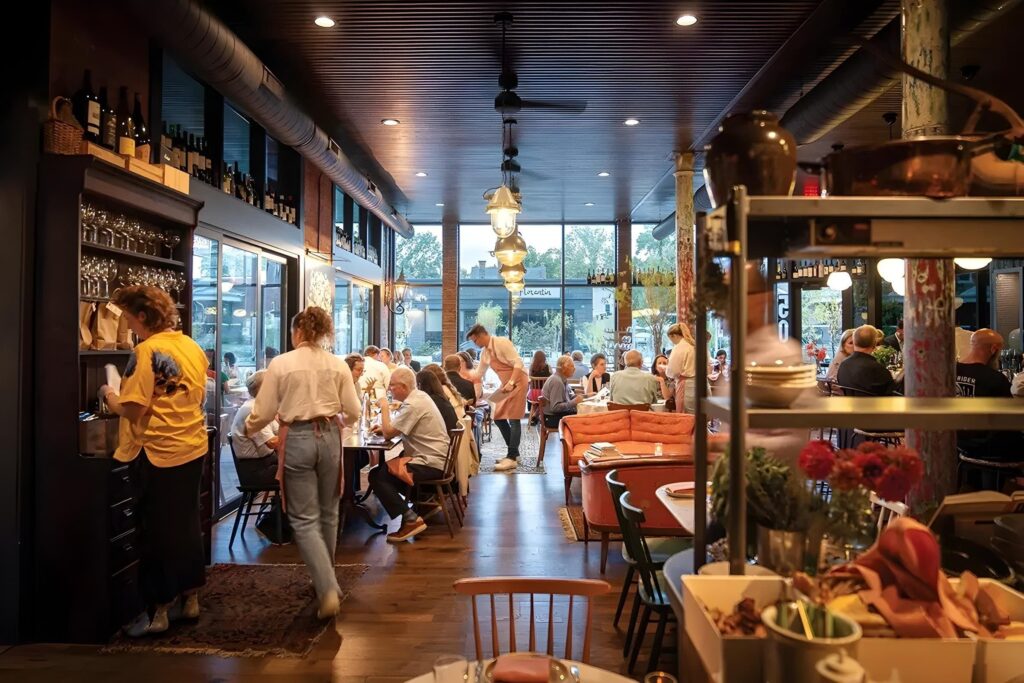
What was the basic concept for Knead? I was shooting for a classic diner feel, but with some elegance to it, if that makes any sense. A basic but elevated menu, sodas presented like cocktails, better pastry offerings. The former Salume Beddu space had both good bones and a great reputation. I wish the dining room was bigger now, but it seemed big enough when we started.
After you opened, did everything go as planned? We had always planned to do lunch and thought pastries would carry us through the breakfast hours, but almost immediately people were asking for more elaborate items. Our response was breakfast sandwiches. And a breakfast plate with our own giant thick-cut bacon, our own breakfast sausage, roasted breakfast potatoes that are rolled in garlic confit, and our bread, of course, toasted. We thick-cut the bacon and braise it for eight hours. Now we serve breakfast all day.
And the bakery is not open at night. We used to do a lot of private parties in house, another thing I never thought we’d do, especially during the holidays, and people still ask about them. But since having a baby, it’ll be a minute before I can get back into that. We could easily do nighttime pop-ups, too.
What’s on the drawing board from a product standpoint? I’d like to start a lamination program and get into croissants, Danish, and puff pastry. But doing all that with sourdough becomes a little more tricky.
What are the biggest non-bread sellers? From the pastry side, the kolaches, the cinnamon rolls—which are baked in individual molds—along with the [homemade] Pop-Tarts and packs of shortbread sugar cookies. The classic doughnuts do well—the vanilla chocolate chip and the cinnamon sugar—as do the doughnut of the week and month. The one in March had orange curd filling with a matcha tea glaze, green tea sugar, and candied orange. The base for all of them, though, is our brioche sourdough.
What’s the secret to a good doughnut? We fry ours in rice bran oil, a more expensive high-temperature oil that’s popular in Asian countries and chemically similar to grapeseed oil. We use our house-made vanilla extract and organic unprocessed powdered sugar…. You can smell the molasses that’s in there. Put all those things together, and you come up with something pretty special.
How long is the dough cycle? It’s a three-day process. We start the feeding cycle on the yeast at noon, which takes 24 hours to go from dormant to the peak of its life cycle. You have to catch it then or you don’t get the maximum flavor or texture. Then we add the yeast to the dough, mix it, let it ferment all day and night in the fridge. Then it gets shaped into loafs or pastry or doughnuts and goes back in the fridge to proof for another 24 hours before any baking occurs.
Can it be a four-day process? Longer fermentation times are good for some pizza and focaccia doughs, but for us, the three-day window is ideal and the max we can go. With sourdough, you try to stretch the fermentation as far as possible, but if you take it too far, the taste and texture head in the wrong direction.
Which sandwich is the most popular? Definitely the bacon turkey ranch, with several cheeses and our own house-made ranch, served with our own chips and our own pickles, including pickled green tomatoes in the summer. We roast all our own meats and cure our own ham.
You make your own sodas in-house, too. We make our own syrups, which include a fruit, an herb, and a spice and then add a carbonated soda and serve it in a stemless wine glass. We build it like a cocktail, minus the alcohol. And as far as juices go, they’re based on colors—an orange, a red, and a green—and the flavors rotate.
Do you have any mentors? Lionel Poilâne of Poilâne Bakery in was one of my early inspirations. His family has made rustic sourdough bread and sourdough shortbread sugar cookies in France for decades. When I started, those were two of the first things I wanted to perfect.
What’s the most important aspect of your business? That it’s not just me and my vision. Early on, I learned the importance of putting together a team that’s as interested in building this brand as I am. And it took me well over a year to do it. Here, we consider everybody a chef, everybody’s empowered.
When does the day start at Knead? Our bakers come in at 5 a.m.—which is late for a baker—and they don’t work insane hours. That’s two places we try to be different than the industry. My staff works a 40-hour week, not 70. Maintaining work-life balance is part of our culture.
With the bakers coming in at 5 a.m., everything is probably warm when the doors open. For sure, but it’s funny: With bread, if it’s too hot, it can’t be sliced, so we start baking that first, so we can have both hot loaves and sliceable ones.
How much of your business is pick up, delivery, and dine in, as opposed to when you opened? No delivery. It’s always run 60/40, pick-up vs. dine-in. Delivery would be a growth opportunity in the future.
What’s your guilty pleasure? My wife, who’s South African, has family here, and relatives who come to visit. They bring back suitcases of treats when they do. Fruit pastels, rolled in sugar, their version of M&Ms, are called Smarties, not the ones we’re used to. The Cadbury in South Africa is different, called Top Deck. They bring back Biltong, which is similar to but better than beef jerky. So there’s usually a giant stash of this stuff that I can hit up.
Any advice to those getting into the business? There are an incredible amount of steps necessary just to get a doughnut into someone’s hand. Besides the baking, many different licenses are required to make that happen. Then there’s the design, the marketing, the back office work… Fortunately, I have a wife who is adept at all that.
Are there any memorable behind-the-scenes stories that you can share? When we opened, people used to think we were crazy, selling $3 doughnuts in a city full of far less expensive doughnut shops. But we sell out every day. Some of those people have come in, tried one, experienced how much we put into it, and said, “OK, now I get it.”