Are you in favor of reducing portion sizes at restaurants, or should they remain the same? —Marie J., St. Louis
A recent article in The New York Times says that after decades of supersizing and “portion creep,” smaller portions may be on the way. Some restaurateurs say not so fast—they like the “dinner today, lunch tomorrow” meal plan.
Find the best food in St. Louis
Subscribe to the St. Louis Dining In and Dining Out newsletters to stay up-to-date on the local restaurant and culinary scene.
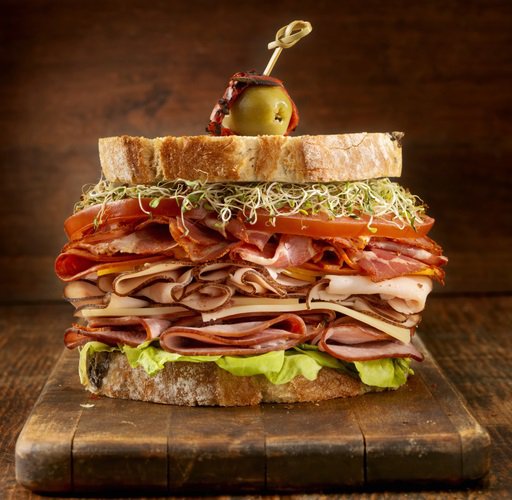
The Times article says “portion sizes in American restaurants shot up in the 1980s and never came down. The size of spaghetti orders doubled and bagels ballooned into six-inch-wide monstrosities.”
Finally, the restaurant tides are shifting. More than 75 percent of customers say they want smaller portions for less money, according to the 2024 National Restaurant Association report on the industry, the Times notes.
In addition, as much as 40 percent of food served at restaurants never gets eaten, according to a 2020 study on food waste. Some restaurants have taken action and reduced portion size, while others “will eventually reconsider oversize portions,” a restaurant executive predicts.
One industry executive quoted by the Times says she’d like to see restaurants offer half-bowl options or baby burritos. “I can customize everything about my order except the size,” she said. “People want this choice, and they are not getting it.”
Amen, sister. Personally, I’ve long been in favor of smaller portions at reduced prices and never could understand why a certain local Italian restaurant (now defunct) insisted on serving a humongous serving of lasagna (for $42!) because that’s the way Mama did it and wanted it. I never thought that Styrofoam containers stacked on almost every table at meal’s end was a flattering look.
We asked several restaurateurs to weigh in on the subject. Gerard Craft brought up a basic but salient point, one I’d bet most diners have never realized. We’ll lead off with him.
Gerard Craft, Niche Food Group: “This is a tricky one, and obviously the following numbers vary from restaurant to restaurant based on product. The price of your entrée includes, give or take some percentage points, 30 percent cost of food, 35 percent labor, 7–10 percent rent, and then you have insurance, employee benefits, breakage, paper goods, flowers and décor, music, and so on. Anything left is profit. So with a $30 entrée, food costs $9, labor $10.50, rent $2.10, other costs $5.40, and profit is 10 percent, or $3, if you’re lucky. So if you did half portions of everything, you would still need to charge $25.50 for that dish, and I think people would be more upset by this than they are with a full-size $30 entrée.”
Natasha Kwan, Frida’s/Bonito Bar, Diego’s Cantina, Station No. 3: “Interesting you mention that, because it’s been in discussion for quite a bit with us. We would only reduce or offer smaller sizes in some items, like fries and salads. Every single day, a restaurant or restaurant group declares bankruptcy. Even in St. Louis, we have seen so many places shutter just in the last six months. I’m in favor of whatever an operator needs to do to stay in business and gets people in the door. The fact is, people want value. Let go of the ego, and give it to them. It might just keep you in business.”
Brant Baldanza, OG Hospitality Group: “Coming out of [the pandemic,] our costs were through the roof, just like everyone else’s. Our restaurants tried minimizing portion sizes to mitigate costs, and it really pissed off our guests and my family—and they eat for free! We will be keeping our portion sizes the same at all concepts.”
Anthony Scarato, Anthonino’s Taverna: “We are in favor of giving quality over quantity. When people go out for a meal, the point is to indulge and be taken care of. Large portions or ‘value’ restaurants will always be around, but, in my opinion, the average customer wants the highest-quality product and would sacrifice portion size to receive it. I think portion sizes should remain realistic, but the focus should be on providing the best ingredients possible.”
Chris Kelling, Pizza Champ: “As costs rise every month—or every week, it sometimes seems—the fact of the matter is that if portion sizes don’t shrink, then prices are going up. So it’s really a question of which do you believe as an operator will be better received by your guests. Everyone has to do what is right for them, but here at Pizza Champ, our guests have gotten accustomed to getting a huge pie—approximately 18 inches—and even an incremental change would be pretty drastic visually. Not to mention that if we were to shrink the main offering, we would be changing the heart of our concept, which I don’t see as the right move.”
Kye Pietoso, The Napoli Group: “I would much rather have someone feeling full and satisfied for a few bucks more with a little left over than feeling like that need to go through a fast food drive thru on the way home because they didn’t get enough to eat. We really feel our portions are accurate and don’t see the need to serve smaller portions for a few bucks. In fact, our chefs are very conscious of the plates not only going out of the kitchen but also coming back. We see a lot of clean plates.”
Charlie Gitto, Jr., Charlie Gitto’s on the Hill, Charlie Gitto’s at Ameristar Casino: “People are diet-conscious today, not just price-conscious. We used to serve large bowls of pasta, for example. We don’t anymore. A 10-ounce portion of long-noodle pasta is now 6 [ounces]. Or you can get your favorite pasta, like Seafood Pasta Suzanne, as a side dish, which is close to half an order. We now serve eight toasted ravioli instead of 12. We now serve three 6-8-count shrimp, instead of five. We serve a 6-ounce filet along with an 8-ounce. Our dessert portions are smaller. When I go out to dinner and see to-go containers on almost every table, I think, ‘They need to cut their portions.’ To say nothing of all the money they’d save on packaging and bags.”
Follow George on X, Instagram, his Arch Eats podcast, or send him an “Ask George” email at [email protected]. For more from St. Louis Magazine, subscribe, sign up for the newsletters, or follow us on Facebook, X, and Instagram.